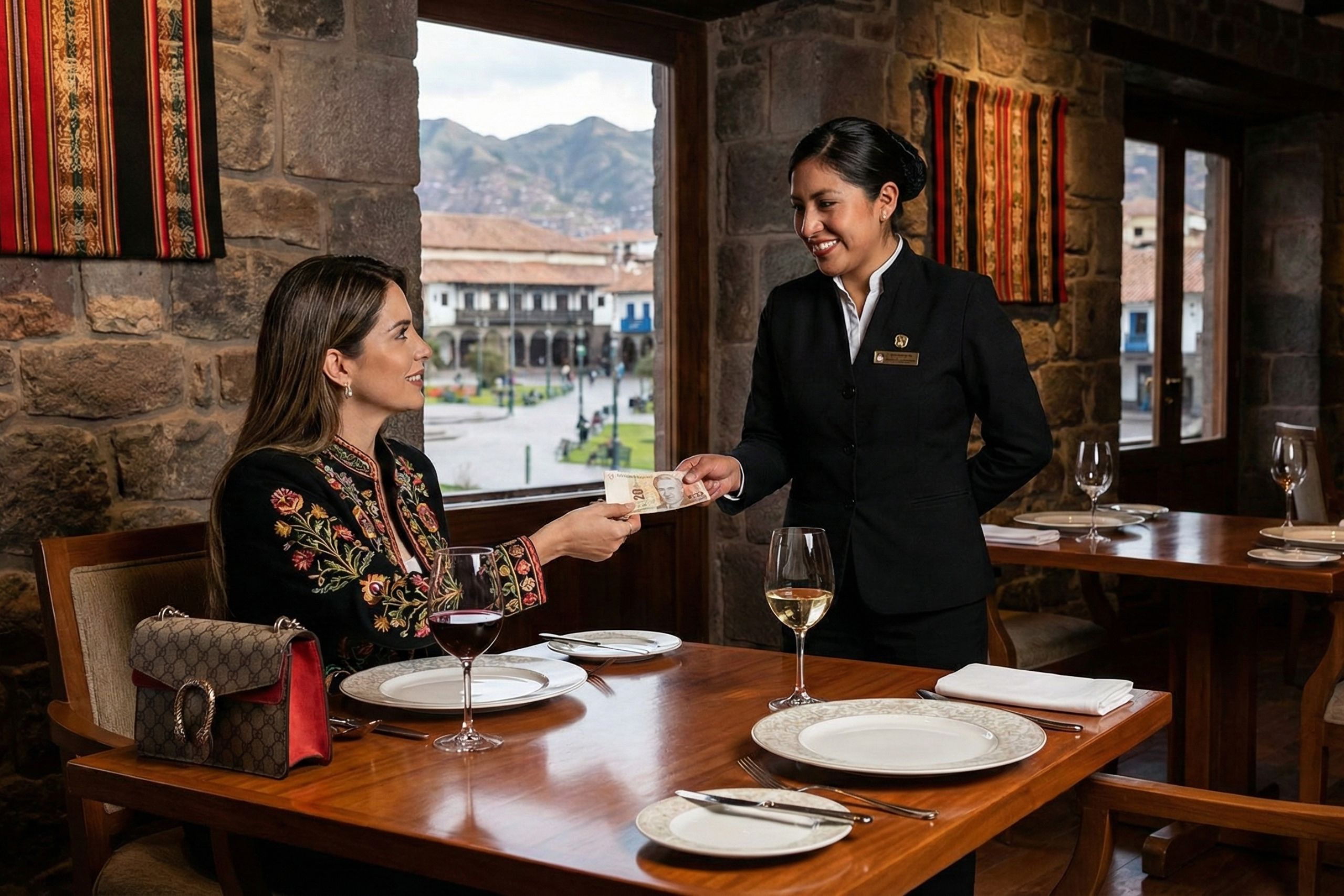
It is a common question that a lot of people face when visiting a new country. When asking for the check at a restaurant or stepping out of a taxi: How much should you tip?
In some countries, such as the United States, giving large tips for services is a common practice. It is completely normal to tip 15-20% in restaurants and slip your bellhop an extra $5 at a hotel in the States.
Meanwhile, in other countries such as Australia, giving large tips is not as common. For that reason, when you arrive in Peru, you might be at a loss regarding how much to tip your waiter, taxi driver or tour guides.
In Peru, the first thing you need to remember is that, like most countries, tipping is not mandatory, even though it is greatly appreciated.
However, if you are pleased with your service and would like to give a little extra, we have outlined Peruvian tipping culture below as a guide to help you during your time in this incredible country.
Key Takeaways: What Are the Golden Rules for Tipping in Peru?
- Restaurants: 5–10% in mid- to high-end restaurants if service is not already included. In simple eateries, leave a small amount in soles on the table.
- Guides & drivers: For private or small-group touring, consider tipping per person, per day: guides should receive US$7–15, and drivers US$3–7 (or the equivalent in soles), with adjustments based on the complexity of the service provided.
- Hotels: For upscale hotels and lodges, US$2–3 per room, per day for housekeeping, and US$1–2 per bag for porters, ideally in soles.
- Taxis: No formal tip; agree on the fare in advance and simply round up for polite, efficient service or help with luggage.
- Treks & cruises: On multi-day treks and luxury cruises, tipping is usually pooled. Expect guidance in your pre-departure documents; as a rule of thumb, US$45 per porter, US$60 per cook per trek, and US$20–30 per guest per cruise day for the shared crew kitty.
Why Does Tipping Matter in Peru?
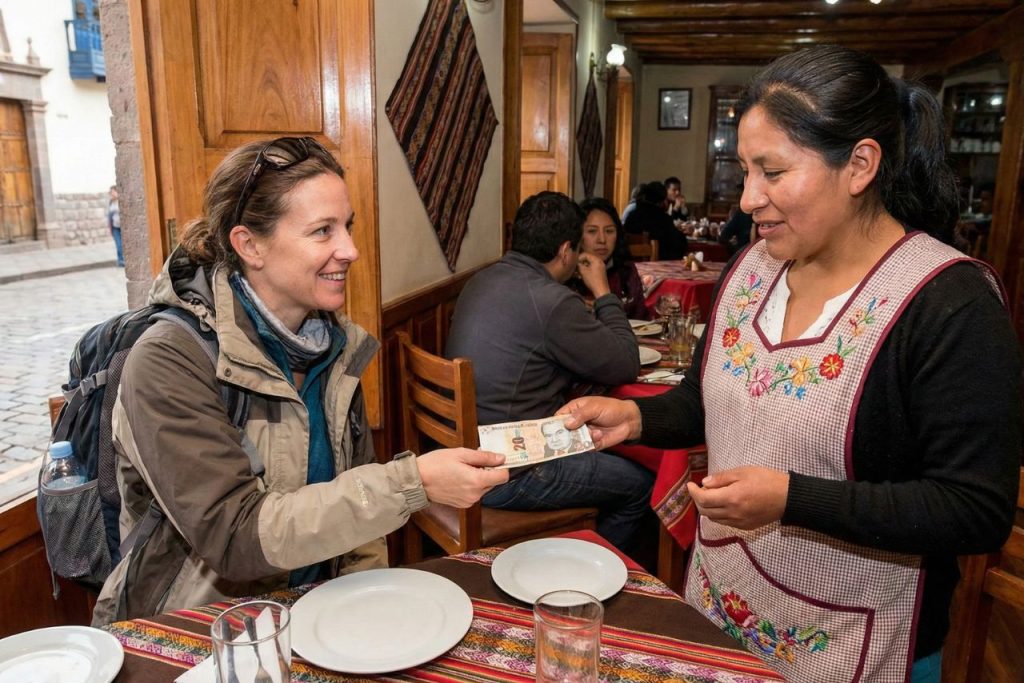
Why is tipping significant in the Peruvian context?
Tipping in Peru is more than a habit borrowed from other countries. It reflects how much of the tourism economy rests on the shoulders of people whose work you experience directly: the waiter who remembers your favourite pisco sour, the driver who knows every curve between Cusco and the Sacred Valley, and the porter who carries your overnight bag along ancient Inca paths.
Wages in the service sector are modest, and tips can turn an ordinary income into one that covers school fees, rent, and essentials with more ease. When you add a thoughtful gratuity, you acknowledge skill, patience, and care, which often go far beyond the basics of a job description.
For a luxury private travel company like Enigma, where each trip is carefully planned and unique, tipping is an act of respect: customers appreciate great service, employees feel appreciated and stay, and the knowledge and friendliness you encounter on each trip grow over time.
Do You Actually Need to Tip in Peru?
Is tipping in Peru mandatory or just appreciated?
Tipping in Peru is not mandatory. You will not offend anyone by declining to tip after poor service or if a situation feels uncomfortable.
However, for good to excellent service, a tip is customary and warmly appreciated in the main travel hubs (Lima, Cusco, Sacred Valley, Lake Titicaca, Amazon, Arequipa) and in luxury or upscale environments.
Tipping in Peru is:
- Voluntary, not enforced
- Service-based, not automatic
- Discreet, not ostentatious
When should you not feel obliged to tip?
- When a service charge is clearly added to your restaurant bill and service is only average.
- When someone demands a tip in a way that feels aggressive or transactional.
- When you have already tipped generously as part of a pooled envelope (e.g., trek teams, cruise crews).
How Much Should You Tip in Peru?
What are the core tipping benchmarks in Peru?
Below is a high-level view. Detailed tables for each category follow.
- Restaurants: 5–10% (check if a service charge – servicio – is already included).
- Bars & cafés: Round up or leave a small amount (S/5–10) for table service.
- Guides: US$7–10 per guest, per half day; US$10–15 per guest, per full day.
- Drivers: US$3–5 per guest, per half day; US$5–7 per guest, per full day.
- Hotel staff: US$2–3 per room, per day for housekeeping; US$1–2 per bag for porters.
- Treks: Around US$45 per porter and US$60 per cook for a standard 4-day trek (per trek, per staff member).
- Cruises: US$20–30 per guest, per day in the shared crew kitty.
Amounts are usually quoted in US dollars for clarity but are best given in Peruvian soles or as their approximate equivalent. Exchange rates shift, so your Travel Designer or hotel concierge can always update you with current guidance.
How Do You Tip at Peruvian Restaurants and Bars?

Do you tip in restaurants in Peru?
Yes, tipping in restaurants is common in the places you’re likely to visit as a traveler. The custom is gentler than in the US but more present than in many European countries.
Table: Suggested Tips for Restaurants & Bars
| Type of venue | When service is… | Suggested tip | Notes |
| Fine-dining / luxury restaurant | Good to excellent | 5–10% of total bill | Check if servicio (service) is already added. |
| Upscale casual restaurant | Good to excellent | 5–10% of total bill | If possible, leave the tip in cash even when paying by card. |
| Local bistro / café with table service | Friendly, attentive | S/5–15 or small 5–10% tip | Rounding up is fine for quick meals. |
| Counter-service café or bakery | N/A | Optional coins in tip jar | Not expected. |
| Bars / pisco bars | Great cocktails & service | S/5–10 per round or 5–10% | Especially for crafted drinks and table service. |
How do you know if service is already included?
On your bill, look for:
- “Servicio” or “servicio de mesa” – usually 10%.
- Sometimes this appears alongside tax (IGV).
If service is included and everything was smooth, you can simply sign and leave. If the service was truly exceptional, adding an extra (2–5% in cash) is a gracious way to say thank you.
How Do You Tip Guides and Tour Leaders?
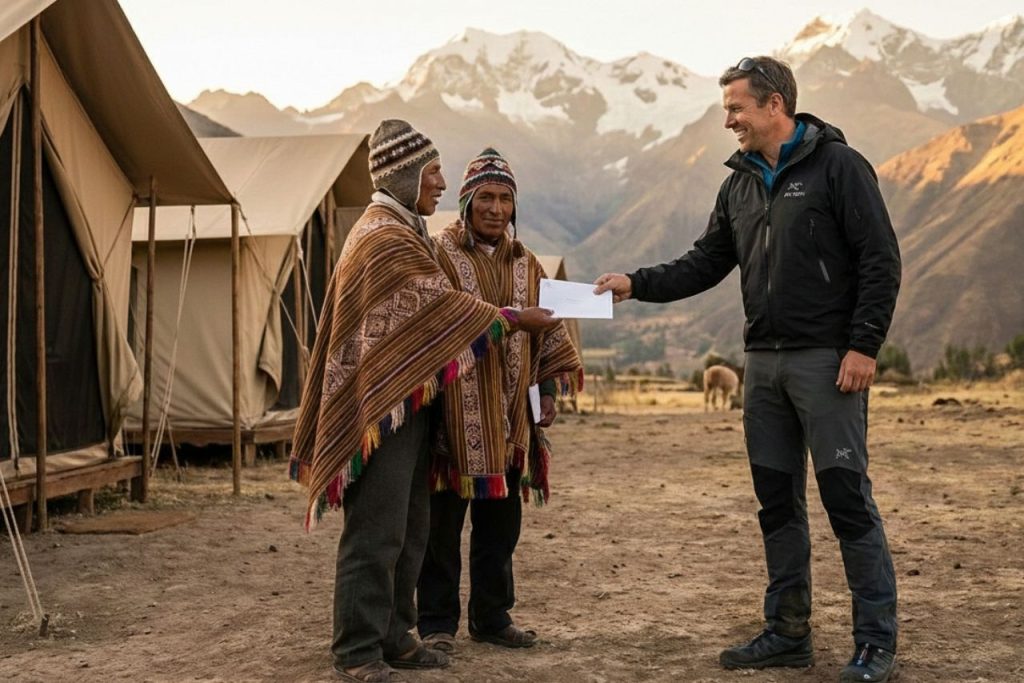
How much do you tip guides for day tours?
When you go on a private or small-group tour, like a full day in the Sacred Valley or a walking tour of Lima’s historic centre, tipping your guide is a direct way to show appreciation for their knowledge and stories.
Table: Suggested Tips for Guides
| Type of service | Typical duration | Suggested tip per guest | Notes |
| Half-day city or site tour | 3–4 hours | US$7–10 (or equivalent in soles) | Adjust for group size and depth of experience. |
| Full-day private touring | 6–8 hours | US$10–15 per day | This is to ensure smooth logistics and provide insightful guidance. |
| Specialist themed tour (art, food, history, photography) | Variable | US$15–20 per day | This reflects a higher level of expertise and preparation. |
| Full-day shared group tour | 6–8 hours | US$5–10 per day | Place the tip in a shared envelope or hand it over discreetly. |
How do you tip on multi-day treks?
On treks such as the Inca Trail or alternative routes, your support team, such as the guides, porters, and cooks, make remote comfort possible.
- Porters: Around US$45 per porter per trek (4 days), shared between the group.
- Cooks: Around US$60 per cook per trek (4 days), shared between the group.
- Lead guide: Often follows the day-tour guidance above, multiplied by trek length.
These amounts are usually pooled and handed over by the group spokesperson on the final evening, often during a short thank-you moment. Your trek briefing or pre-departure notes will normally outline the suggested ranges.
How Do You Tip Drivers and Transport Providers?
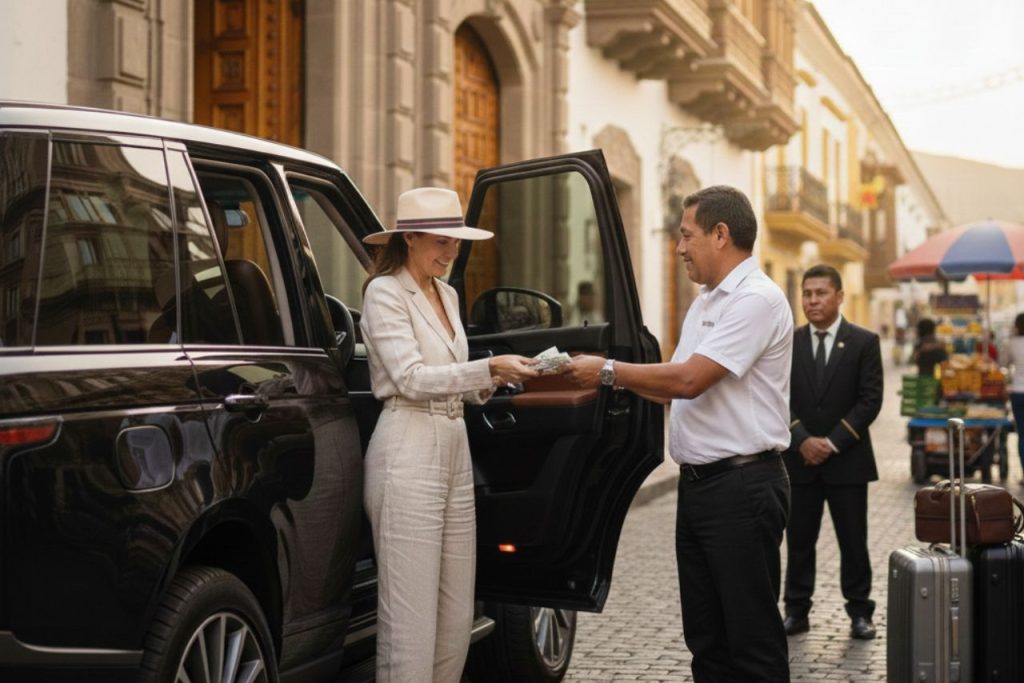
Do you tip private drivers in Peru?
Yes, tipping private drivers is customary when they provide safe driving, punctuality, assistance with luggage, or local insight.
Table: Suggested Tips for Drivers & Transport
| Type of service | Typical duration | Suggested tip per guest | Notes |
| Airport–hotel transfer (Lima, Cusco etc.) | 30–60 minutes | US$3–5 | For smooth arrivals or departures. |
| Half-day touring with driver | 3–4 hours | US$3–5 | Often separate from the guide’s tip. |
| Full-day touring with driver | 6–8 hours | US$5–7 | More if road conditions are challenging. |
| Long-distance transfers (e.g. Cusco–Sacred Valley, remote lodges) | 2–4+ hours | US$5–10 | Reflects time, skill, and road conditions. |
On luxury or expedition cruises, drivers are usually part of a larger operations team. In that scenario, they contribute to the collective crew fund instead of receiving individual tips.
How Do You Handle Tipping at Hotels and Lodges?

Who do you tip in a hotel, and how much?
At the level of beautifully curated hotels, trains and lodges that Enigma tends to work with, service is both detailed and very human. A small, well-placed tip can brighten someone’s day.
Table: Suggested Tips for Hotels & Lodges
| Role / service | Suggested tip | Notes |
| Housekeeping | US$2–3 per room, per night | Leave it in an envelope or on the bedside table with a note. |
| Bellhops / porters | US$1–2 per bag | Give directly when bags are delivered. |
| Concierge (after complex arrangements) | US$5–10 total or per stay | For restaurant reservations, special access, and complex logistics. |
| Spa therapists | 10–15% of treatment cost | If no service charge is added. |
| Butler or dedicated host | US$10–20 per night (per room) | At properties offering butler-style service, adjust to the level of attention. |
Some remote lodges, riverboats or luxury trains may suggest a single envelope tip per guest to be shared fairly among the whole team, including back-of-house staff you never see. This is both elegant and equitable.
Do You Tip Taxi Drivers and Local Transport?
Do you tip taxis in Lima, Cusco and other cities?
Traditional street taxis in Peru:
- Do not run on meters.
- Expect you to agree to the fare in advance.
- Do not expect a formal tip.
If the agreed fare is fair and the driver is courteous, helps with luggage or waits for you, rounding up is a gracious gesture.
Table: Suggested Tips for Taxis & Casual Transport
| Situation | Example fare | Suggested tip | Notes |
| Standard city ride (no luggage) | S/10–20 | Round up by S/1–2 or to the nearest 5. | Only for friendly, safe service. |
| City ride with luggage or brief wait | S/20–30 | Round up by S/3–5 | Especially for airport hotel runs. |
| Ride-hailing apps (where available) | Variable | Optional in-app tip (5–10%) | If you feel the service stood out. |
If a driver insists on an additional tip after you have already paid a fair negotiated rate, you can simply smile and decline.
Should You Tip in Soles or US Dollars?
Is it better to tip in local currency?
Whenever possible, tip in Peruvian soles (PEN). Local currency:
- Is easier for staff to use immediately.
- Saves them time and fees at money-exchange offices.
- Feels more considerate and thought-through.
It is common to use US dollars in the travel corridor. So, you can pay larger tips in US dollars, especially for treks and cruises.
When you do tip in dollars:
- Use clean, recent bills (no tears or marks).
- Avoid very small denominations for day-to-day tipping; soles are more practical.
For a full overview of ATMs, exchange counters and how to carry cash elegantly and safely, see our Peru money & currency guide. Pair it with our Peru packing list and first-time guide to Peru for a complete pre-travel picture.
Does Tipping Change Between Lima, Cusco and Remote Areas?
Do you tip differently in Lima vs. Cusco or the Sacred Valley?
The percentages and amounts for tipping are similar in Peru’s main visitor destinations, but the expectations may vary.
- Lima: In fine-dining restaurants and stylish bars, 10% is standard for good service when not already included.
- Cusco & Sacred Valley: Tipping guides, drivers and hotel staff is very common, as tourism is a key economic lifeline.
- Remote areas, Amazon, Colca Canyon: You may encounter pooled tipping systems, especially in lodges and on boats. Individual tips are still welcome but often complemented by a shared envelope.
If you are travelling with Enigma, your Travel Designer and on-the-ground concierge will quietly advise you on local norms for each stop on your journey, ensuring your gestures feel natural and appropriate.
How Do You Give a Tip Gracefully?
What is the most elegant way to hand over a tip?
A few simple guidelines keep the gesture refined:
- Use an envelope for larger amounts, especially pooled tips for trek teams or cruise crews.
- Hand tips discreetly, either to the person or at reception with clear instructions about whom it is for.
- Say thank you in Spanish, even a simple “muchas gracias” delivered warmly is as valuable as the amount itself.
- Avoid placing large notes on a table in a way that feels showy or transactional
Lastly, we suggest tipping in soles (the local currency) instead of US dollars, as it is more convenient for the receiver and saves them the hassle of having to change money.
Final Thoughts: How Can You Tip Gracefully in Peru?
Tipping is an intricate part of Peru’s culture and economy. As a visitor, you must know tipping etiquette to respect local customs and support the local economy.
Remember, tipping is more than just leaving a few coins on the table. It honors service industry workers. It is a way to say thanks and give back to the local community.
So, be sure to tip generously in Peru and do so with a smile.
Frequently Asked Questions About Tipping in Peru
There is no fixed percentage of trip cost. Many guests find that an overall tipping budget of US$10–25 per travel day, per guest, spread between restaurants, guides, drivers and hotel staff, is comfortable for generous yet thoughtful tipping. Multi-day treks or cruises will increase this slightly.
Locals do tip, but usually more modestly and selectively, especially in everyday eateries and taxis. In the travel corridor, staff are used to an international mix of guests, so a 5–10% restaurant tip and day-rate for guides feel natural, not excessive.
If the bill already includes a 10% service charge and the service was good, you can sign and leave. If the evening was truly special – perfect wine recommendations, thoughtful pacing, attentive care – adding a small extra tip in cash (2–5%) is a sophisticated way to acknowledge that.
“Free” walking tours in Peru operate on a tip-only model. If you enjoyed the experience, a tip of US$5–10 per person is considered fair, more if the tour ran long or the guide had exceptional insight.
Both are recognised, but heels are more practical for everyday tipping. Reserve US dollars for:
– Larger pooled tips (treks, cruises).
– Higher-end hotel envelopes at the end of a stay.
For everything else, such as taxis, cafés, and casual restaurants, soles feel easier and more natural.
It is not rude to refrain from tipping for poor service or when someone is inappropriately pushy. For neutral or acceptable service, rounding up slightly is polite. For genuine warmth, care and professionalism, a tip is a gracious way to say that you noticed.
Some restaurants and hotels can add tips to your card slip; many smaller businesses cannot. When it’s possible, it’s best to give a cash tip in soles because the staff gets it faster and doesn’t have to wait for processing.
Guides, drivers, and hotel staff often make extra efforts with younger guests or older family members. If you want to say thank you with a little more care than usual, like arranging quieter tables, changing the timing, or planning gentle alternatives, that’s a nice way to do it.
Article Updated: December 2, 2025
Experience Peru like never before. Contact us at journeys@enigmaperu.com to design your tailor-made itinerary.