You have probably heard about the grandeur of the Inca Empire. Have you ever explored the festivals that once defined it? Inti Raymi, also known as the Festival of the Sun, remains one of the most fascinating of these traditions.
Inti Raymi is a traditional Inca festival that honors the sun god, Inti. It takes its name from him. This celebration is held every year on June 24, coinciding with the winter solstice in the Southern Hemisphere. It marks the start of a new agricultural cycle in the Andean calendar. The festival carries visitors back through centuries of Inca tradition, with music, dance, and historical reenactment at its center.
During this time, the city of Cusco becomes a living museum. Streets and plazas fill with color, processions, and ceremony. The energy is contagious, and the air carries genuine respect for the rituals about to unfold.
This guide moves through the history of Inti Raymi. It looks at what the festival meant to the Inca and how it is celebrated today. It also covers the festival’s impact on local communities and what makes it worth experiencing firsthand.
Key Takeaways: Inti Raymi, The Festival of the Incas
- Inti Raymi was established by the Inca ruler Pachacutec in the 1430s and remains Peru’s most important traditional festival.
- The festival was banned in 1572 and survived in secret until its public revival in 1944.
- Today’s reenactment involves more than eight hundred performers across three historic sites in Cusco.
- Inti Raymi was declared a Cultural Patrimony of the Nation in 2001.
- Booking accommodation early and arriving prepared for sun, altitude, and crowds makes for the best experience.
The History of Inti Raymi

The Inca ruler Pachacutec established Inti Raymi in the 1430s. This was during the height of the empire’s expansion across the Andes. The name means Festival of the Sun in Quechua. It quickly became the most important ceremony on the Inca calendar.
The Inca believed Inti was the supreme deity, responsible for light, warmth, and the fertility of the land. Inti Raymi was the moment to give thanks for the past harvest. It was also a chance to ask for the sun’s continued protection. In Inca times, the celebration lasted around fifteen days. As many as fifty thousand people traveled to Cusco from across the empire to take part.
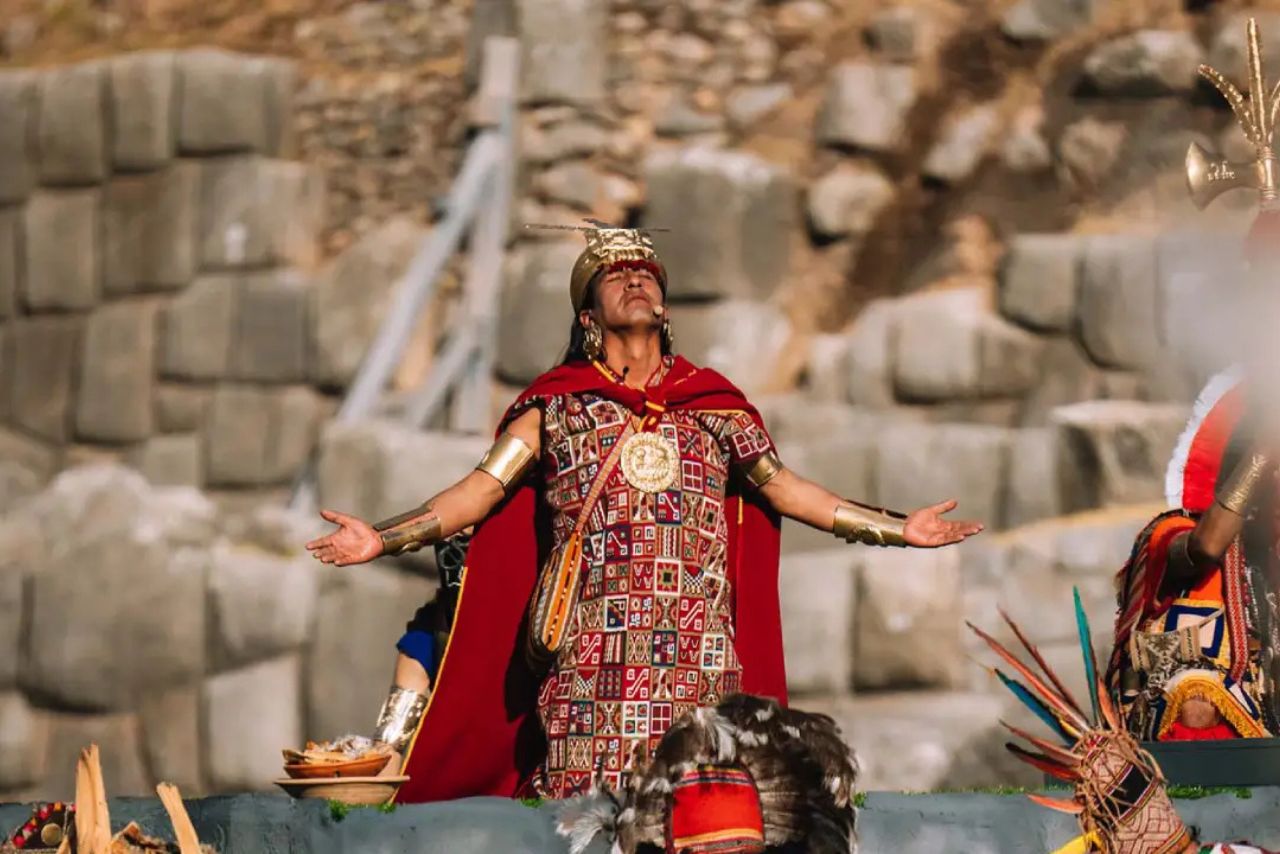
The ceremony was led by the Sapa Inca, the Inca emperor, alongside high priests and nobles. At the Coricancha, the Temple of the Sun, offerings and prayers honored Inti directly. The Sapa Inca then addressed the gathered crowd in Cusco’s main square. Processions, dances, and theatrical retellings of Inca myth filled the days that followed.
Animal sacrifice played a role in these ceremonies as well. Llamas were offered to the sun god in gratitude. The Inca believed this practice helped secure a prosperous year ahead.
In 1572, the Spanish viceroy Francisco de Toledo banned Inti Raymi. He viewed it as a pagan rite incompatible with Catholic doctrine. The festival survived in secret in the centuries that followed, kept alive quietly within Andean communities. In 1944, the Cusco writer and actor Faustino Espinoza Navarro led its public revival. He drew on colonial chronicles and archaeological research to reconstruct the ceremony. Cusco has staged Inti Raymi as a public reenactment every year since.
In 2001, Peru formally declared Inti Raymi a Cultural Patrimony of the Nation. Today it draws both Peruvian and international visitors. It stands as one of the country’s most significant cultural events.
The significance of the Festival in Inca culture
For the Inca, Inti Raymi carried far more weight than a simple celebration. It was a religious and political event woven into the structure of empire itself. The festival gave thanks to Inti, the deity the Inca credited with their harvests and their prosperity.
Because it coincided with the winter solstice, Inti Raymi also marked the beginning of the Inca calendar year. The Sapa Inca used the occasion to reaffirm his connection to the sun. It was also a moment to assert his authority over the empire’s four regions.
That significance has not faded. For many communities across the Andes today, Inti Raymi remains a meaningful link to ancestors. It offers a chance to celebrate a shared history, culture, and identity.
How Inti Raymi is celebrated today

Modern Inti Raymi blends careful historical reconstruction with the energy of a major public event. More than eight hundred performers take part, dressed in Inca-era costume. Dances, processions, and dramatic reenactments unfold across three central sites. The Coricancha, the Plaza de Armas, and the fortress of Sacsayhuamán each play their part.
Celebrations begin roughly a week before June 24. Nightly shows and parades build anticipation across the city. On the day itself, the full reenactment runs for several hours. It moves between its three stages before a finale at Sacsayhuamán. Afterward, the celebration spills back into the streets, continuing well into the night.
The impact of Inti Raymi on local communities

Inti Raymi carries real economic weight for Cusco. The festival draws large numbers of visitors each June. Hotels, restaurants, artisans, and performers throughout the region all benefit.
Just as importantly, the festival brings Cusco’s own residents together. Locals gather to celebrate a shared history. The event reinforces a sense of pride and identity rooted in centuries of Andean tradition.
Inti Raymi also plays a quiet but vital role in cultural preservation. Each year’s reenactment passes Inca-era language, costume, and ritual to a new generation. It keeps traditions alive that might otherwise fade. The setting deepens this effect. The festival unfolds in and around Cusco, the Inca Empire’s former capital. The grand finale stages against the dramatic backdrop of Sacsayhuamán and the surrounding Andes.
How to experience the Festival of the Incas: Travel Tips
A few practical notes make all the difference for anyone planning to attend. Book accommodation in Cusco well in advance, since hotels fill quickly in the weeks around June 24. Pack for shifting weather too. Temperatures can swing significantly between sun and shade at this altitude.
Arrive early on the day itself to secure a good vantage point near the main ceremony sites. Sunscreen, a hat, and plenty of water are essential, since the event runs for hours outdoors.
Inti Raymi extends well beyond the central ceremony. Parades, street performances, and smaller cultural events take place across Cusco throughout the week. Exploring these extra moments rounds out a much fuller picture of the festival.
Inti Raymi remains a deeply held religious and cultural event for the people who celebrate it. Visitors should treat sacred sites and customs with genuine respect. Following any guidance from event organizers matters too. Staying mindful of how much this festival means to the local community is just as important. As with any large public gathering, ordinary caution with belongings and surroundings is worthwhile as well.
Witness Inti Raymi for Yourself
Few events capture the spirit of the Andes as fully as Inti Raymi does. For travelers in Cusco around June 24, witnessing this festival in person offers a rare window into living Inca heritage. The same is true of the Qoyllur Rit’i pilgrimage, held earlier in the year in the Sinakara Valley.
For travelers who want this experience built into a private itinerary, Enigma’s Cusco and Sacred Valley journeys can help. These trips can be timed around Inti Raymi. Our travel designers bring the kind of expertise that turns a single festival day into something far more memorable.
Begin Planning Your Cusco and Sacred Valley Journey
Every journey designed around Inti Raymi begins with a conversation about who you are and what you are looking for. If you are ready to start planning a private journey, our team of travel designers is here to listen. Together we will build something through Cusco, the Sacred Valley, and Machu Picchu that is genuinely yours.
Post Updated: June 22, 2026.