Pisco is Peru’s pride in a glass, crafted from our valleys, carried by tradition, and poured with unmistakable heritage.
Pisco is to Peru what tequila is to Mexico, whisky is to Scotland, and vodka is to Russia: a spirit that carries the imprint of its homeland. Clear, aromatic, and precise, it is both a cultural emblem and a craft tradition, shaped by sunlit valleys, careful grape selection, and a production method that favors integrity over intervention.
Unlike many spirits defined by aging or blending, pisco expresses itself through purity. The focus is the grape, the fermentation, and a single distillation that preserves character rather than smoothing it away. From the coastal vineyards where the fruit ripens to the bodegas where it is distilled and rested, pisco reveals a distinctly Peruvian approach to excellence: patient, exacting, and quietly confident.
A Spirit Rooted in Peru’s Coastal Valleys
Photo: Wikimedia
Pisco’s identity begins with geography. Peru’s coastal desert might seem an unlikely birthplace for a grape spirit, but it is precisely this environment, such as bright days, low humidity, and pronounced temperature shifts, that helps grapes develop concentration and clarity. Nowhere is this more evident than in and around the Ica region, where vineyards stretch across a landscape defined by light and open space.
These valleys give pisco its signature structure. The fruit ripens under generous sun, and the resulting wines, made specifically for distillation, carry a direct sense of place. In the best expressions, there is an immediacy to pisco: a clean, lifted aroma, a satin-like texture, and a finish that feels composed rather than aggressive.
Peru’s relationship with pisco is also cultural. The spirit is present at family tables and formal celebrations alike. It belongs to the country’s everyday life as much as it does to its finest bars and dining rooms. That wide embrace has helped preserve standards and protect tradition, keeping pisco anchored to origin rather than trend.
Grapes, Styles, and the Character of the Blend
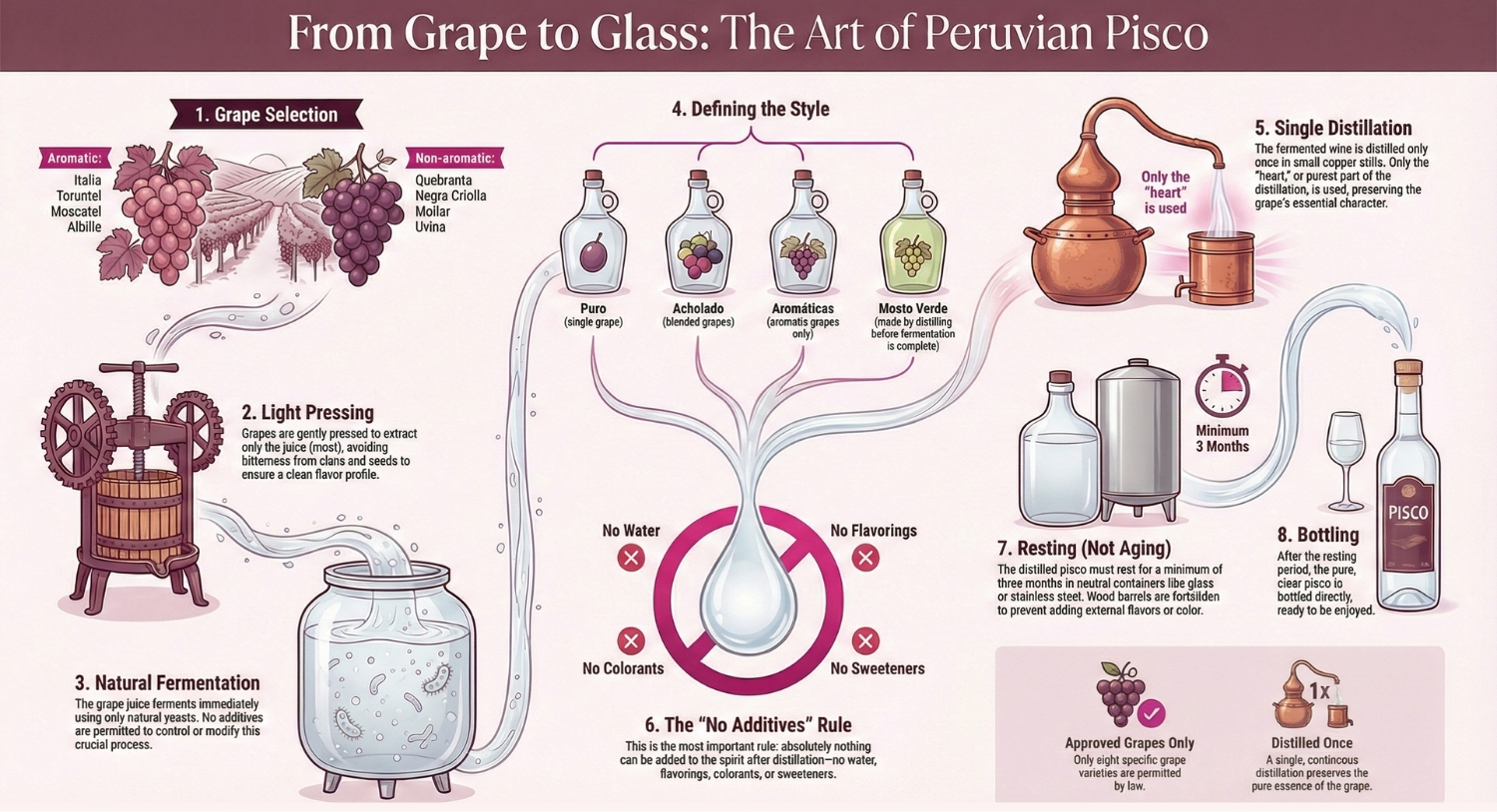
Pisco is not a single flavor profile. Its diversity begins in the vineyard, where approved grape varieties fall broadly into aromatic and non-aromatic categories. Each brings a distinct personality, some floral and expressive, others structured and dry, with a more restrained aromatic profile. Producers select grapes with intent, often guided by family practice, local conditions, and the style of pisco they aim to create.
Three principal styles shape the way pisco is understood and enjoyed. Puro is made from a single grape variety, offering a focused expression with a character that remains consistent from aroma to finish. Acholado blends multiple grape varieties, built for complexity and balance, often prized for its layered aromatics and broader palate. Mosto verde, distilled from partially fermented grape juice, is the most labor-intensive style, requiring greater quantities of grapes and yielding a spirit with notable roundness and depth.
These categories are not about hierarchy; they are about intention. A puro might suit a neat pour and a contemplative pace. An acholado may lend itself beautifully to cocktails, where its complexity remains present even when paired with citrus or bitters. Mosto verde offers richness and softness that many consider particularly elegant, especially when served neat.
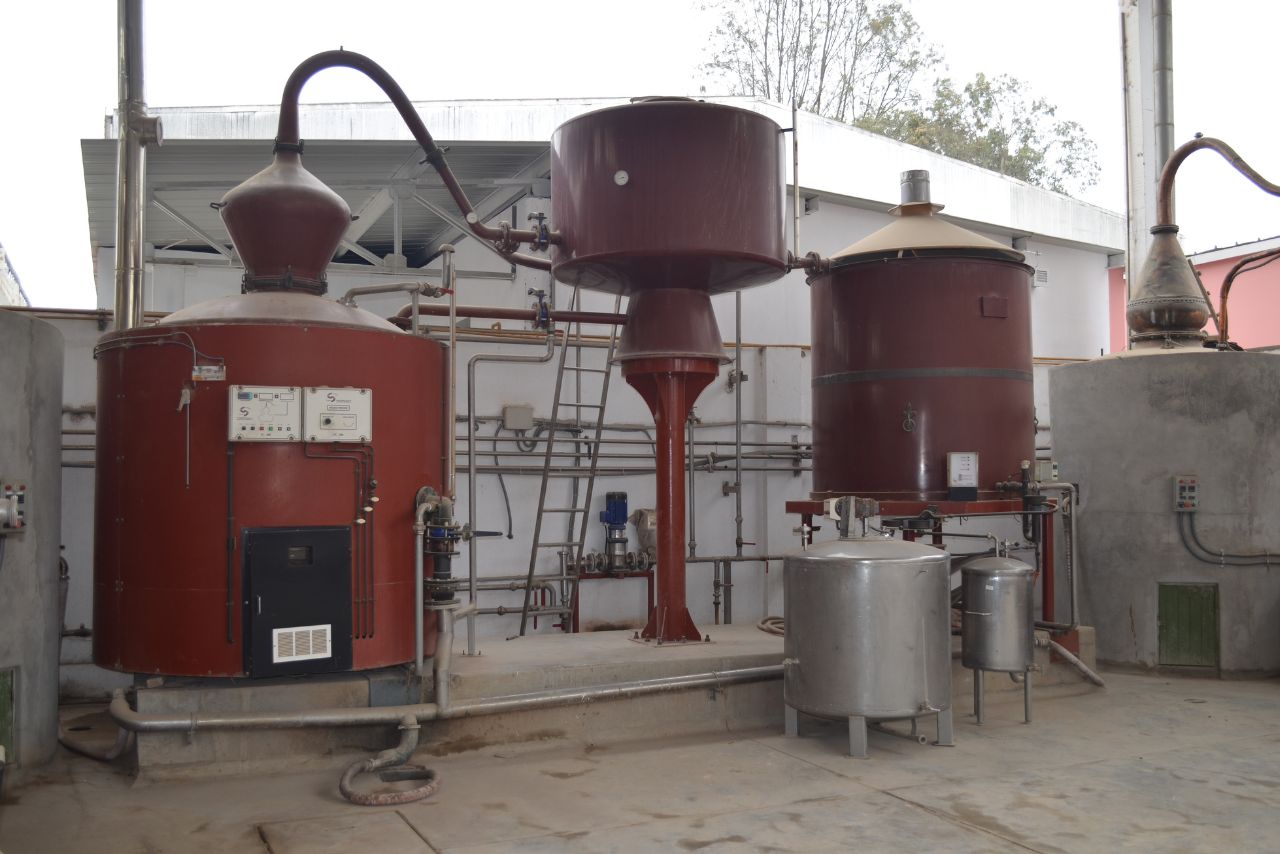
Pisco’s production is defined by restraint. The process begins with fermentation and designed to honor the grape rather than overpower it. The resulting wine is then distilled, typically in copper stills, in a method that values precision over volume.
What distinguishes pisco from many global spirits is what is not done. The distillate is produced with clarity in mind, and it is not altered through barrel aging, artificial flavoring, or heavy-handed manipulation. The goal is to preserve the grape’s identity, not to replace it with oak or sweetness.
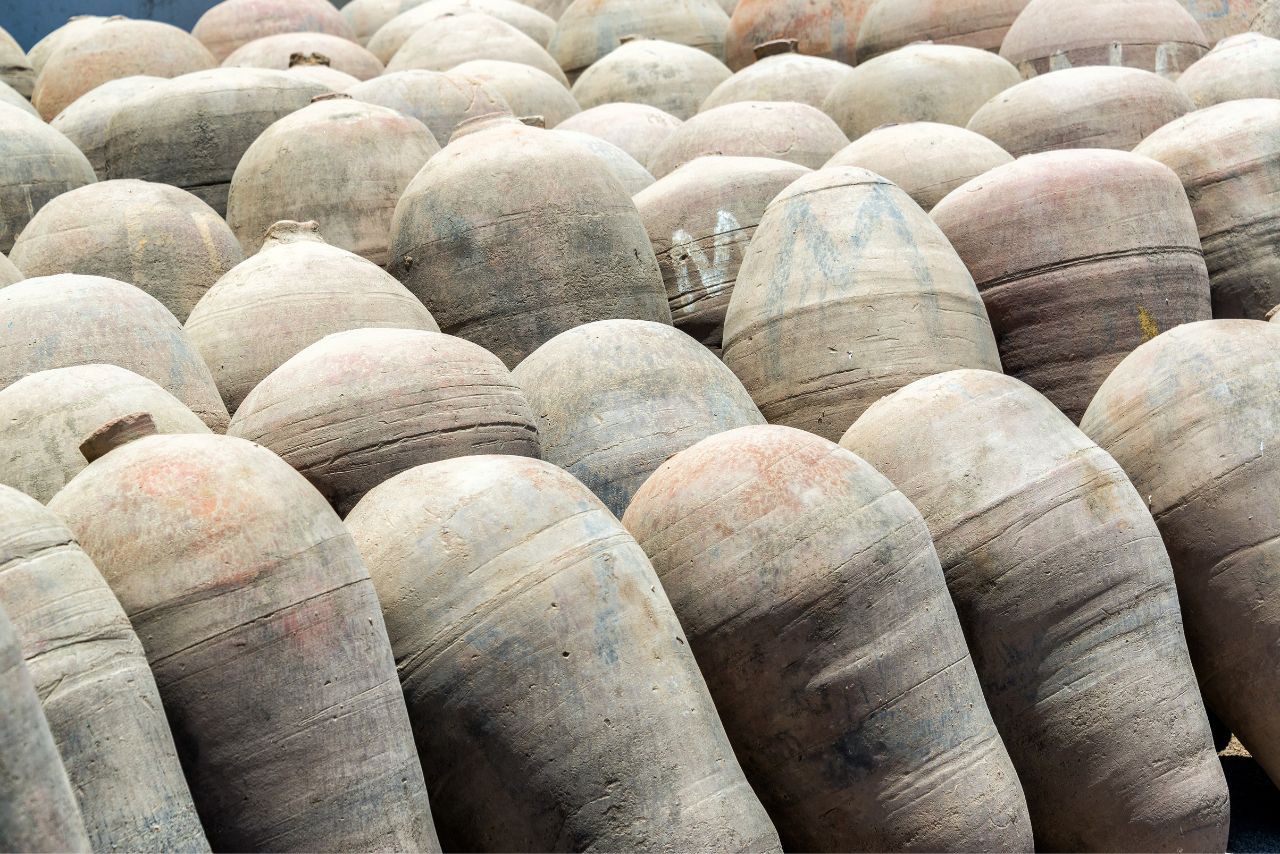
After distillation, pisco is rested in neutral containers, such as glass, stainless steel, or other inert materials, allowing the spirit to settle and harmonize. This resting period supports balance, smoothing any sharp edges without stripping away character. The result is a spirit that feels polished through process, not through embellishment.
This approach reflects a broader Peruvian sensibility: allow the raw materials to speak, guide them with skill, and avoid unnecessary interference. In pisco, the craft is evident not because it is announced, but because it is disciplined.
Bodegas, Heritage, and the Culture of Craft
To step into a pisco bodega is to see tradition functioning in real time. Many are family-owned, shaped by generations of continuity rather than rapid reinvention. Vineyards often sit nearby, and production spaces carry the practical elegance of places made for work: well-kept equipment, measured routines, and an emphasis on consistency.
Bodega culture is as much about knowledge as it is about production. Decisions around harvest timing, fermentation management, and distillation cuts are the result of experience refined over decades. Even when modern techniques are introduced, they typically serve the same purpose: to protect quality, preserve grape character, and maintain the integrity of the spirit.
For travelers, this side of Peru offers a deeper kind of access. It is not a performance. It is a living craft, rooted in agriculture and guided by a sense of responsibility to tradition. Tastings become more meaningful when paired with context, when you see how sunlight, soil, grape selection, and careful distillation come together in the glass.
In that setting, pisco reads as more than a drink. It becomes a story of place, people, and a national standard built on pride and consistency.
The Ritual of Drinking: Neat, Acholado, and the Pisco Sour
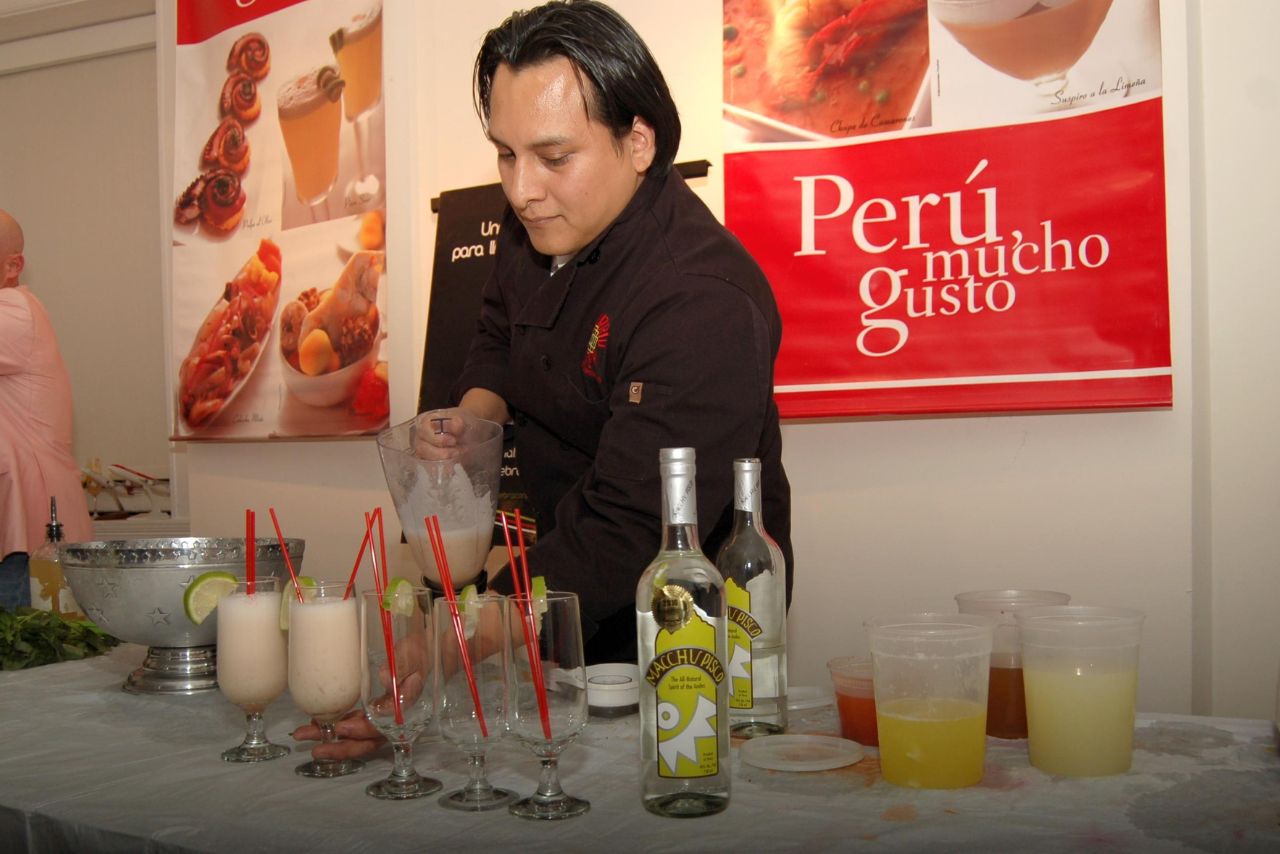
Pisco is often introduced through cocktails, and for good reason. The Pisco Sour has become a symbol of Peru’s modern culinary identity: balanced, bright, and quietly celebratory. Yet the cocktail’s popularity sometimes obscures the broader ritual of drinking pisco: neat pours, tasting flights, and careful comparisons across styles and grape varieties.
Served neat, pisco invites attention. Its aromas can be floral or fruit-forward, sometimes carrying notes of citrus peel, stone fruit, or soft spice depending on the grapes and production method. The palate tends to be clean and structured, with a texture that can range from crisp to rounded. It is a spirit that rewards slow drinking, not because it demands reverence, but because it offers nuance.
Acholado styles, in particular, can be compelling in both neat tastings and cocktails. Their blended complexity creates a fuller aromatic range, while still retaining the clarity that defines pisco at its best. Mosto verde, with its richer mouthfeel, often shines neat, where its softness and depth can be fully appreciated.
Beyond the Pisco Sour, Peru’s cocktail culture continues to expand, still rooted in balance and ingredient quality. Citrus, bitters, herbs, and seasonal fruits appear frequently, but the best expressions remain disciplined: pisco stays central, not disguised.
Experiencing Pisco in Peru
Photo: Wikimedia
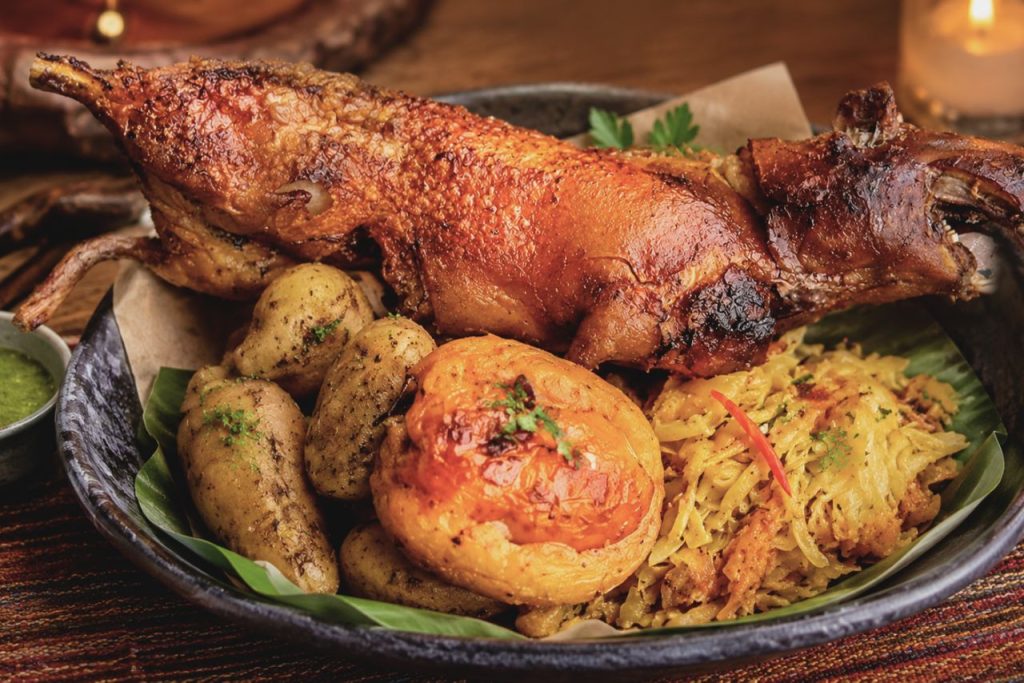
To experience pisco in Peru is to encounter the country through one of its most enduring crafts. A well-designed visit might include time in the vineyard, a look at distillation practices, and a guided tasting that highlights the differences between puro, acholado, and mosto verde. For those who appreciate gastronomy, pairing pisco tastings with regional dishes adds another layer, revealing how the spirit complements coastal flavors as naturally as it does Andean ingredients.
The most memorable pisco experiences tend to be those that are unhurried. A quiet tasting in a bodega, a conversation with a producer, a cocktail class that focuses on technique rather than showmanship, these moments offer an authentic view of Peru’s relationship with its national spirit.
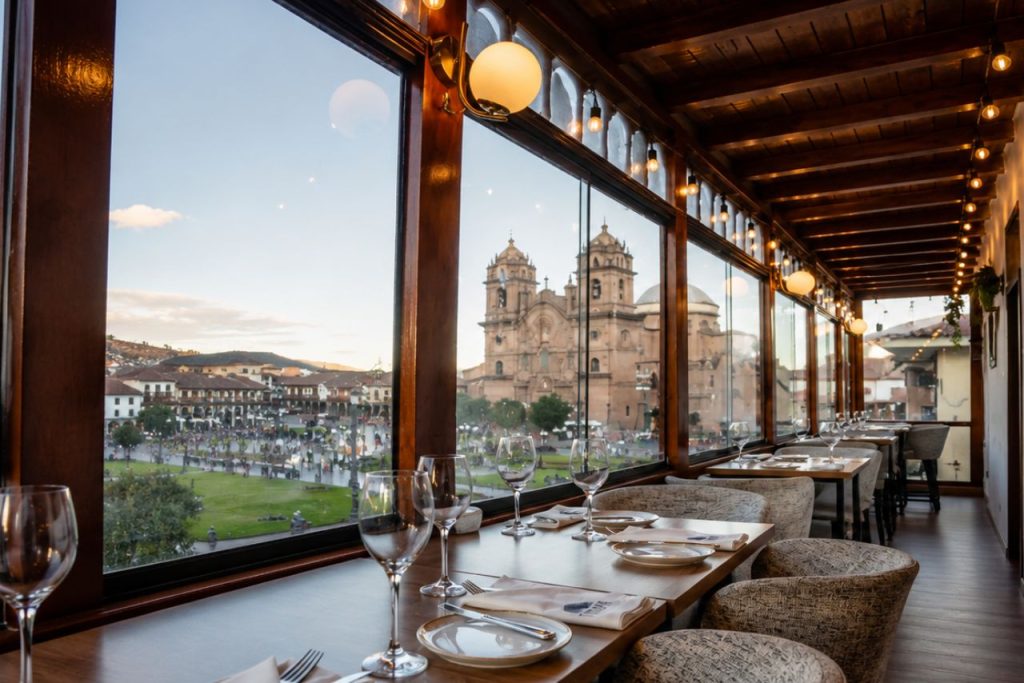
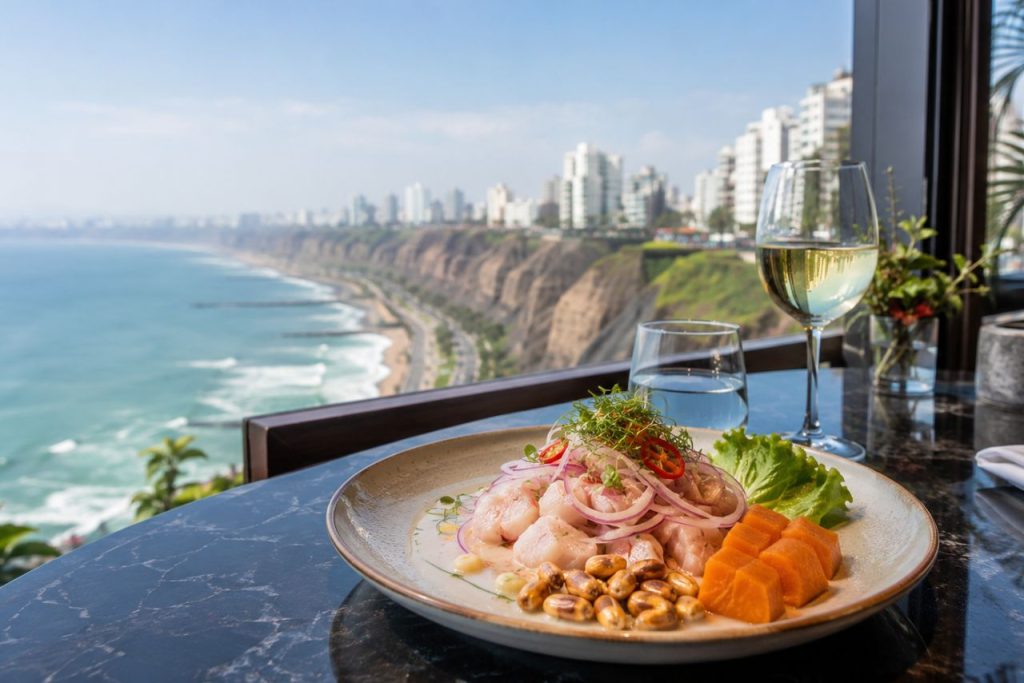
Pisco also complements Peru’s broader travel narrative. It fits within Lima’s culinary scene, pairs naturally with coastal journeys, and adds depth to itineraries that move through the south. It is a cultural thread that connects regions and experiences, offering travelers a taste of Peru that feels both immediate and deeply rooted.
In the end, pisco endures because it embodies a particular kind of excellence: clear, deliberate, and grounded in place. It does not need embellishment to feel special. Its craft is present in the details, such as grape choice, fermentation, a single distillation, and careful rest. To taste it is to meet Peru in a distilled form: confident, layered, and unmistakably its own.