For whale-watchers from around the world, Peru is the place to visit!

In the north of Peru, in the waters not far off from the pristine white-sand beaches of Tumbes and Piura, occurs every year one of the most incredible encounters. Starting mid-July and ending in late October is whale-watching season along Peru’s northern beaches.
The humpback whale (Megaptera novaeangliae), known in Spanish as Ballena jorobada, is one of the largest species of baleen whale. The adults can grow in length up to 12-16 meters (39-52 feet) and can weigh approximately 36,000 kilograms (79,000 pounds), with females typically being larger than males. The whale is recognizable by its distinctive body shape as it has unusually long pectoral fins and a knobby head. The whale’s body is a typically a dark grey color, with patches of white along its underside. Those patches of white are so unique to each whale that they can be used to identify individuals – almost like fingerprints.

Humpback whales, like all baleen whales, are seasonal feeders that feast on tiny crustaceans (krill) in the water, as well as plankton and other small fish. The whales have 14-35 grooves along their throats that run from the chin to the navel. These grooves help the animals to feed. During filter feeding they allow the throat to expand and take in huge amounts of water. Humpbacks live and travel in pods and have developed cooperative hunting methods to catch their prey. The hunting members of a pod will swim in a spiral while blowing a wall of bubbles to trap their prey before eating a large, hearty meal.
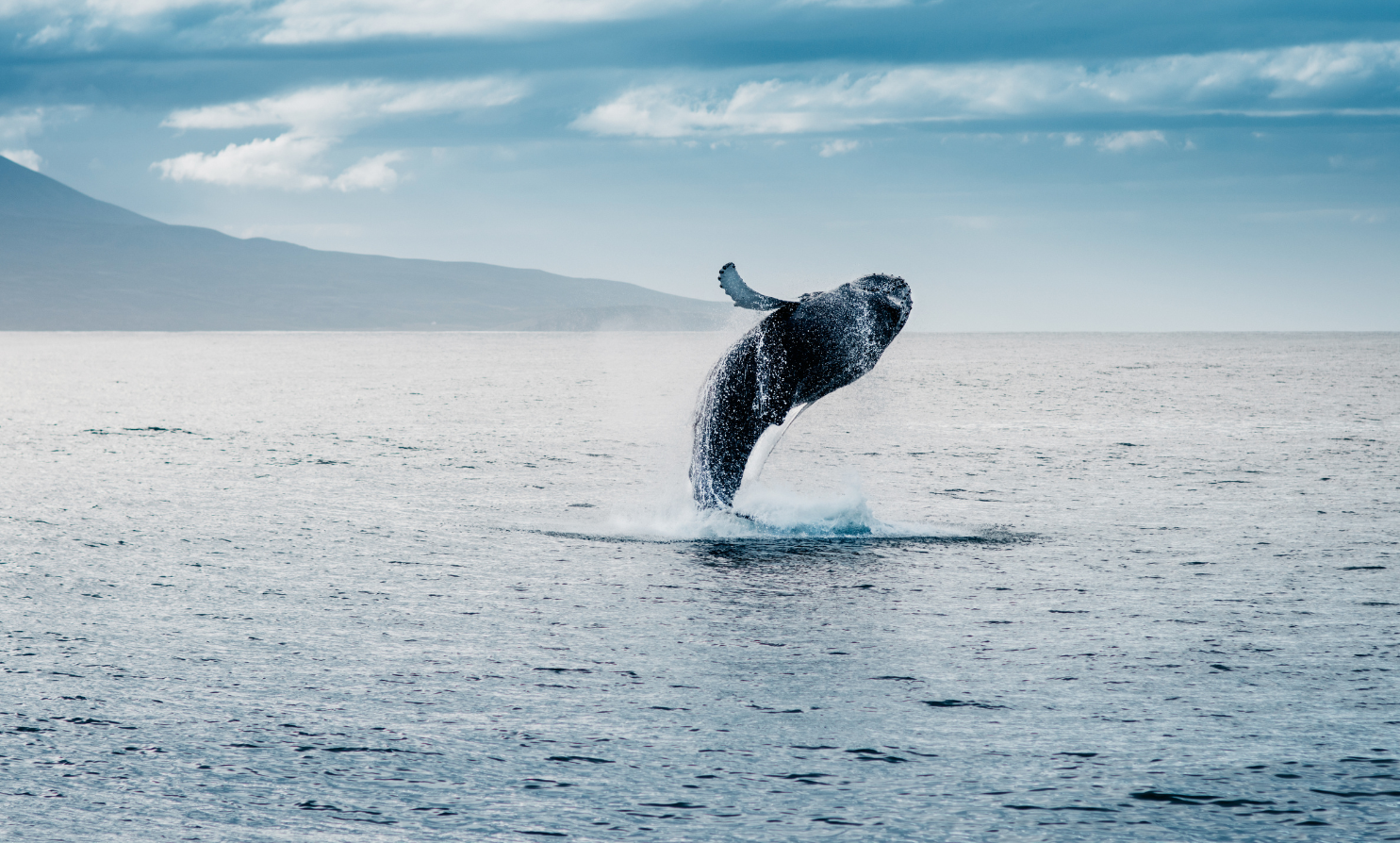
Humpback whales are known for two distinct character traits: their hauntingly beautiful songs and their habit of breaching. The songs are believed to be a way for males to communicate to females that they are ready to mate. When the whales leap out of the water, a behavior called “breaching,” no one is sure exactly why they exhibit this behavior – it could be that they are trying to dislodge bothersome parasites from their skin. In any case, the breaching behavior of humpbacks has made them a favorite among whale-watchers around the world.

During the period between July and October, more than 1,000 humpback whales visit the coasts of Peru and Ecuador, coming from the frigid waters of Antarctica and traveling hundreds of miles. It is believed that the whales visit this region to give birth and mate in the warm waters. When the whales arrive, visitors to Peru’s northern shores have an excellent opportunity to view one of nature’s most majestic creatures.
While it’s not uncommon to spot the whales from the shore, your best chance of seeing them is by taking a boat ride into deeper waters. There you have approximately an 80% chance of seeing these massive animals surface – or maybe even breach!
But besides the whales, when you take a trip for example to Piura or Tumbes, you have the opportunity to see other exciting marine life and birds, such as dolphins, sea lions and the Peruvian booby. If you’re interested in traveling to Peru during whale-watching season, don’t hesitate to contact Enigma. We’re experts in travel and everything “Peru,” so we’d be happy to give you advice and help you plan your trip!