Peru is not an easy place to visit lightly.
Its landscapes shift from coastal desert to high Andean plateau to dense Amazonian canopy within a few hours. The Peruvian communities speak dozens of languages. Its heritage runs uninterrupted from ancient civilization to living tradition.
All of this demands something from the traveler in return.
Sustainable tourism in Peru is not a niche concern reserved for the environmentally committed. It is the only framework that keeps the country’s most extraordinary qualities intact for the people who live there and the travelers who follow.
The choices made before, during, and after a journey determine whether that journey adds something to Peru or quietly takes from it.
This is a guide to what conscious travel actually means on the ground, how to identify the operators who practice it sincerely, and what questions to ask before you book.
Key Takeaways: Sustainable Tourism in Peru
- Sustainable tourism in Peru means protecting culture, community, and landscape in equal measure.
- Peru is home to some of the world’s most ecologically and culturally sensitive destinations.
- Choosing the right travel partner is one of the most important decisions a conscious traveler makes.
- Community benefit, not just carbon offset, is the real measure of responsible travel.
- Certifications such as B Corp signal genuine accountability across an entire operation.
- How you travel through Peru matters as much as where you go.
What Sustainable Tourism in Peru Actually Means
Sustainability in the context of Peru is best understood as a commitment to four interconnected areas: responsible operations, social commitment, environmental respect, and the conservation of cultural heritage.
They describe daily decisions made by operators, guides, hotels, and travelers that either support or erode the country’s delicate equilibrium.
Responsible Operations
Responsible operations cover how a company runs itself. Are staff fairly paid and formally trained? Are supply chain partners vetted against meaningful standards? Is the company transparent about its environmental footprint?
These are not glamorous questions. But they define whether a business is genuinely sustainable or simply marketing itself as one.
Social Commitment
Social commitment is often the most visible dimension for travelers. It describes how tourism revenue flows back into the communities that make Peru’s extraordinary experiences possible.
The principle is straightforward: rather than benefiting from communities, a responsible operator benefits with them. That means training local guides, supporting local artisans, and funding education and health initiatives in the regions where travel takes place.
Environmental Respect
Environmental respect means operating in ways that protect Peru’s exceptional biodiversity. The country is one of the world’s seventeen megadiverse nations, and its Andean ecosystems support species found nowhere else.
Every trek, every lodge stay, every river journey carries an environmental consequence. The best operators account for those consequences in their planning and their conduct.
Conservation Of Cultural Heritage
Conservation of cultural heritage addresses Peru’s most layered responsibility. It protects not just monuments and archaeological sites, but also living traditions, indigenous knowledge, and the communities who are their custodians.
A journey designed with this in mind seeks to preserve and celebrate these traditions and not package them as spectacle.
READ ALSO: Conscious Travel in Enigma Peru
“Rather than just giving something back, we believe in not taking away from in the first place.” This is the governing principle of responsible travel in Peru, and it asks something more demanding than a donation or a carbon offset.
Why Peru Demands a More Thoughtful Approach
Few destinations concentrate so much ecological and cultural significance into a single landscape.
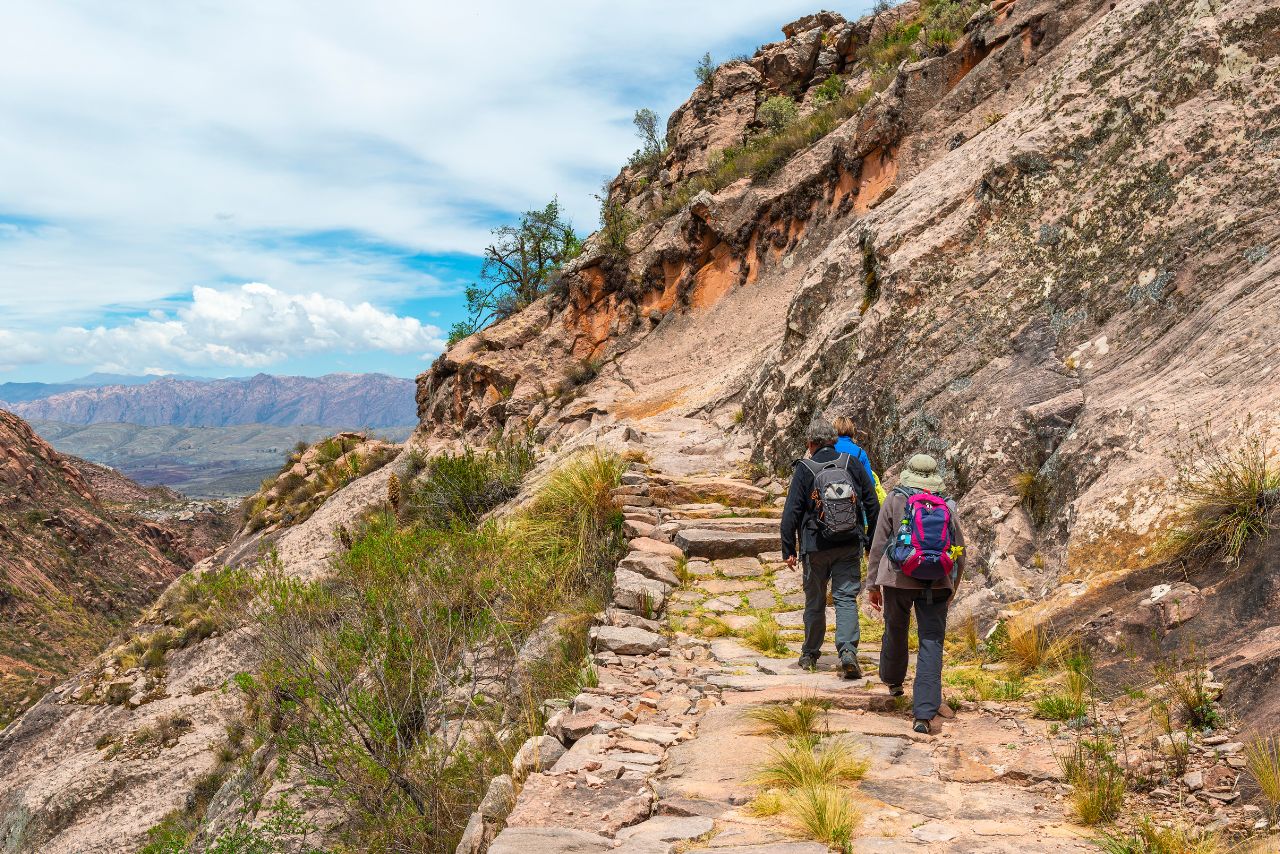
The Inca Trail passes through cloud forest and high-altitude grassland before arriving at a citadel that has stood for six centuries. The Amazon basin in the south holds the highest concentration of bird species on earth. Lake Titicaca sits at over 3,800 meters above sea level and has been continuously inhabited for millennia.
These environments are not robust.
The archaeological sites of the Cusco region have been shaped by centuries of careful stewardship. The community life of the Sacred Valley is inseparable from the land. The wildlife of the Peruvian Amazon depends on ecosystems that are extraordinarily sensitive to disturbance.
Overtourism, extractive practices, and poor operator standards all carry real consequences here.
Peru has taken meaningful steps at a national level. In 2021, Machu Picchu became one of the first destinations in the world to achieve carbon-neutral certification. Several Peruvian destinations have been recognized in the Top 100 Green Destinations rankings.
These are significant achievements. They also make clear that Peru’s most celebrated places are actively managing the tension between access and preservation.
Responsible travel in Peru is not about restricting access. It is about ensuring that the access the country offers now is still available in fifty years.
That requires operators, travelers, and local communities to make decisions with the long term in mind.
READ ALSO: How to Plan a Luxury Trip to Peru That Feels Truly Personal
How to Identify an Ethical Travel Operator in Peru
The most reliable signal is accountability.
An operator committed to ethical travel in Peru will be able to show, not just describe, how their operations hold up against independent standards.
B Corp certification is one of the most rigorous. It requires a company to meet verified performance standards across governance, workers, community, and environment. It also requires legal accountability, meaning the company’s commitment to purpose is embedded in how it is governed, not just how it is marketed.
A B-Corp travel company in Peru has made a structural commitment, not a seasonal one.
Beyond certification, look for specificity.
An operator with genuine depth in responsible travel can tell you which communities they work with and how. What percentage of their guides and staff are local. How they manage waste on trekking routes. What their supplier vetting process looks like. How they measure their social and environmental impact.
Vague language about being committed to sustainability is easy to produce. Detailed answers to detailed questions are harder to fake.
The quality of a company’s guiding tells you a great deal. Guides who have worked with the same operator for a decade, who understand both the ecological significance of the routes they lead and the cultural context of the communities they enter, bring a quality of stewardship that no briefing document can replicate.
This kind of continuity is itself a form of responsible practice.
Ask about trekking operations specifically. The Inca Trail and other high-altitude routes are managed under strict permit systems. The way an operator handles permits, porter welfare, campsite management, and Leave No Trace practice reveals the depth of their commitment to the land they are taking you through.
READ ALSO: Preserving Peru’s Camelids: Sustainable Tourism and Conservation Efforts
The Traveler’s Role in Sustainable Tourism
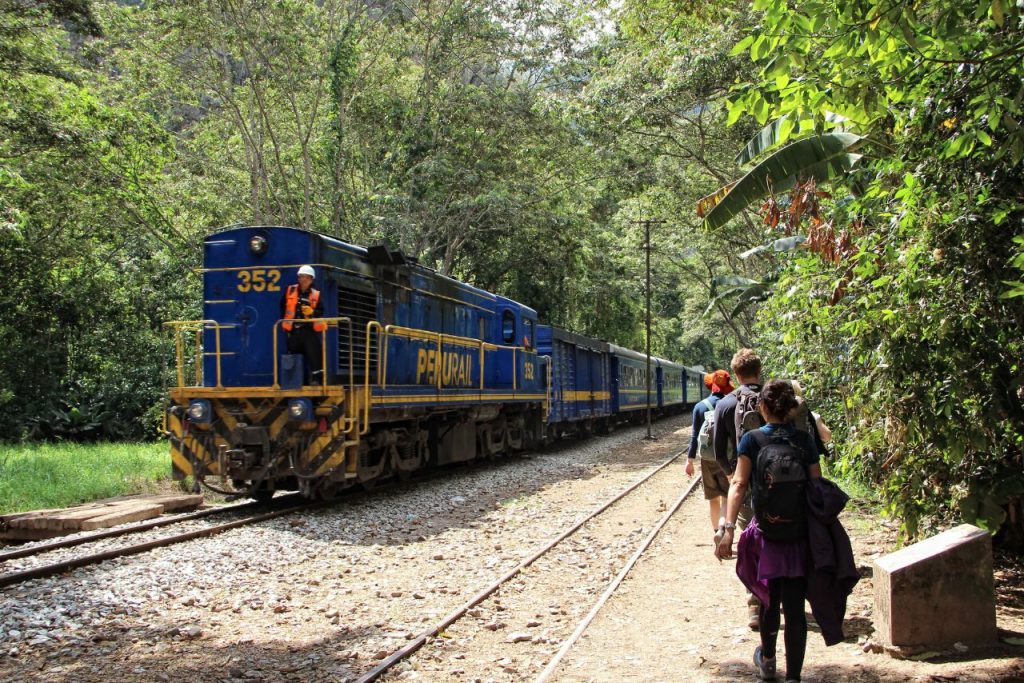
Sustainable travel is not something an operator can do entirely on your behalf. It asks something of the traveler too.
Most of it is simple.
Choose depth over breadth. A journey that moves slowly through fewer places, engaging meaningfully with each, leaves less impact and creates more value for the communities it touches.
The temptation to compress Peru into a single week, ticking off every major site, works against both the traveler and the destination.
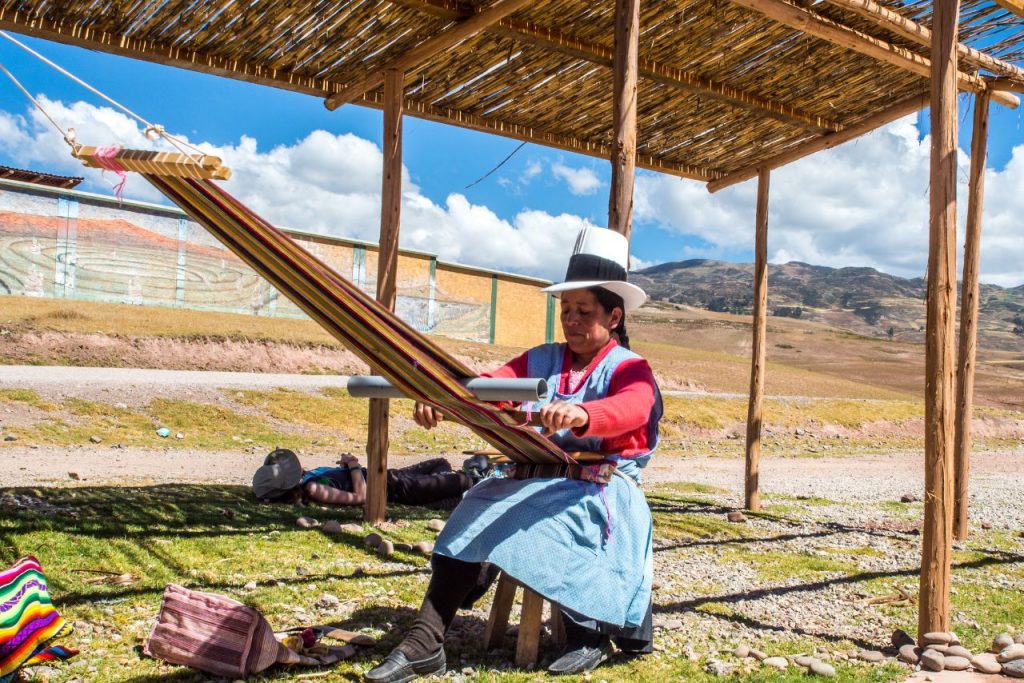
Spend locally. Enjoy meals at family-run restaurants, textiles bought directly from weavers, guides hired through vetted local operators: each of these decisions keeps tourism revenue where it belongs.
There is no sustainable tourism in Peru without economic benefit flowing to the people and communities at the center of the experience.
Follow your operator’s guidance on environmental conduct. On the Inca Trail, the rules around campsite use and waste management exist for good reason. In the Amazon, the protocols around wildlife observation protect species that cannot be replaced.
In highland communities, the conventions around photography and participation in ceremonies reflect genuine protocols, not theatre. Respecting these matters.
Ask questions before you book. An operator who values responsible travel will welcome informed, specific questions about how they operate. One who deflects or offers only generalities is telling you something important.
Discover our Conscious Travel philosophy and learn how we embed responsible operations, social commitment, environmental respect, and cultural heritage conservation into every journey we design. Visit enigmaperu.com/conscious-travel
Philanthropy as Part of Conscious Travel
The most meaningful journeys to Peru often include a philanthropic dimension.
Not in the sense of a token donation tacked onto an itinerary. But as a genuine engagement with the social and environmental projects that sustain the communities and landscapes at the heart of the experience.
Operators committed to conscious travel design philanthropy experiences that allow travelers to witness and participate in community initiatives. These range from education programs and women’s cooperatives to conservation projects protecting native species and fragile ecosystems.
These experiences deepen the travel itself. They transform a journey from observation to participation.
The governing principle is transparency. A responsible operator will be specific about where philanthropic contributions go, how they are monitored, and what impact they generate.
Travelers who ask these questions and receive clear answers are working with an operator whose social commitment is real.
LEARN MORE ABOUT: Enigma Philanthr: Travel With Purpose
Traveling Well in Peru
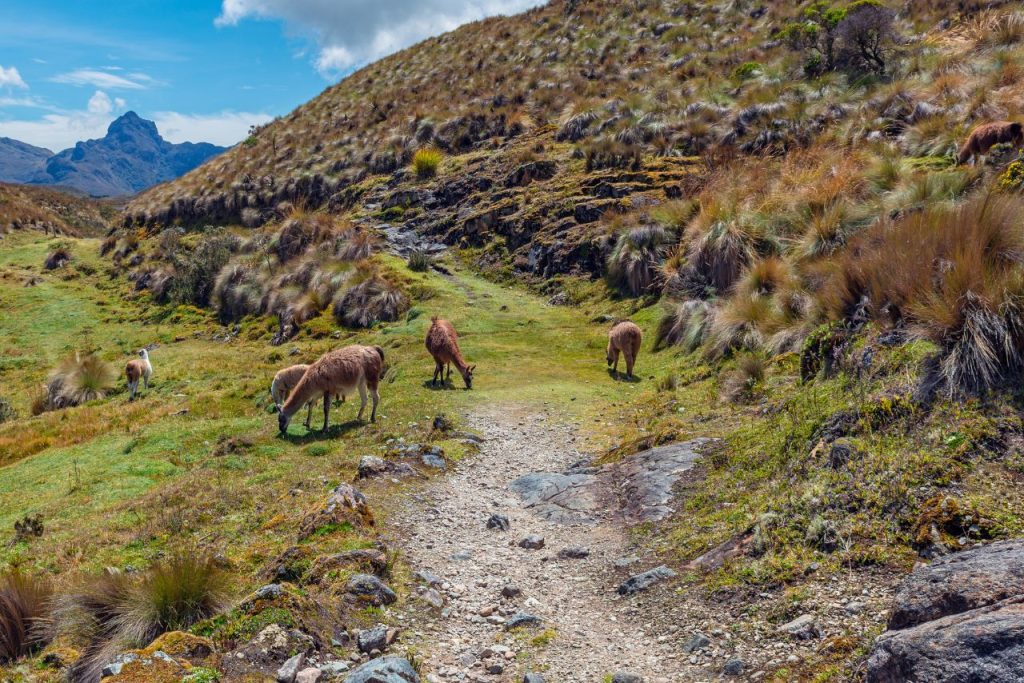
Sustainable tourism in Peru is an act of respect.
It means respect for landscapes that took millennia to form. Respect for cultures that have survived extraordinary pressure and remain alive and generative. Respect for communities whose livelihoods depend on tourism being conducted with care and intelligence.
The traveler who chooses their operator thoughtfully, moves through Peru with attention, and spends with purpose is not making a sacrifice. They are accessing the most authentic, the most nourishing, and ultimately the most unforgettable version of the country.
Peru rewards those who travel it well.
Every Journey We Design Begins Here
Learn more about the principles that guide every journey we design in Peru. When you are ready to travel with purpose, our team is here to help you plan an experience that gives back as much as it asks.