“There are very few places left on earth that still hold genuine silence. Colca is one of them.”
There are places in the world that do not announce themselves. They ask nothing of you upon arrival. They simply exist, ancient, unhurried and vast, and it is you who must rise to meet them.
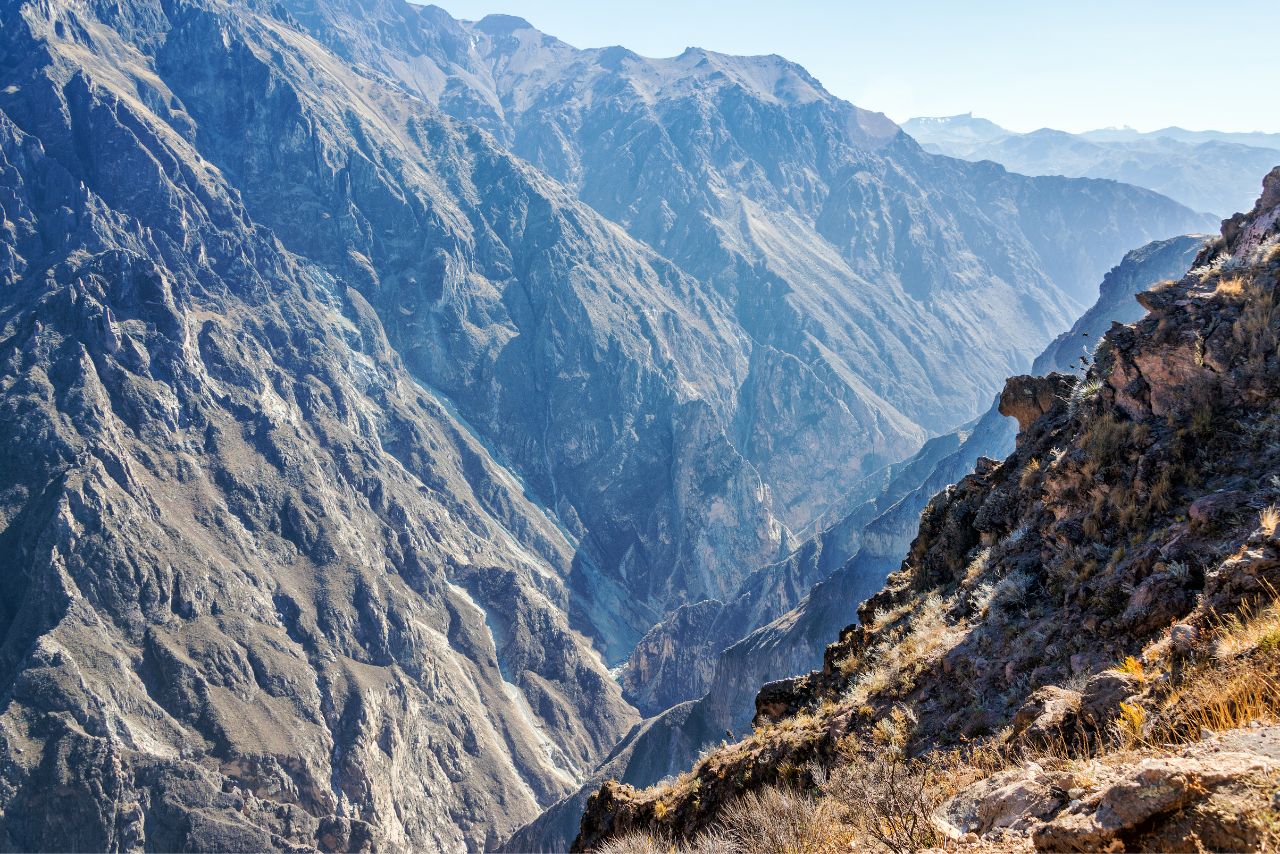
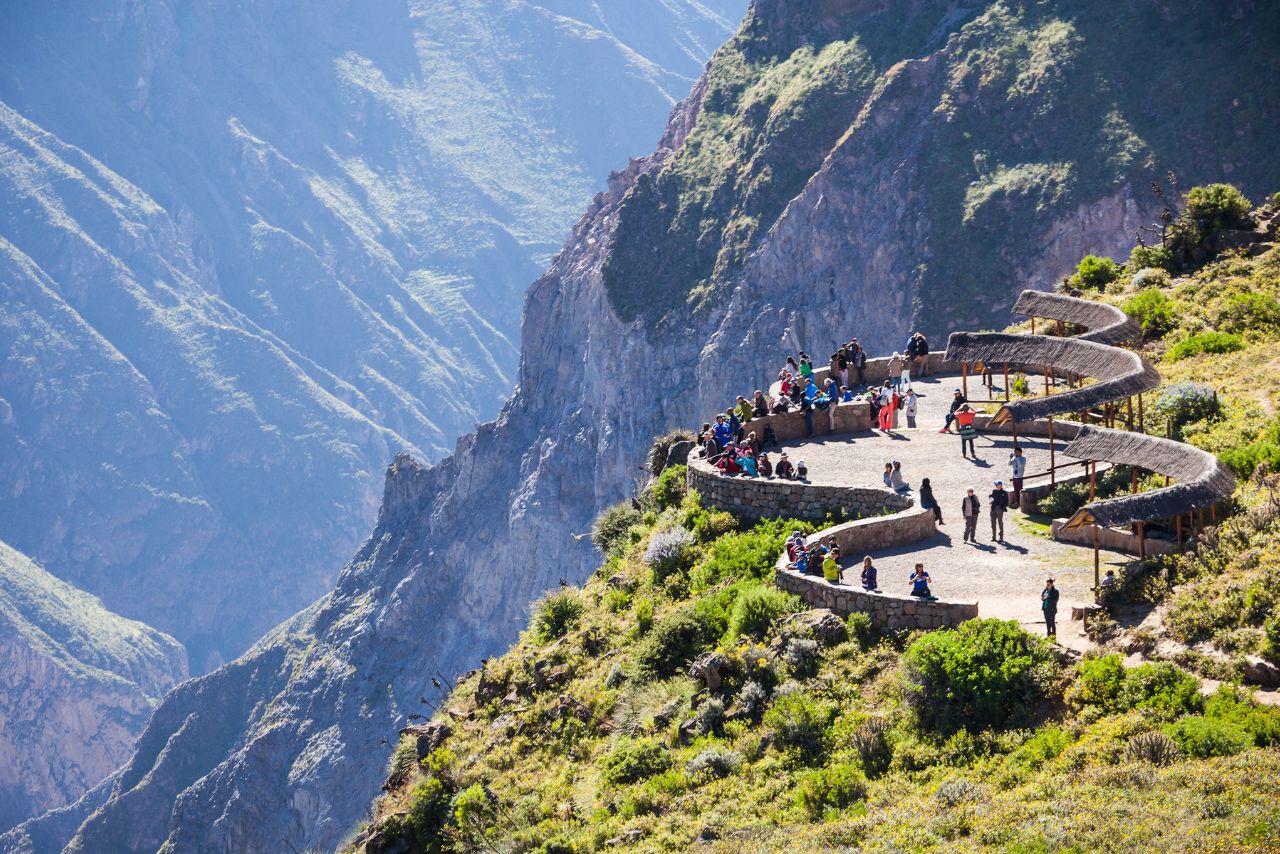
Colca Canyon, carved deep into the southern Andes of Peru, is one such place. At nearly twice the depth of Arizona’s Grand Canyon, it is among the most dramatic natural formations on earth. And yet, what strikes you first is not the scale. It is the silence.
This is a destination that rewards the traveller who moves slowly, chooses well and arrives with a guide who truly knows it. For those who do, Colca does not disappoint. It transforms.
A Journey Worth Taking Slowly
The approach matters in Colca. Do not be tempted to rush it.
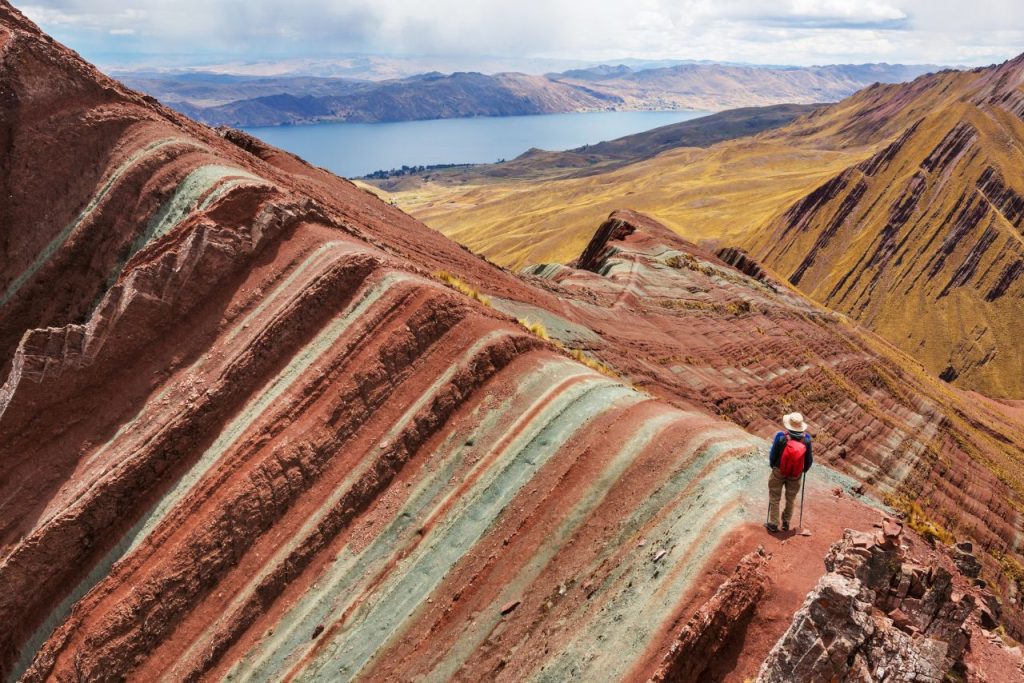
The drive north from Arequipa, Peru’s elegant White City built from pale volcanic sillar stone, takes you through terrain that belongs to another planet. The road climbs through the Salinas and Aguada Blanca National Reserve, a high-altitude expanse where herds of wild vicuñas graze at the edge of your vision. The vicuña, whose fleece is finer than cashmere and once reserved exclusively for Inca royalty, is now a protected symbol of thoughtful conservation. Seeing them here, unhurried in their native landscape, is a quiet privilege.
At the Mirador de los Volcanes, the landscape opens to reveal a chain of snow-capped peaks and dormant craters stretching to the horizon. One of them, Mismi Volcano, is the confirmed source of the Amazon River. The fact lands gently. Somewhere beneath you, a trickle of glacial melt begins a journey of over six thousand kilometres to the Atlantic. It is the kind of detail that changes how you see the land beneath your feet.
The journey from Arequipa takes around four hours and covers approximately 160 kilometres. It is not merely a transfer. In the hands of an expert guide, it is the first chapter of the experience.
Colca Canyon: Where the Earth Opens
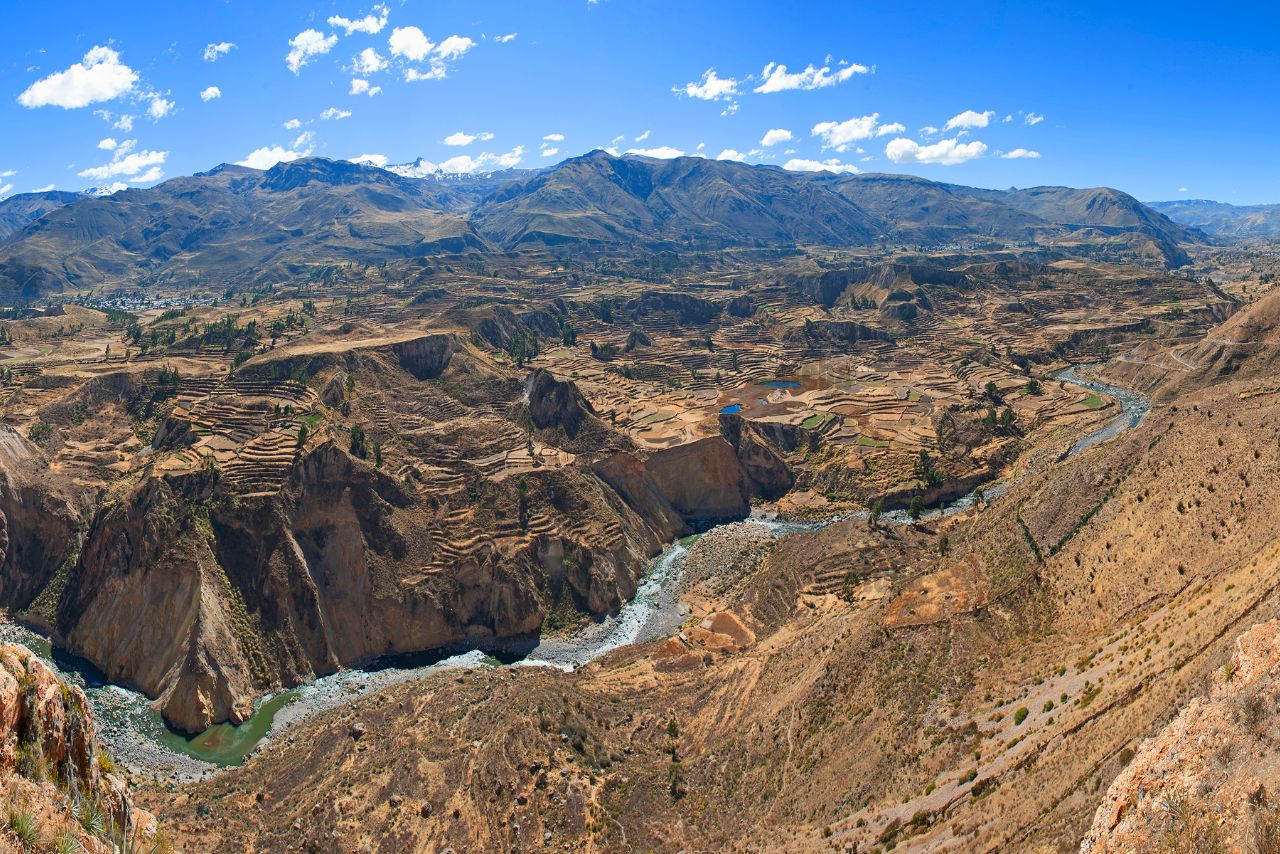
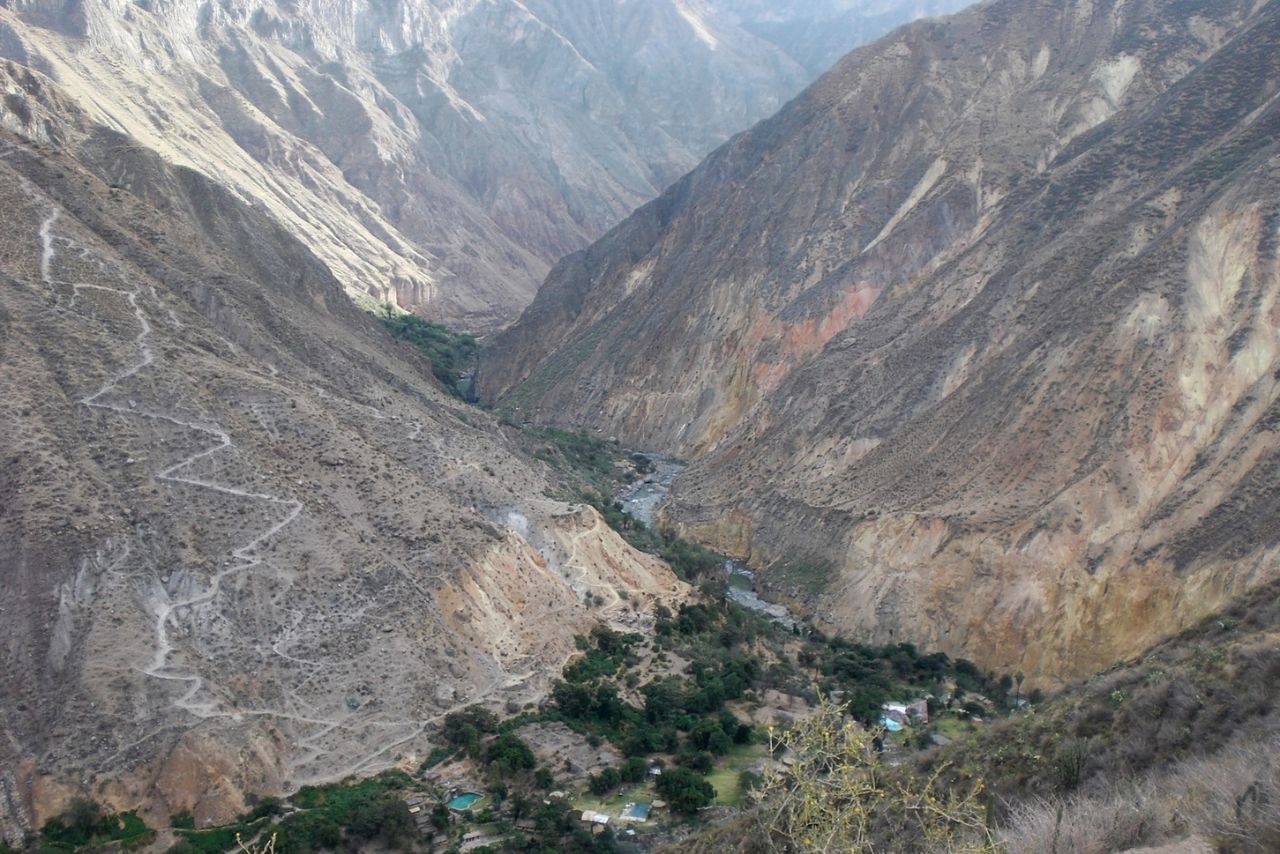
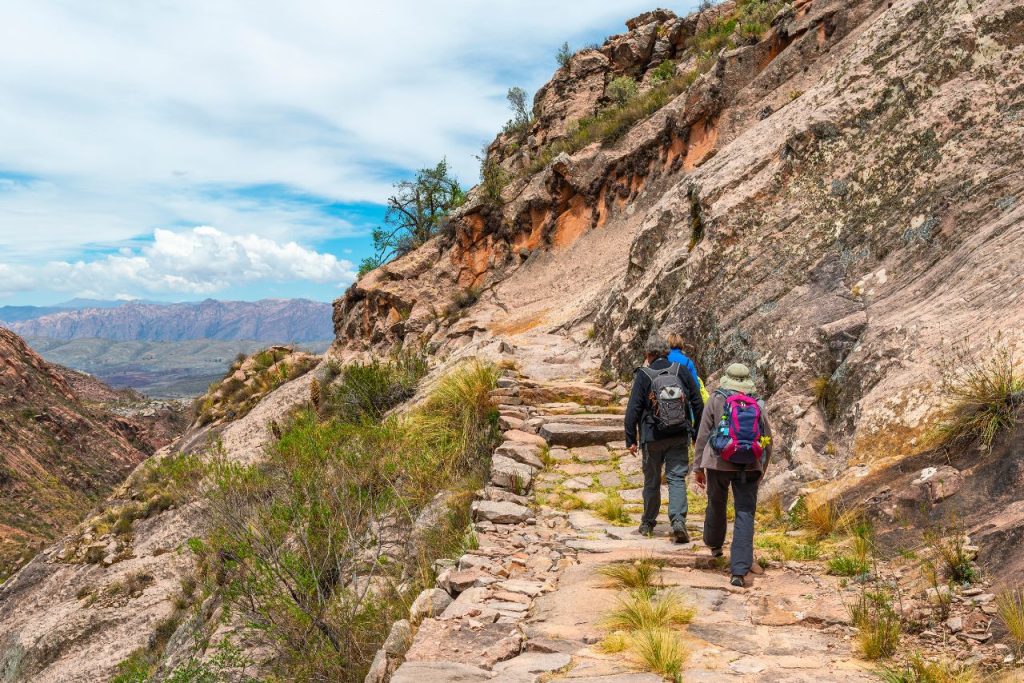
The Colca Canyon floor drops from over 3,600 metres near the village of Chivay to 1,800 metres at the canyon’s lowest crossing. The walls are not merely rock. They are layered in colour, terracotta, ash, copper and shadow, and they hold the mark of thousands of years of human presence. Cave paintings dating back more than 7,000 years depict llamas, hunting scenes and the Southern Cross. The Collagua and Cabana people arrived long before the Inca, and their descendants are still here, still farming the pre-Inca andenes, the ancient stepped terraces that cascade down the canyon walls in elegant and enduring geometry.
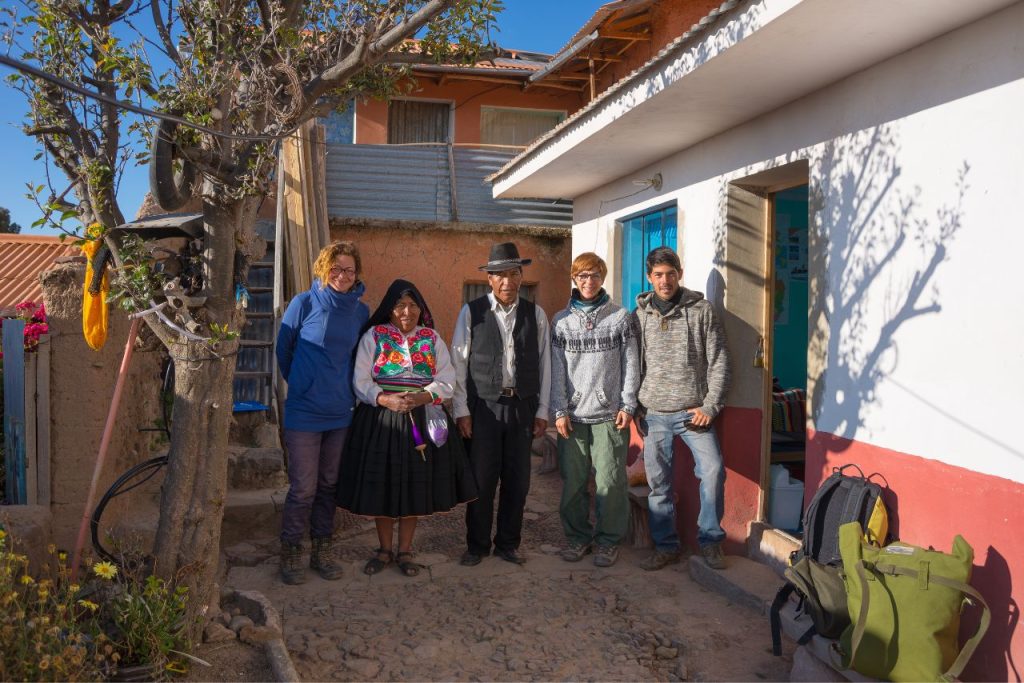
The valley villages are unhurried and beautiful. Women still wear the embroidered skirts and sequinned blouses of their ancestors. Colonial churches, some restored, others gracefully worn by altitude and time, stand beside Andean market squares. This is not performance. This is continuity. To walk through Yanque or Maca is to understand that the Colca Valley has always been inhabited by people with a deep and unbroken relationship to this land.
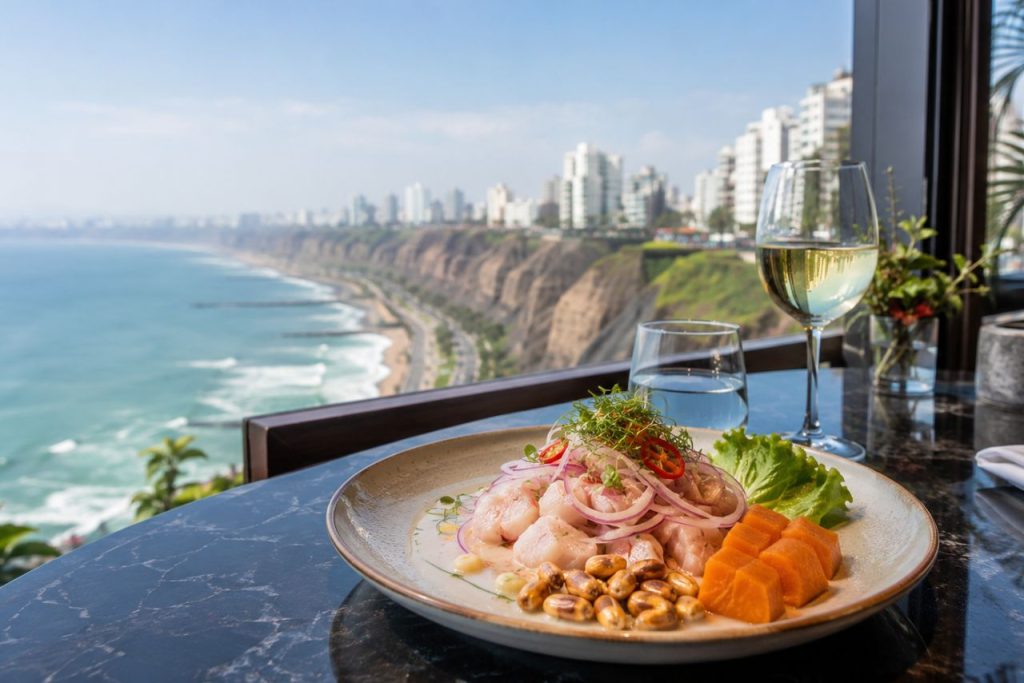
The agriculture here is extraordinary. More than a hundred varieties of potato are grown across the valley. Local chefs are beginning to bring these ingredients to the table with real intention, and a meal in the right setting, with produce grown on the terraces above you, is a quietly revelatory experience.
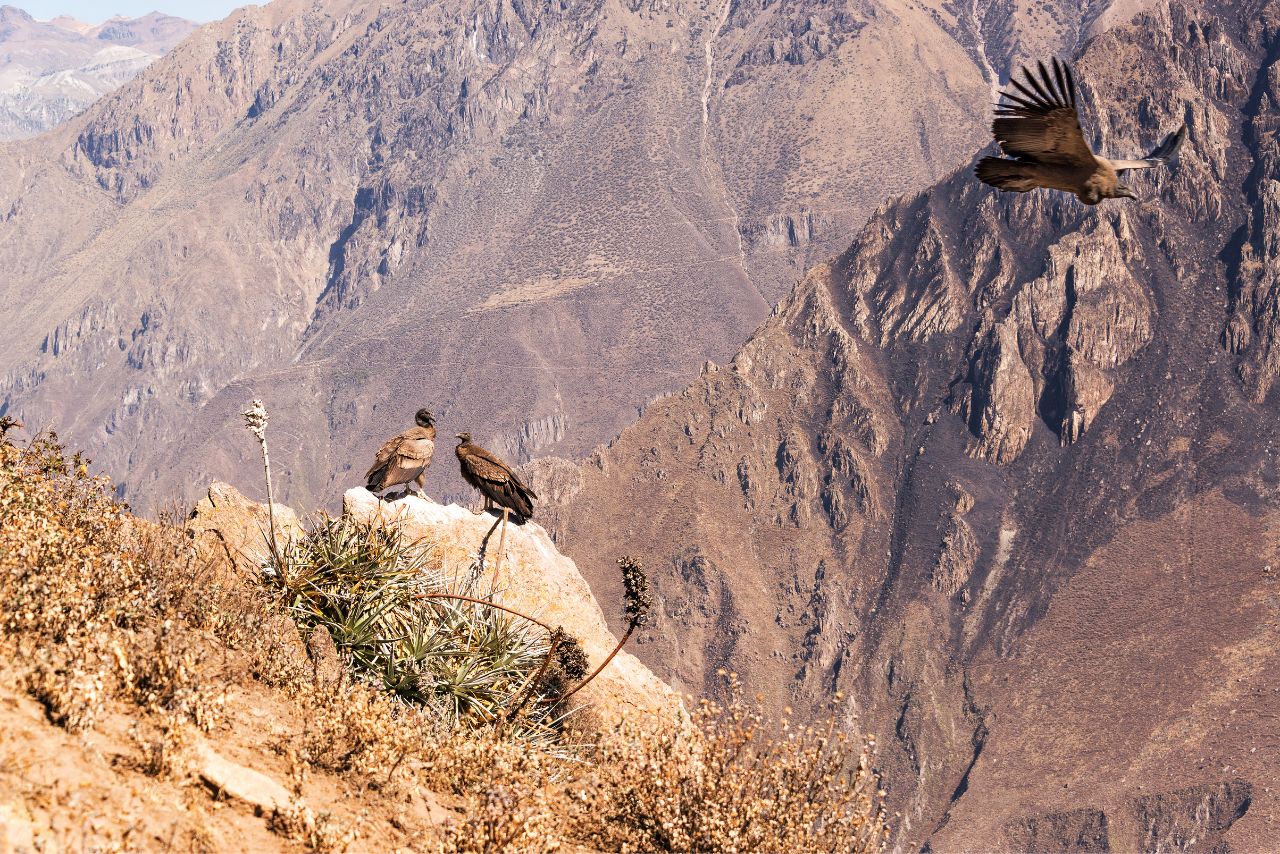
At the Mirador Cruz del Condor, the finest viewpoint along the canyon’s southern rim, you wait as the morning thermals begin to rise from deep within the gorge. Then, without ceremony, the condors appear. They emerge from the canyon walls and sweep past at close range, effortless and enormous. With a wingspan reaching close to three metres and a weight of up to fifteen kilos, the Andean condor is the largest vulture on earth. It is also, in Andean cosmology, the messenger between the living world and the divine.
The condor can live for sixty to seventy years. Standing at the rim, watching one soar in silence below you, it is easy to understand why the Incas called it eternal.
The best sightings occur during the dry season, between May and December, in the early morning hours around nine o’clock. A knowledgeable guide will position you with care and context.
At Enigma, our guides are matched to each guest by temperament and interest, the kind of considered attention that transforms a viewpoint into a moment of genuine encounter.
Colca rewards slowness. A single day from Arequipa will give you a view of the canyon and perhaps a condor. Two or three days will give you something else entirely.
We design private, fully customised journeys to the Colca region. These are not programmes assembled from a catalogue. Each itinerary is shaped around the traveller, incorporating the canyon, the valley communities, the volcanic reserve, the local gastronomy and the kind of unhurried access that group travel simply cannot offer. The Colca experience sits within the broader Arequipa program and is particularly well-suited to families. The region delivers condors, vicuñas, volcanoes and living Andean culture with remarkable generosity, making it one of the most rewarding destinations in Peru for travellers of all ages and interests.
Our approach to the region is grounded in responsible travel and long-standing community relationships. The operators they work with, the accommodation they select and the guides they deploy are all chosen with the same standard of care that defines everything they do across Peru.
Accommodation in the area ranges from intimate lodges to five-star retreats, some with their own thermal springs fed by geothermal activity deep in the valley. After a day on the canyon rim, there is nothing quite like soaking in warm mineral water as the Andes turn gold in the evening light. It is the kind of effortless comfort that only a place like Colca can deliver, without artifice and without apology.
Plan Your Trip
Colca Canyon does not compete for your attention. It has no interest in spectacle for its own sake. What it offers instead is rarer: a landscape of genuine antiquity, inhabited by people who have never stopped belonging to it, watched over by a bird that was ancient when the Inca were young.
To visit well is to go slowly, to go with someone who knows it and to allow yourself the uncommon luxury of simply being present. We have spent decades understanding exactly what that means. In Colca, that understanding shows in every detail, from the guide who knows precisely where to stand at the canyon rim, to the meal that arrives with a story worth telling long after you leave.
Some destinations are checked off a list. Colca is not one of them. It stays with you.