There is a particular moment, somewhere between Pisac and Ollantaytambo, when the Sacred Valley announces itself not as a destination but as a state of mind.
The Urubamba River catches the late afternoon light. Terraces carved into hillsides thousands of years ago step upward toward clouds that seem unwilling to leave. The air carries the faint sweetness of eucalyptus and something older, something that resists easy description. You feel it before you can name it.
For years, the Sacred Valley Peru travel guide conversation has centered on a single question: how many hours before your train to Machu Picchu? That framing, convenient as it is, misses everything. The Valley is not a corridor. It is a destination in its own right, one that rewards patience, curiosity, and the kind of unhurried attention that most travel never allows.
Travelers who know this are extending their stays. Some are spending three nights, some five, some longer. They return home not talking about checklists ticked but about the weaver in Chinchero who showed them how a single thread becomes something luminous, or the sunrise over the salt pans at Maras when no one else was there. These are the experiences that linger.
Key Takeaways: Sacred Valley Peru Travel Guide
- The Sacred Valley is a complete destination. With sites like Pisac, Ollantaytambo, Moray, and Maras each offering profound depth, the Valley rewards an extended stay rather than a transit stop.
- Luxury hotels in the Sacred Valley now rival the best in South America, with properties that combine exceptional comfort with genuine connection to landscape, community, and Andean tradition.
- Early mornings and considered pacing unlock the Valley’s best qualities. The light, the quiet, and the access to sites before the crowds arrive are all reasons to organize your days with intentionality.
- Insider access changes everything. A knowledgeable local guide transforms the Valley from a series of impressive ruins into a living culture with extraordinary richness, continuity, and meaning.
- The Sacred Valley belongs before Machu Picchu, not after. Spending meaningful time in the Valley before continuing to the citadel provides essential context and makes the entire journey more coherent, more resonant, and more your own.
The Sacred Valley Landscape
If you want to understand the Sacred Valley, you need to know what the Inca understood, and this is a place of extraordinary agricultural intelligence. The valley floor sits at roughly 2,800 meters above sea level, sheltered from the harsher conditions of the altiplano, fed by the Urubamba River, and positioned to capture microclimates that could sustain crops at multiple elevations simultaneously.
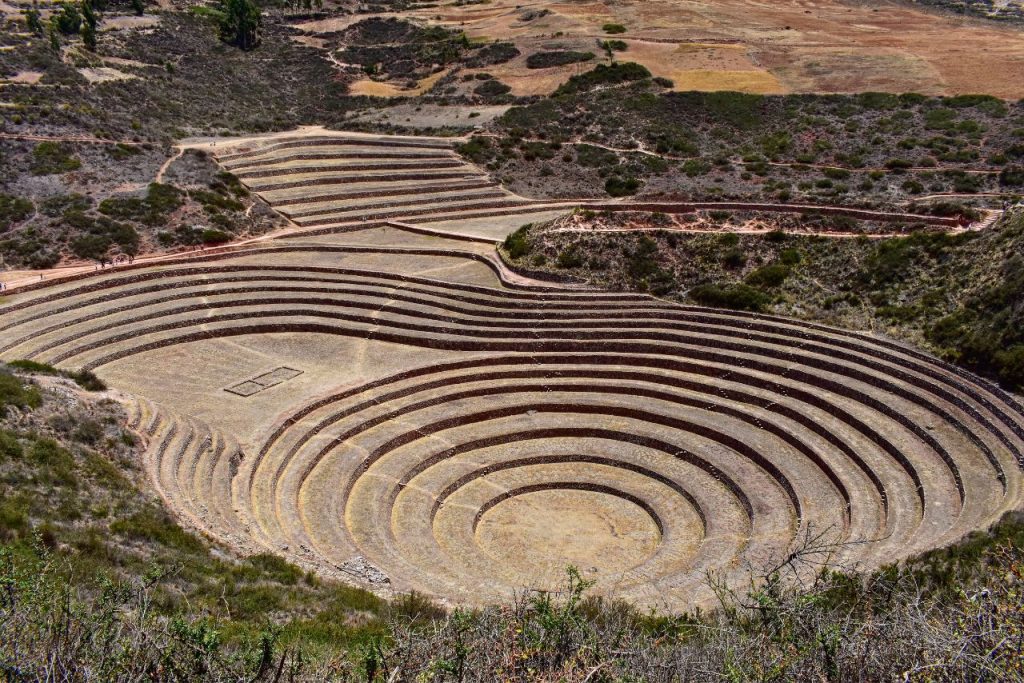
The terraces you see, called andenes, were not simply practical. They were scientific, architectural, and in some sense sacred. At Moray, the circular agricultural terraces descend into the earth like an amphitheater designed for the gods, each tier maintaining its own temperature, its own moisture, its own growing conditions. Archaeologists believe this was an Inca laboratory, an experimental station for cultivating crops from across the empire.
Visiting Moray early, before the day warms and the crowds gather, is one of the quiet privileges of a well-planned Sacred Valley itinerary. Standing at the rim and looking down into those concentric circles, you feel the intellectual ambition of a civilization that looked at a hillside and saw possibility.
READ ALSO: Sacred Spaces in the Sacred Valley
Pisac
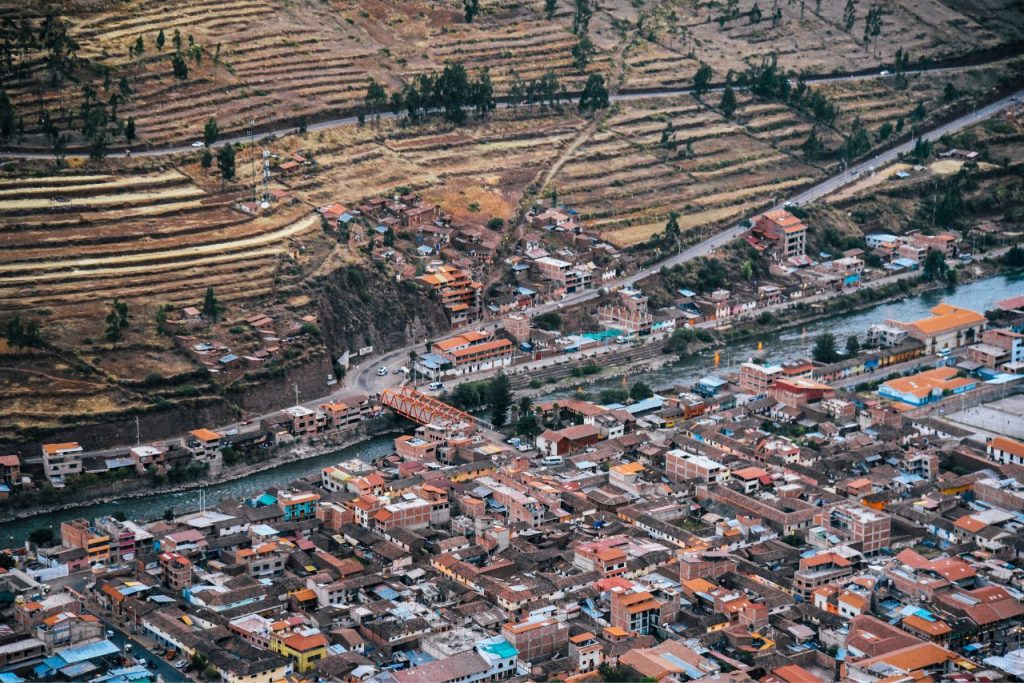
The town of Pisac occupies a comfortable bend in the valley, its Sunday market spreading through the central plaza in a way that feels genuinely local rather than staged for visitors. Textiles, ceramics, fresh produce, silver work, and herbs fill the stalls, and the people selling them are, in many cases, the same communities that have sold here for generations.
Above the town, the ruins of Pisac rise steeply into the hillside, one of the most extensive Inca sites in the valley and, perhaps because of the climb required to reach them, one of the least crowded. The agricultural terraces, the ceremonial baths, the residential sectors, and the extraordinary hilltop citadel form a complex that rewards genuine exploration rather than a quick survey.
The walk between the ruins and the town below is one of the great unheralded walks in this part of Peru. It takes an hour or so, depending on your pace, and it passes through landscapes that feel entirely unchanged. Your guide, if well chosen, will tell you things that no sign ever could.
EXPLORE MORE: Enigma Treks and Expeditions
Ollantaytambo

Of all the Sacred Valley experiences, Ollantaytambo is perhaps the most layered. It is the only town in Peru where people still live within the original Inca urban grid, in houses whose foundations were laid more than five hundred years ago.
Walking its narrow cobblestone streets in the early morning, before the day’s visitors arrive, is to feel the particular intimacy of a place that has simply continued.
The fortress above the town is formidable. The Temple of the Sun, with its massive pink granite monoliths hauled from a quarry across the valley and up the mountain face, is an engineering achievement that still prompts quiet disbelief. The Inca never finished it. The Spanish arrived before it was complete, and so it stands today in a state of magnificent incompleteness, which, in its way, makes it more moving than if it had been whole.
Ollantaytambo is also where travelers board the train to Aguas Calientes, the gateway to Machu Picchu. But it deserves at least a night, preferably two. The small hotels here, some of them occupying centuries-old buildings, offer an atmosphere that larger resort properties cannot replicate.
READ ALSO: The Mysteries of Ollantaytambo: A Look into Peru’s Incan Past
The Salt Pans of Maras
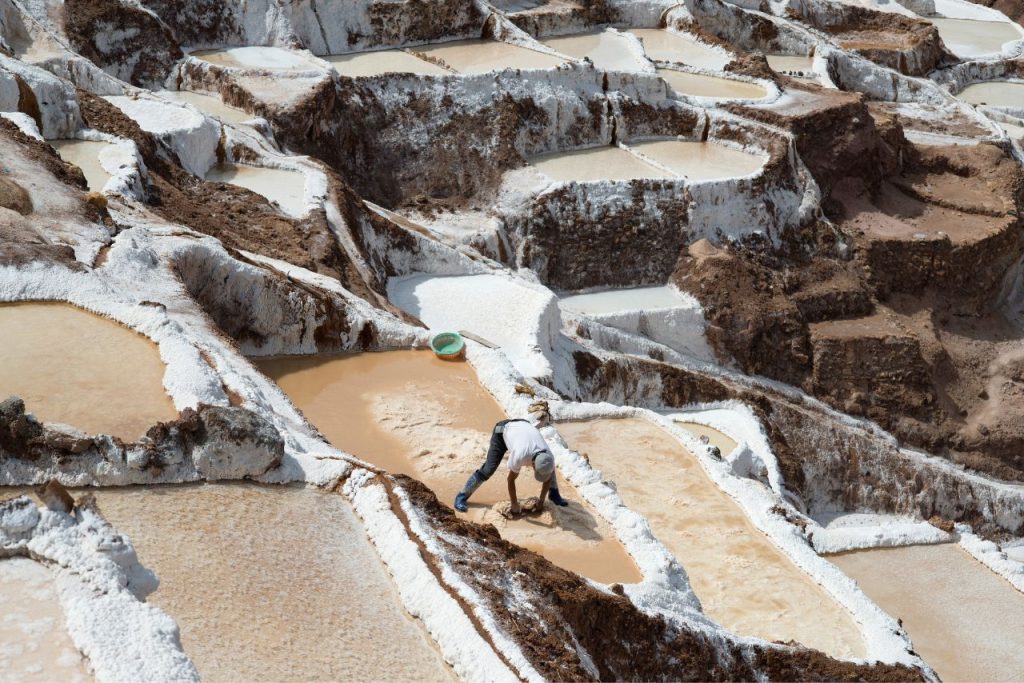
Maras sits above the valley, its salt evaporation ponds cascading down a hillside in a pattern that is simultaneously ancient and contemporary, something between a minimalist landscape painting and a living geological process. The ponds have been in use since pre-Inca times, fed by a saltwater spring that surfaces from deep within the mountain.
Today, local families still manage individual ponds, harvesting the salt by hand as their ancestors did. Visiting in the late afternoon, when the low light turns the ponds from white to amber to rose, is one of those experiences that rewards simply staying put. No explanation required. Just stand there and let it happen.
READ ALSO: Sal De Maras: Season Away With Andean Pink Salt
Community, Craft, and the Meaning of Insider Access

The most memorable Sacred Valley experiences are rarely the ones printed in itineraries. They emerge from relationships, from a guide who knows the weaver’s family, from a chef who buys from the same farmers who have been coming to the Pisac market for generations, and from a host who understands that what you want is not information but connection.
There are textile workshops in the valley where you can spend a morning with master weavers, understanding the symbolism embedded in each pattern, the months of work that go into a single piece, and the way that this craft carries a form of memory that no museum can fully convey.
There are cooking experiences that begin not in a kitchen but in a market or a field and end with something that tastes like the land itself.
These are the things that remain. Not the monuments, which are extraordinary, but the human exchanges, the moments of genuine encounter that good travel makes possible.
READ ALSO: Machu Picchu in March 2026: Fewer Crowds, Lush Landscapes and Lower Prices
Where to Stay In The Sacred Valley
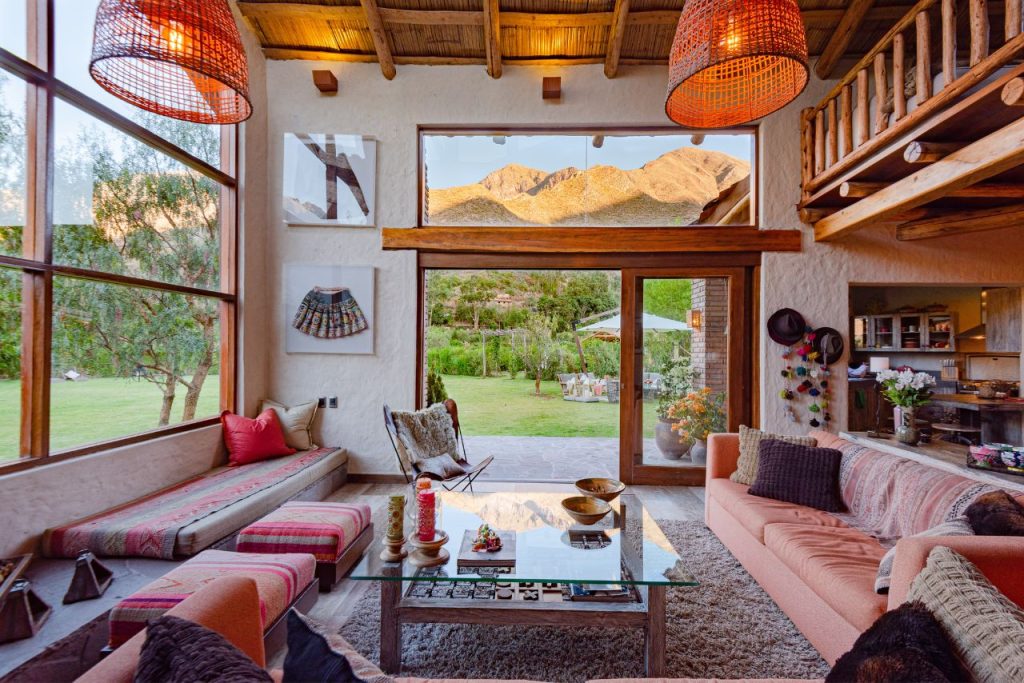
The question of where to stay in the Sacred Valley is increasingly interesting. Luxury hotels in the Sacred Valley options have expanded considerably, and the quality at the upper end is genuinely world-class.
The hacienda-style properties in the valley floor, with their organic gardens, spa facilities, and direct access to the landscape, offer a level of comfort that makes it easy to want to stay longer. Which, of course, is the point.
Some travelers prefer to split their time between a more immersive property near Urubamba and a smaller, more intimate posada in Ollantaytambo, giving them a different quality of experience in each. Others choose a single base and move through the valley on day excursions, returning each evening to somewhere genuinely beautiful.
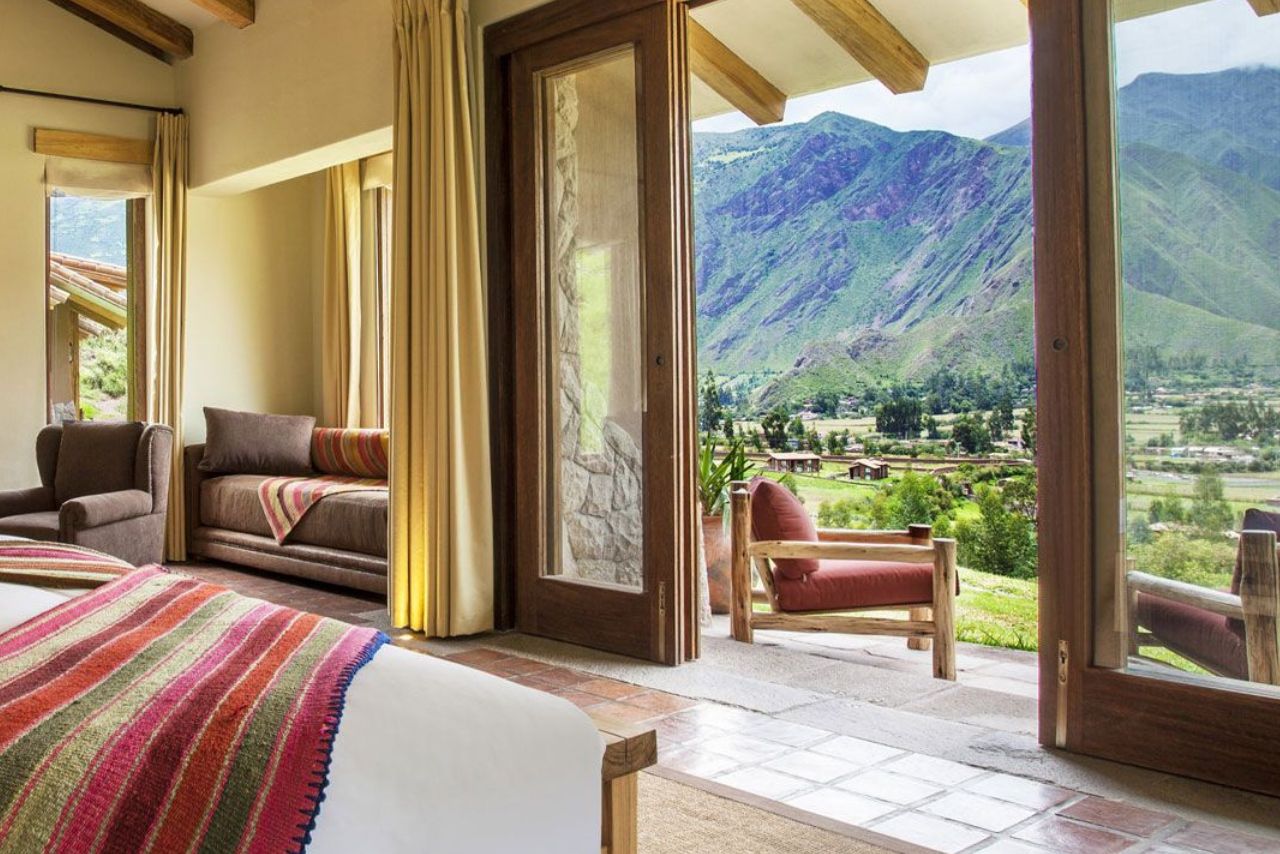
The best properties here are those that feel embedded in the landscape rather than imposed upon it, where the light at breakfast comes through old wooden shutters and the garden is not decorative but productive, where the staff have stories and the silence, in the evening, is complete.
Enigma Residences in the Sacred Valley offers a refined way to experience one of Peru’s most captivating regions, with handpicked private homes located near Urubamba, a perfect base for exploring the valley while easing into the altitude at around 2,800 meters.
Surrounded by wide-open landscapes, ancient ruins, mountain scenery, and routes for hiking and discovery, these residences combine comfort, privacy, and a strong sense of place.
Enigma’s collection includes spacious four-bedroom homes for up to 12 guests, with tailored villa services that can be adapted to each stay, from essential support to a more fully staffed experience, while the team can also design a complete journey around the home with excursions, transportation, and personalized services.
READ ALSO: Must-See Experiences in the Peruvian Andes
Why the Sacred Valley Deserves More Than a Day
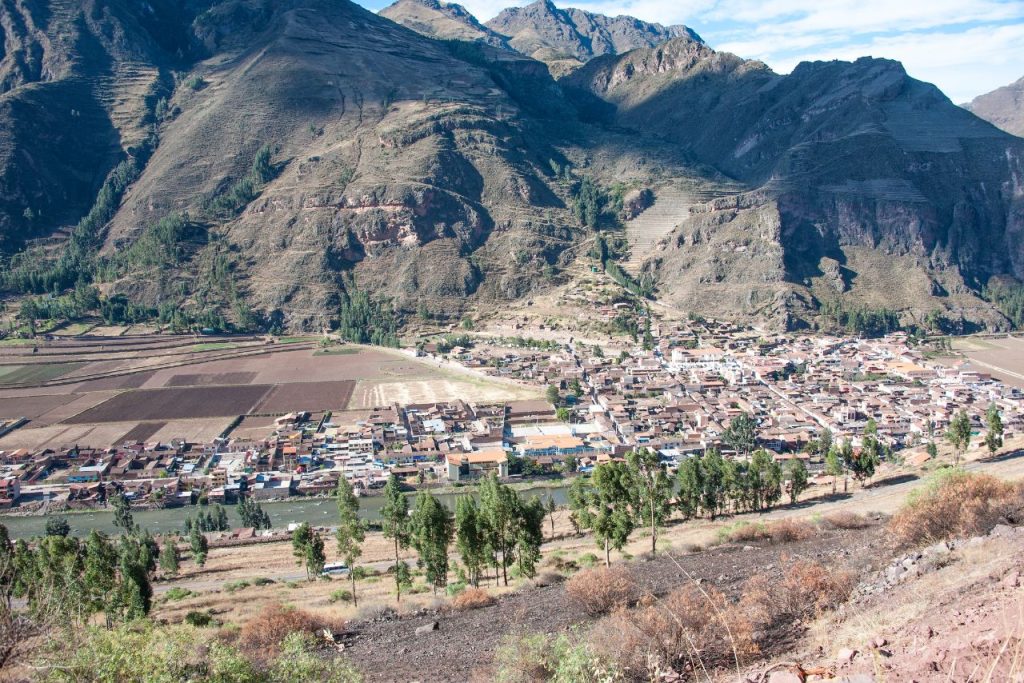
The standard Sacred Valley experience is a single day, folded into a loop from Cusco that touches Pisac, glances at Ollantaytambo and arrives back in time for dinner. It is efficient. It is also a missed opportunity of extraordinary proportions.
The Inca chose this valley not as a waypoint but as a home. Its fertile soils fed an empire. Its terraces, temples and fortresses were built with a precision that still confounds engineers.
The communities that live here today carry traditions, textile knowledge and agricultural practices that reach back centuries. None of this reveals itself in a few hours from a bus window.
The Case for Three Nights (at Minimum)
Three nights is where the Sacred Valley begins to open up. The first day serves a practical purpose: acclimatisation. At roughly 600 metres lower than Cusco, the Valley is a gentler place to let your body adjust to altitude.
Travelers who begin here rather than in Cusco report fewer headaches, better sleep, and more energy for the days ahead. It is a physiological advantage that also places you in one of the Americas’ most beautiful landscapes.
By the second day, you are ready to explore with clarity. Ollantaytambo in the early morning, before the day-trip coaches arrive from Cusco, is a different place entirely. The fortress above the town holds massive pink granite monoliths hauled from a quarry across the valley and up the mountainside, an engineering achievement that still prompts quiet astonishment.
Below, the town itself is the only settlement in Peru where people still live within the original Inca urban grid, in houses whose foundations were laid more than five hundred years ago. Walking its narrow cobblestone streets at first light, when the only sound is the irrigation channels the Inca built and that still carry water, is to feel the particular intimacy of a place that has simply continued.
The third day is where the Valley rewards your patience. The terraces at Moray, a series of concentric circular depressions that the Inca used as an agricultural laboratory, are striking in photographs but genuinely moving in person.
The Maras salt pans nearby catch the light differently at every hour, with thousands of small evaporation pools worked by local families for generations. Arriving early, before the crowds, you see them at their most geometric and beautiful.
Five Nights: Where It Becomes Transformative
Five nights allows something to shift. The Valley stops being a destination on your itinerary and starts becoming a place you know. You have time for experiences that cannot be compressed: a morning with master weavers in Chinchero, understanding the symbolism embedded in each pattern and the months of work that go into a single piece.
A cooking experience that begins not in a kitchen but in a field, with ingredients pulled from the earth that morning. Horseback riding in the afternoon takes you through remote communities where families wear clothing that has changed remarkably little since the Inca period, as you pass through landscapes so vivid and silent they feel almost cinematic.
With five nights, you can also explore on foot. The Lares Valley trek, departing from the Sacred Valley into the high-altitude terrain of turquoise glacier lagoons and Quechua-speaking communities, offers an immersion into rural Andean life that no museum or guided tour can replicate. Shorter day hikes to lesser-visited sites like Huchuy Qosqo reveal ruins perched on clifftops that most travelers never see.
Waking to the sound of the Urubamba River, stepping onto a terrace with mountain views in every direction, and pouring a glass of wine as the late afternoon light turns the peaks amber: this is what staying longer makes possible.
What You Miss When You Rush
The travelers who pass through in a day see ruins. The travelers who stay see a living culture. They meet the farmer in Chinchero who has won international recognition for cultivating hundreds of native potato varieties, each one a different colour when sliced open.
At the same time,they sit under a blanket of Andean stars so complete that it redefines what they thought a night sky could look like. They learn, from a guide who has walked these paths for decades, that a particular cactus along the trail harbours a tiny insect whose crushed body produces the vivid crimson pigment the Inca used in their royal textiles.
These are the moments that people describe when they come home. Not the monuments, which are extraordinary, but the human encounters and the sensory details that only emerge when you give a place enough of your time.
How to Plan Your Sacred Valley Stay
The dry season from May to October offers the most reliable weather, with clear skies and cool nights. June through August is peak season, so booking well in advance is essential for the best accommodation and guides. The shoulder months of April, May, September and October offer a compelling balance: fewer visitors, green landscapes from recent rains and lower rates at top properties.
For altitude, plan to arrive in the Valley before ascending to Cusco. Starting at 2,800 metres rather than Cusco’s 3,400 metres gives your body a meaningful advantage, especially if you plan to trek. Most experienced Peru travel designers now recommend this sequencing as standard.
Three nights is the minimum to experience the Valley with any depth. Five nights allows you to combine archaeological exploration with cultural immersion, outdoor activity and genuine rest.
Some travelers stay longer still, particularly those based in a private residence who find that the Valley’s rhythm becomes difficult to leave.
Start Your Sacred Valley Journey
The Sacred Valley is the kind of place that changes the way you think about travel. It asks you to slow down, to pay attention, and to trust that the most important things are not always the most obvious ones. The travelers who come here and stay long enough to understand that always leave changed, and always want to return.
Enigma designs Sacred Valley journeys around what matters most to you: the depth of the culture, the quality of the places, and the confidence that every detail has been considered. We know the Valley not as a waypoint but as a world.
The Sacred Valley rewards those who stay. If you are ready to experience it at the pace it deserves, Enigma designs private, unhurried journeys shaped entirely around your curiosity.
FAQs: Sacred Valley Peru Travel Guide
Most travelers who experience the valley meaningfully spend between three and five nights. Two nights is a reasonable minimum, but it tends to leave people wishing they had more time. If your itinerary allows for five nights, you will leave with a fundamentally different relationship to this place than those who pass through in a day.
Technically, yes. In practice, attempting all three in one day means experiencing none of them fully. Each site deserves unhurried time, and the drives between them, winding through the valley floor and up into the hills, are themselves part of the experience. A well-designed Sacred Valley itinerary will spread these visits across multiple days, building in time for the unexpected encounters that make travel memorable.
The dry season, from May through October, brings clear skies, cooler nights, and ideal conditions for being outdoors. June and July in particular are exceptional, though they are also the busiest months. The wet season, from November through April, brings lush green landscapes and far fewer visitors. The rain typically falls in the afternoons, and mornings can be perfectly clear. Both seasons have their advocates.
The best properties are those that feel genuinely embedded in their surroundings rather than simply located within them. Look for places with working gardens, connections to local communities, thoughtful design that reflects the landscape, and staff who can help you understand where you are. A beautiful spa is wonderful; a hotel that makes you feel connected to the Andes is something more.