Kuelap Fortress is situated in the northern region of Peru near to Chachapoyas, and is one of the largest and most well-known ancient monuments in Peru. The fortified citadel was the humble home to the Chachapoyas people, who were also famously known as the “Warriors of the Clouds”.

According to archaeological evidence the complex is estimated to have been constructed around 6th AD, and was continued to be used up until 16th AD before they were invaded and conquered.
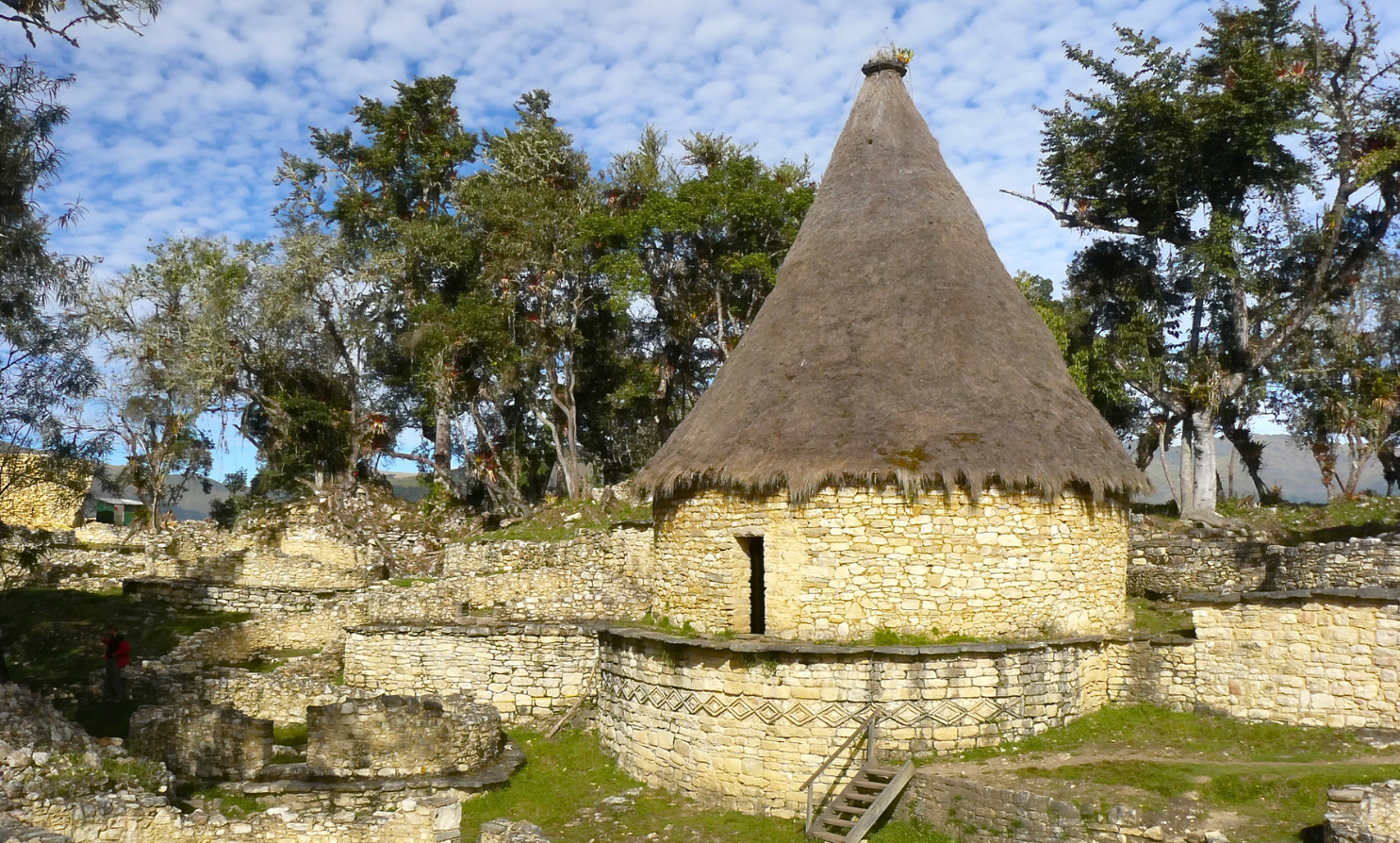
The strategic location and optimum vantage point of the stone structure, suggested that it was used for military purposes with the towering 20 meter (65.6 feet) high walls reinforcing its immense defense. As a logical place to be positioned against attacks, the ruins show that contrary to belief the building contained non-archaeological buildings that were civil, religious or domestic. Containing over 420 circular stone dwellings, wall murals and high relief carvings, the evidence shows that the city may have housed up to 3,000 inhabitants who weren’t just warriors, but also merchants, farmers and shamans. More fittingly it could be deemed that Kuelap was much more than a fortress, but rather a small empire perfectly positioned to guard the surrounding territory.

Situated at 3000 meter (9843 feet) above sea level and stretching for 600 meter (1969 feet), the site required an immense amount of skill, dedication and manpower to erect the heavy stone blocks that form its structure. Amongst the buildings there are three prominent structures that stand out within the complex. At the southern end you will find “El Tintero”, which is shape like a large inverted cone and built using small bricks piled on top of one another. “La Atalaya” can be found at the opposite northern end of the fortress, and is built to resemble a turret. The last architectural point of interest is “El Castillo”, which is located in the most conspicuous section on the top Anden (terraces dug into the slopes for agricultural purposes).
One of the most fascinating aspects about the archaeological site of Kuelap is the advanced knowledge and techniques that were required to complete such a project. The level of sophisticated engineering needed to build a rainwater drainage system in such a precarious location, still baffles many scientists today and is a testament to the Chachapoya people.

However, despite their seemingly impenetrable fortress it is believed around the second half of the 15th century the mighty “Warriors of the Cloud” were overthrown by the Incas. The Chacapoyas people continued to live in their stone fortress and the Incas did little to interfere in their daily lives. It wasn’t until the Spanish conquistadores arrived in the 16th century that their culture eventually crumbled and the site of Kuelap was abandoned permanently.
The insight that has been obtained from the ancient fortress since its rediscovery has been significant and invaluable. Archaeologists have gathered vast amounts of data that has helped piece together their legacy and revealed intimate cultural aspects about the ancient warriors. Rather than becoming a figment of the past, thanks to the work of many institutions and world class experts, we have learned and gained a deeper understanding as to these ancient rituals and practices.

Bringing in more than an estimated 40,000 people to visit the site each year, Kuelap is a true architectural masterpiece where crowds come from all corners of the world. In previous years access to the ruins was normally by a two-hour road trip from Tingo Maria to the stone fortress. The new cable car, however, will change this and from June 2017 onwards, it will take tourists and locals a mere 20 minutes to reach the site, offering impressive views of the surrounding jungle-covered mountains. LATAM have also seen the commercial opportunity and began direct flights to Jaen (Cajamarca) recently meaning even less travel time to visit the iconic ruin!