
For whale-watchers from around the world, Peru is the place to visit!
In the north of Peru, in the waters not far from the pristine white-sand beaches of Tumbes and Piura, one of the most incredible wildlife encounters takes place every year. Whale-watching season along Peru’s northern beaches begins in mid-July and continues until late October.
The humpback whale (Megaptera novaeangliae), known in Spanish as ballena jorobada, is one of the largest species of baleen whale. Adults can grow to 12–16 meters (39–52 feet) in length and weigh approximately 36,000 kilograms (79,000 pounds), with females typically larger than males.
Humpback whales are recognizable by their distinctive body shape, unusually long pectoral fins and knobbly heads. Their bodies are typically dark grey, with white patches along the underside. These white markings are unique to each whale and can be used to identify individuals, much like fingerprints.
Humpback Whale Behavior and Whale-Watching Experiences

Humpback whales, like all baleen whales, are seasonal feeders that feast on tiny crustaceans called krill, as well as plankton and other small fish. They have between 14 and 35 grooves along their throats, running from the chin to the navel. These grooves help the whales feed by allowing their throats to expand and take in huge amounts of water during filter-feeding.
Humpback whales live and travel in pods and have developed cooperative hunting methods to catch their prey. Members of a pod may swim in a spiral while blowing a wall of bubbles to trap their prey before enjoying a large meal.
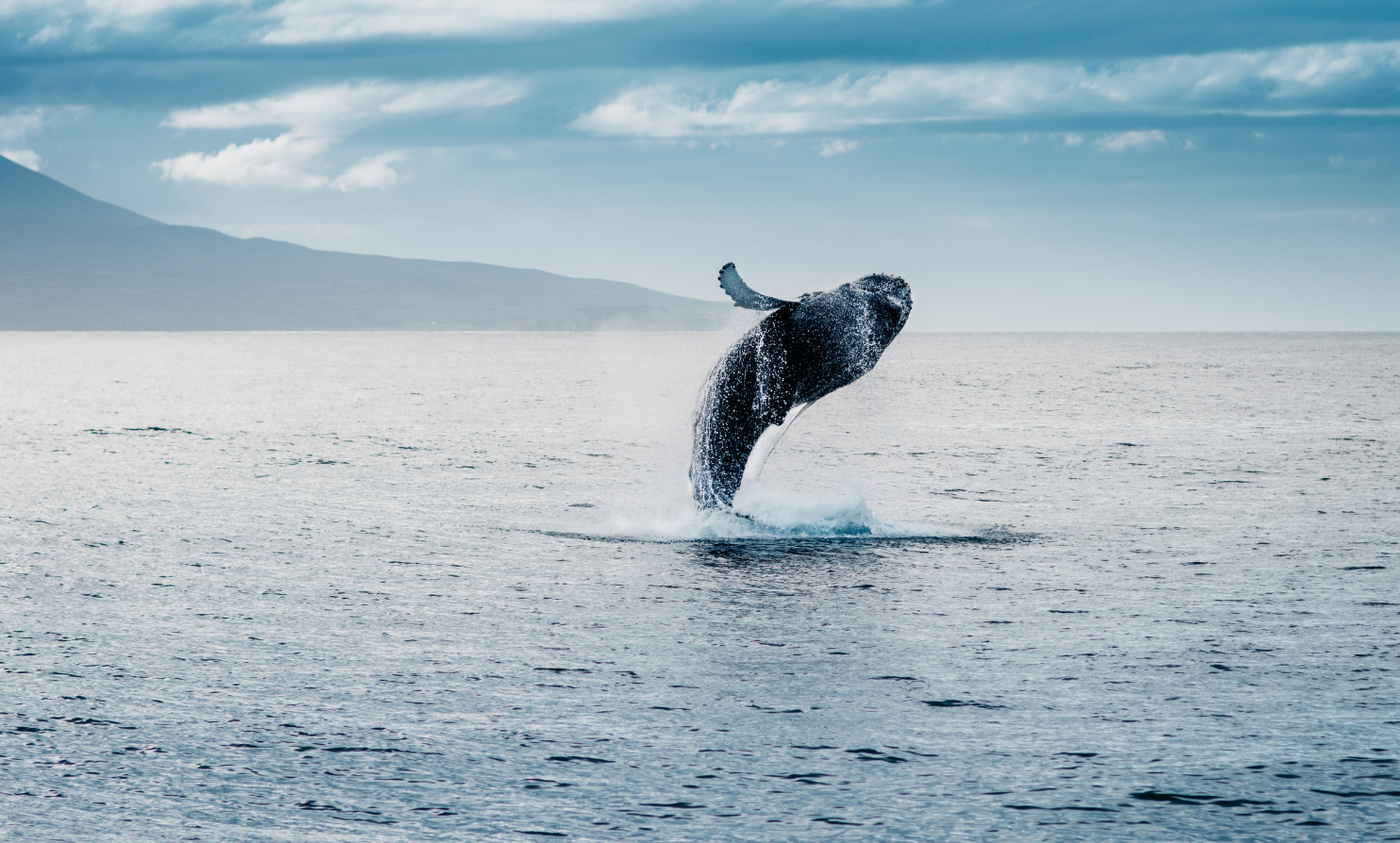
Humpback whales are known for two distinctive characteristics: their hauntingly beautiful songs and their habit of breaching. The songs are believed to be a way for males to communicate to females that they are ready to mate.
When whales leap out of the water, a behavior called “breaching,” the exact reason remains uncertain. They may be trying to dislodge bothersome parasites from their skin, among other possible explanations. Whatever the reason, breaching has made humpback whales a favorite among whale-watchers around the world.
The Best Time to Spot Whales in Peru

Between July and October, more than 1,000 humpback whales visit the coasts of Peru and Ecuador, travelling hundreds of miles from the frigid waters of Antarctica. It is believed that they visit this region to give birth and mate in the warmer waters.
When the whales arrive, visitors to Peru’s northern shores have an excellent opportunity to see some of nature’s most majestic creatures. Although it is possible to spot whales from the shore, taking a boat trip into deeper waters offers a better chance of seeing them. There, visitors have an approximately 80% chance of seeing these enormous animals surface or even breach!
Beyond the whales, a trip to destinations such as Piura or Tumbes offers opportunities to see other fascinating marine life and birds, including dolphins, sea lions and the Peruvian booby.
If you are interested in visiting Peru during whale-watching season, contact Enigma Peru. With expertise in travel throughout Peru, the team can offer advice and help you plan your trip.
Build Your Private Journey With Enigma
Peru rewards travelers who go further than the headline. Enigma has designed private, tailor-made journeys across the country since 2002, from Cusco to the northern cloud forest. Our team builds each itinerary around your pace, your interests and the access we have spent two decades earning.
Let us design a private Peru journey in which every transfer, stay and experience belongs to the story of the trip.