
Cusco holds the country’s attention, and it earns it every year. The old Inca capital is one of the most remarkable cities of the Americas.
It is also one region out of many. Peru covers coastal deserts, the high Andes and the Amazon rainforest. Across that range, the national tourism board counts more than 1,800 bird species. A trip that stays inside Cusco sees a fraction of what the country holds.
The best places to visit in Peru beyond Cusco are not obscure, merely overlooked. They sit on scheduled flight routes and hold hotels of real quality.
Three regions make the strongest case for going further. Each region is reachable by domestic flight, well served, and feels nothing like the last.
Arequipa and the Colca Canyon

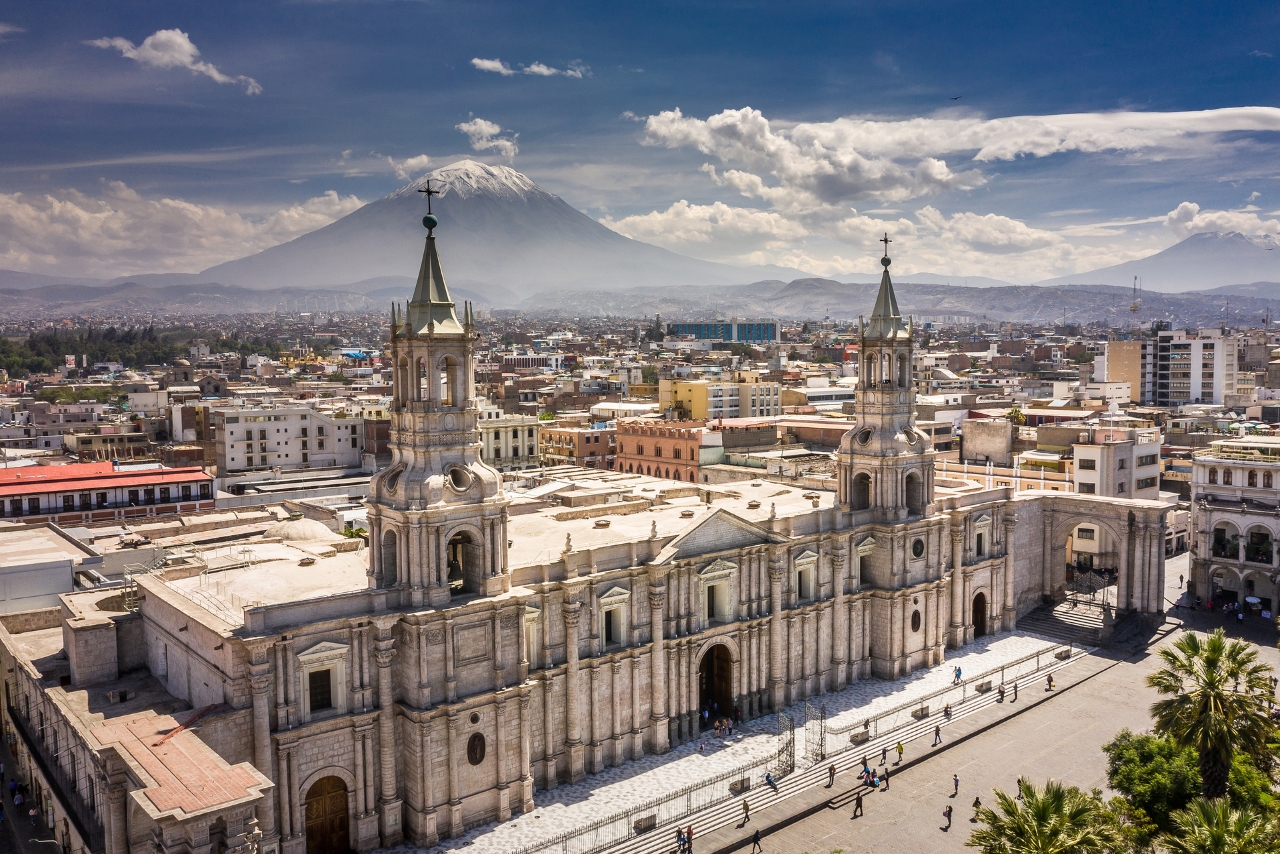
Arequipa is the most composed city in Peru. Its sillar architecture, cut from pale volcanic stone, gives the White City its unmistakable glow. The Main Square is widely considered among the most beautiful in the country.
Its historic center dazzles with churches, colonial mansions and monasteries built across centuries. The pleasure here is in wandering. Traditional neighborhoods such as Yanahuara and San Lazaro hold scenic lookouts facing the Misti volcano. Their alleyways carry ordinary daily life at an unhurried pace. Beyond the center sit natural hot springs, villages and ancient agricultural terraces still worked today. Arequipa is also a serious food city, defined by its picantería tradition of long regional lunches.
READ ALSO: 15 Most Beautiful Places in Peru
The valley beyond the city
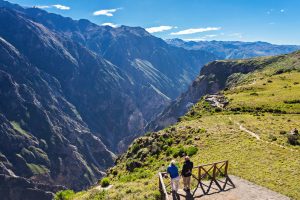
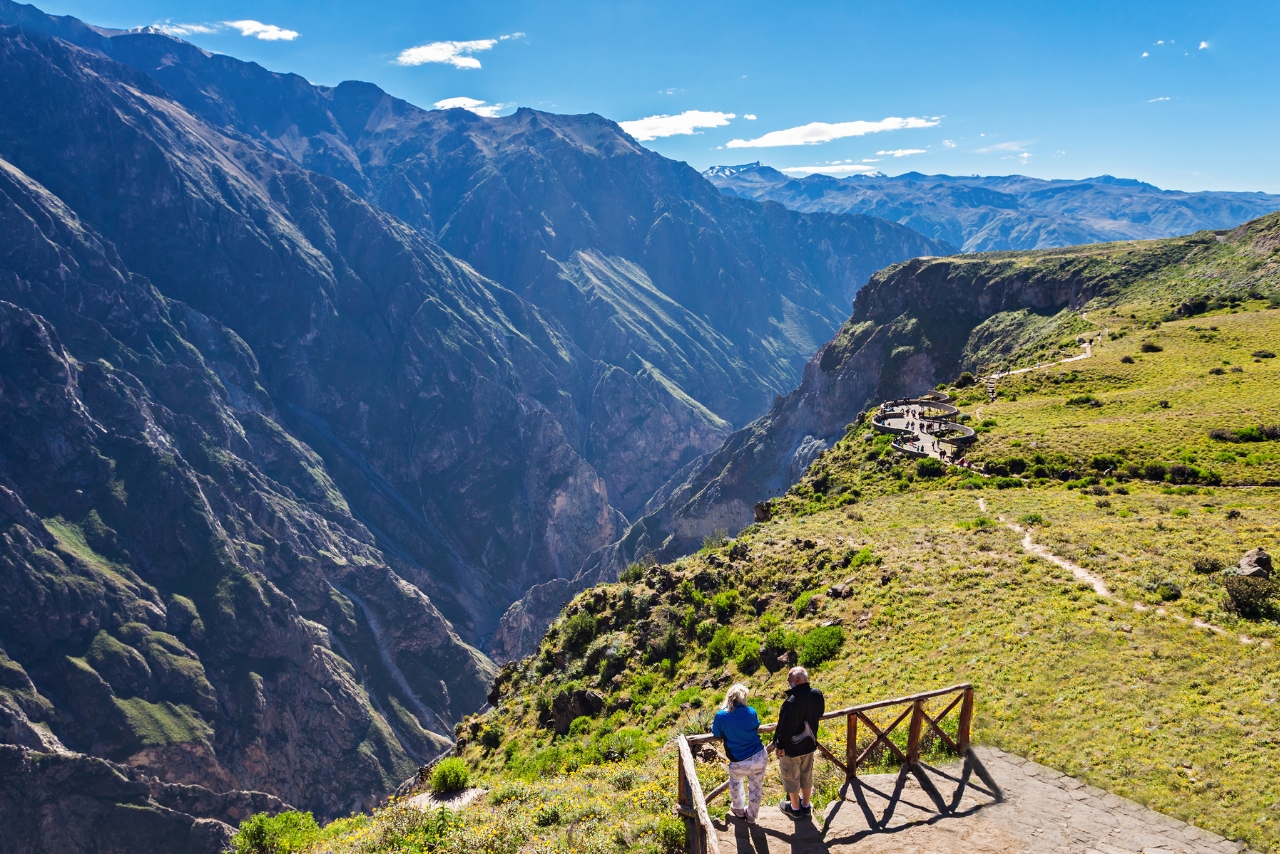
The Colca Valley opens about 150 kilometers north. Volcanoes, hot springs and colonial villages define it, including Yanque, Sibayo and Coporaque. Elevations range from 2,900 to 4,500 meters.
The Cruz del Condor lookout is the essential vantage point for seeing the flight of the Andean condor. The experience goes past the visual. The silence of dawn and the wind through the mountains carry the scale of the place.
Hot springs at Calera make a fitting close to a cold morning. Many travelers rate that pairing as the highlight of the southern circuit.
The condor is rarely seen on demand. Sometimes it appears only as a black dot far above the ridge. Travelers wait anyway, from first light, and that wait is part of the reward.
READ ALSO: Colca: The World’s Most Beautiful Silence
Amazonas and the cloud forest cities
The northern region of Amazonas is the quietest of the three and the most surprising. Its forests are misty rather than tropical, sheltering orchids, spectacled bears and Andean cocks-of-the-rock.
At its center stands Kuelap, protected by an outer wall rising to twenty meters in height. It sits on the summit of an almost inaccessible mountain, within a rugged landscape. Inside, the Templo Mayor is a circular structure shaped like an inverted cone, known locally as the Tintero.
The complex is linked to astronomical belief and reflects a sophisticated body of knowledge. It is reached by road to Nuevo Tingo, then by Peru’s first cable car system. A short walk from the La Malca station completes the approach.
What the extra nights will get you
Kuelap alone justifies the flight, but the region rewards a longer stay. Walking its passageways brings you close to a culture that found identity and permanence in the heights.
The region sees a small fraction of Cusco’s visitors, which is much of its appeal. Sites here often have no visitors at all.
Nearby, the Gocta waterfall drops 771 meters through the forest. The sarcophagi at Karajia stand upright on a cliff ledge above the valley. At Leymebamba, a museum holds well over two hundred Chachapoya mummies, along with the objects buried with them.
READ ALSO: Why Northern Peru Should Be Your Next Destination
Madre de Dios and the rainforest
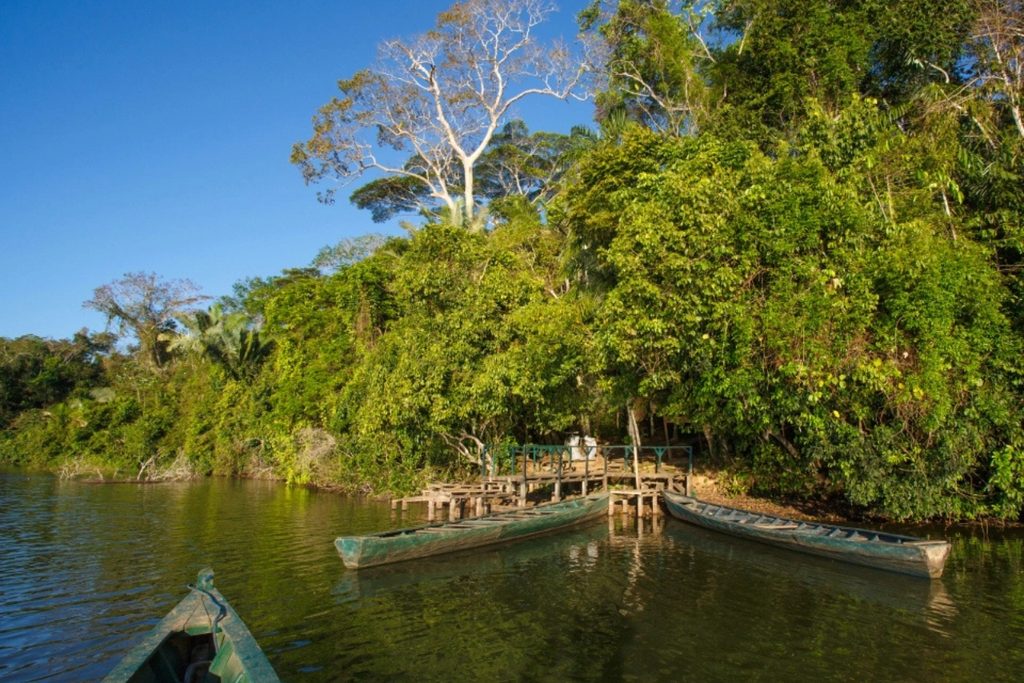
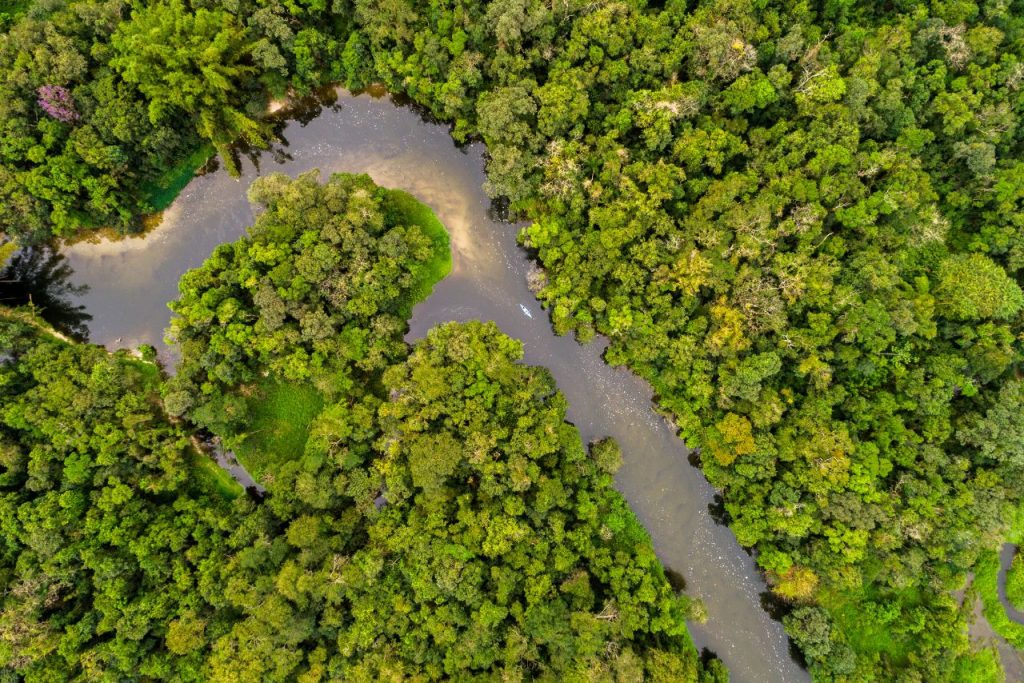
The third region is the one most travelers underestimate. Peru’s Amazon is among the most biodiverse places on earth, and it asks for time rather than effort.
Manu National Park is a UNESCO World Heritage site spanning Cusco and Madre de Dios. It shelters 228 mammal species, 150 amphibians, 132 reptiles, 210 fish and more than 1,000 birds. Its landscape runs from tropical lowland forest to frigid puna above 4,000 meters.
Manu is also home to native populations who preserve their traditions, and some communities live in voluntary isolation. That fact alone sets the tone for visiting the park.
Reaching the deeper zones means navigating winding rivers and walking into dense forest. Eco-lodges provide an intimate and responsible base. Observation towers and macaw clay licks deliver the wildlife encounters that people travel for.
READ ALSO: The Peruvian Amazon: A Complete Guide to Peru’s Greatest Wilderness
The gentler option
Tambopata sits closer to Puerto Maldonado and suits shorter stays or families. Transfers are measured in hours rather than days. Mammals, birds, reptiles and butterflies show themselves freely along its trails and oxbow lakes.
Community-based tourism here brings guests into daily local routines with respect rather than spectacle. Visitors can join the Brazil nut harvest, one of the iconic products of Madre de Dios. Residents guide the work with ancestral techniques that they still practice today. That income is what keeps the surrounding forest standing.
How to fit them into one trip
Two of the three is the realistic ceiling for most itineraries. Trying to visit all three turns the trip into a series of airport hops.
The places to visit in Peru beyond Cusco are best treated as destinations in their own right. None of them works well as a day trip added to a Cusco base. Arequipa pairs naturally with Cusco and Lake Titicaca on a southern loop.
Amazonas works best as its own arc, flown from Lima and given four or five days. Madre de Dios belongs at the end of any trip. Closing at low altitude is far kinder than climbing at the finish.
Flight routing usually decides the rest. Arequipa and Puerto Maldonado connect easily through Lima or Cusco, while Jaen or Chachapoyas serve Amazonas.
Altitude governs the order throughout. Cusco, Puno and Colca all sit high, so acclimatization time should be built in before anything demanding. The dry season from April to October brings the clearest skies.
Frequently Asked Questions
How many days do I need beyond Cusco?
Three to four days per region is the minimum that makes the domestic flight worthwhile.
Which region is easiest to add?
Arequipa and the Colca Canyon, since they sit on the same southern circuit as Cusco and Puno.
Is Amazonas suitable for a first trip to Peru?
Yes, though it suits travelers who prefer quiet sites over famous ones.
Manu or Tambopata for the Amazon?
Manu for depth and wildlife, Tambopata for shorter transfers and easier access.
When should I travel?
April to October brings the most reliable conditions across all three regions.
Can all three be combined?
Rarely can all three be combined in one trip, because the north and south work better as separate journeys.
Build Your Private Journey With Enigma
Peru reveals its true beauty the moment you step off the well-trodden tourist path. Enigma has designed private, tailor-made journeys across the country since 2002. Our range runs from the White City to the cloud forests of the north. Our team of travel designers builds each itinerary around your pace and your interests.
Let us design a private Peru journey in which every transfer, stay and experience belongs to the story of the trip.