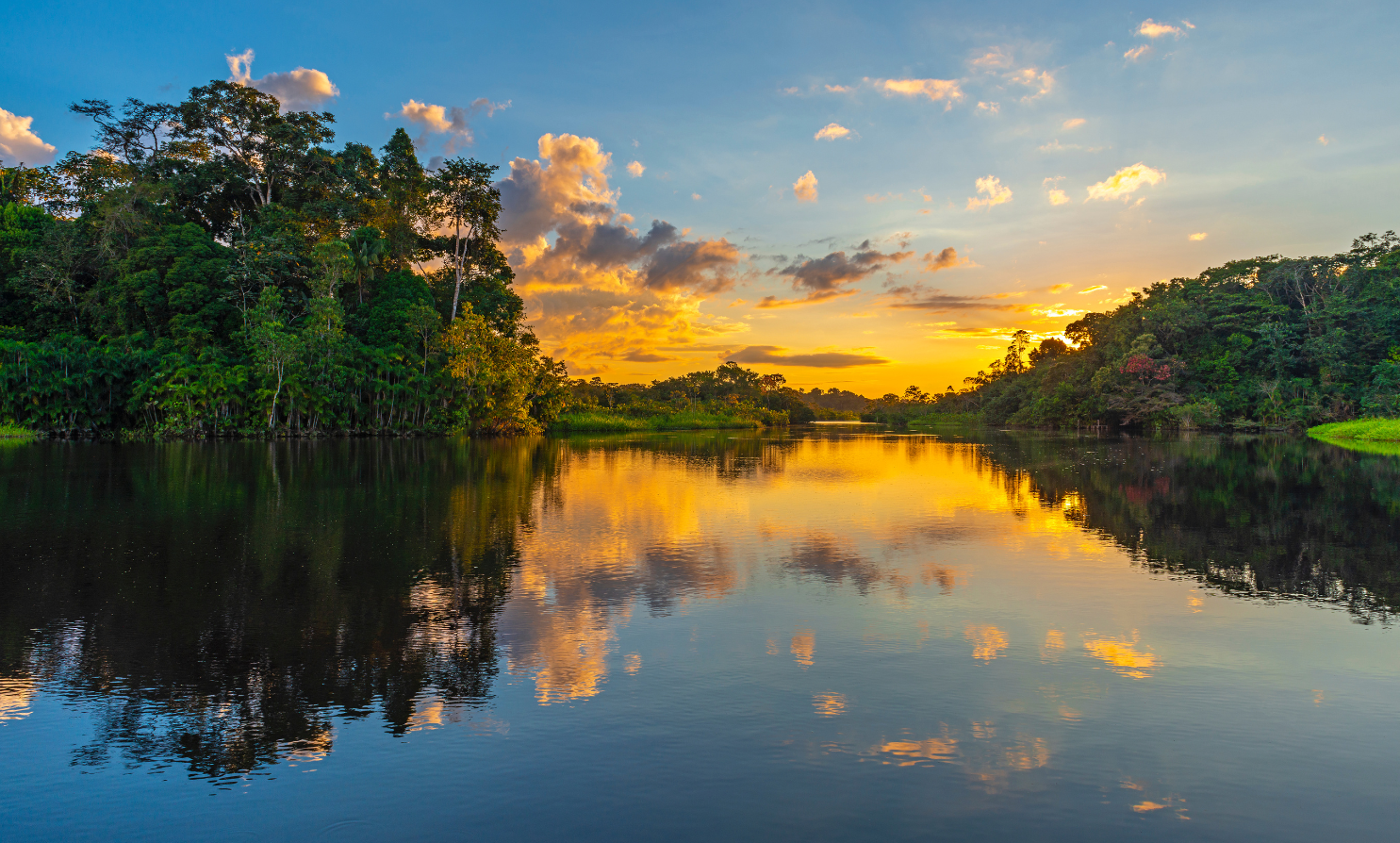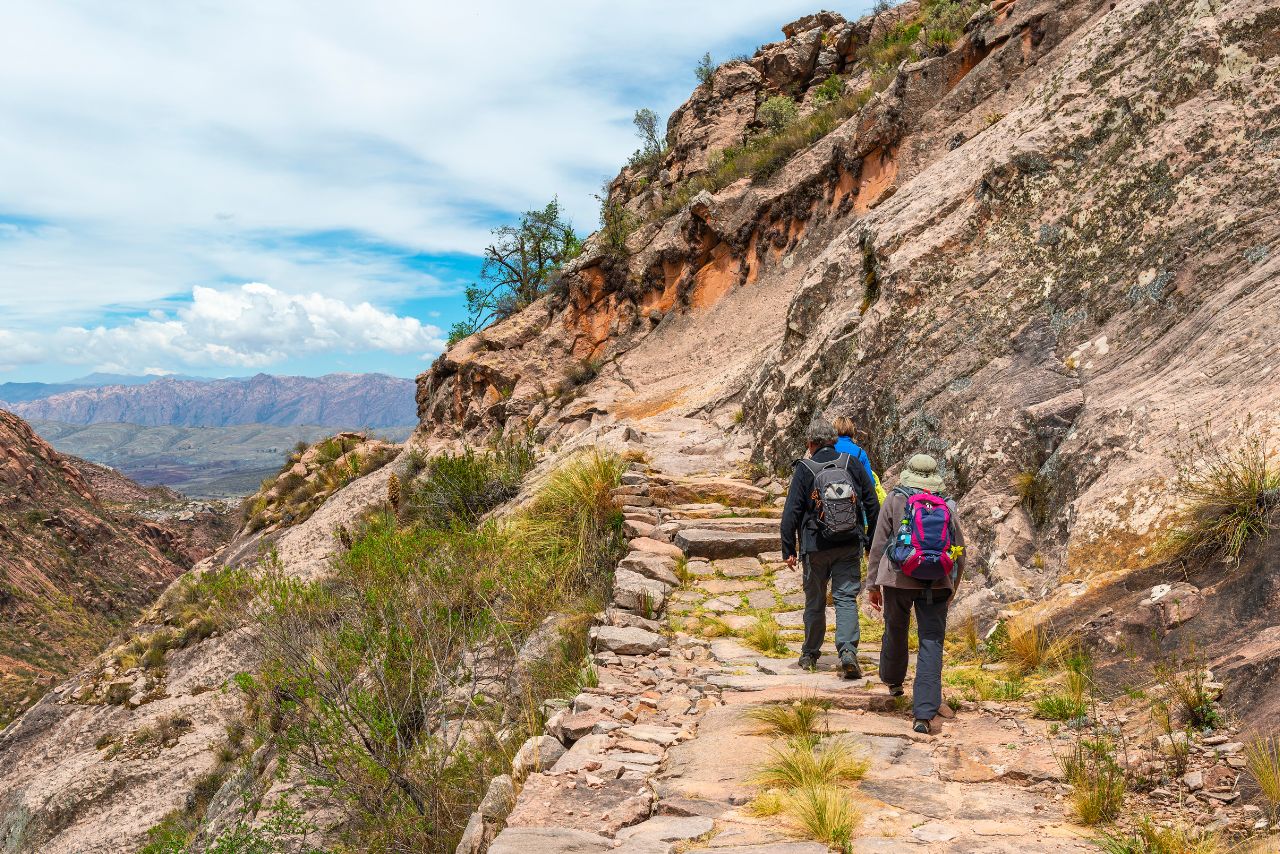
Most travelers arrive in Peru with Machu Picchu on their minds. They leave with the Amazon on their hearts.
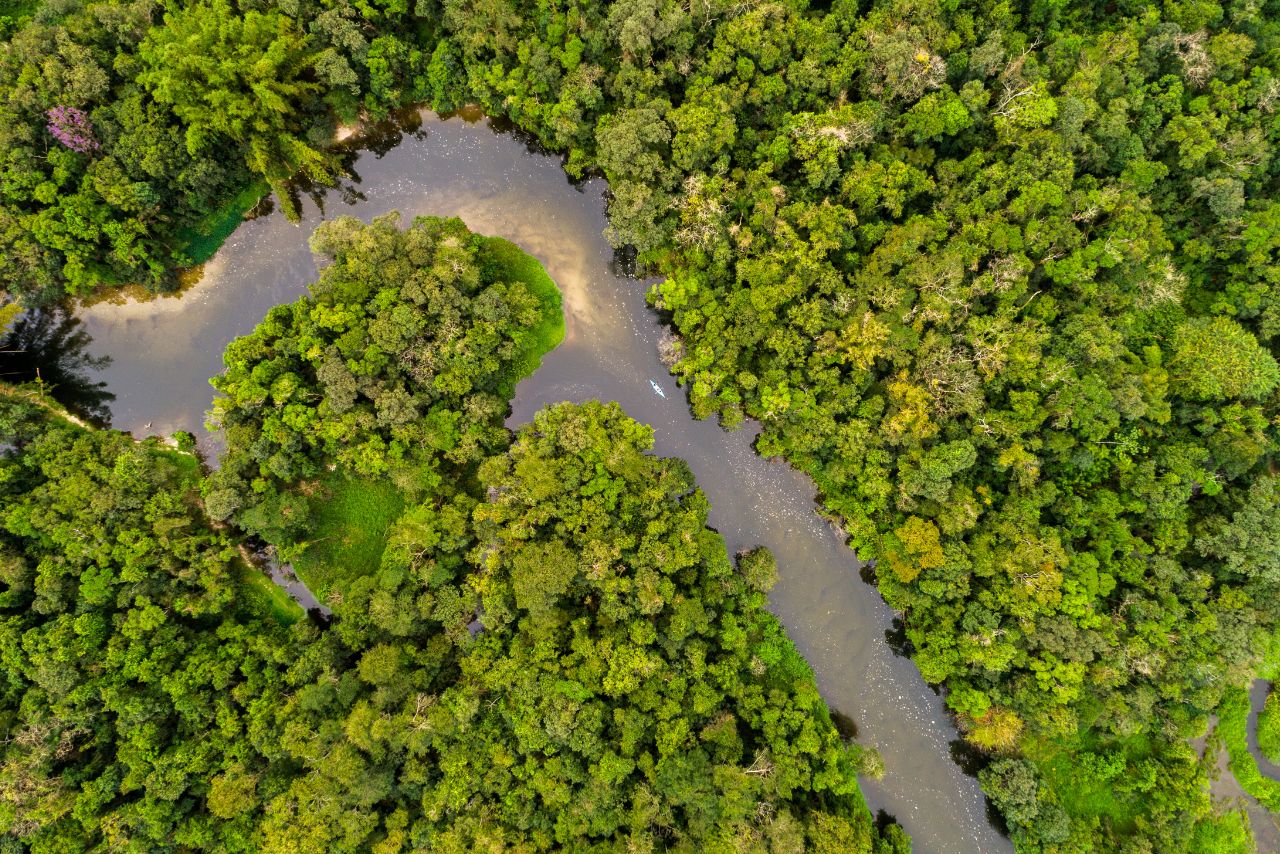
Peru contains one of the most biologically extraordinary sections of the Amazon Basin on Earth. Covering roughly 60 percent of the country’s landmass, this vast green interior is home to an estimated ten percent of the world’s known biodiversity. It produces a fifth of the planet’s oxygen. And it begins, quietly, as a glacial trickle high in the Peruvian Andes.
No two visits to the Peruvian Amazon are alike. The region divides naturally into two distinct zones, each with its own character, its own wildlife rhythms, and its own way of slowing you down until you remember what stillness feels like. This guide covers both.
Key Takeaways: A Complete Guide to the Peruvian Amazon
- Peru’s Amazon splits into two regions: river cruises in the north from Iquitos, and jungle lodges in the south near Puerto Maldonado.
- Both seasons offer strong wildlife experiences; the right choice depends on whether you prefer trails or waterways.
- Tambopata National Reserve alone hosts over 670 bird species and is one of the most biodiverse protected areas on the continent.
- Manu National Park spans cloud forest to lowland jungle and rewards the extra travel time required to reach it.
- Enigma partners with ARBIO, a Peruvian non-profit protecting 916 hectares of Amazon forest in the Madre de Dios region.
Two Amazons, Two Experiences
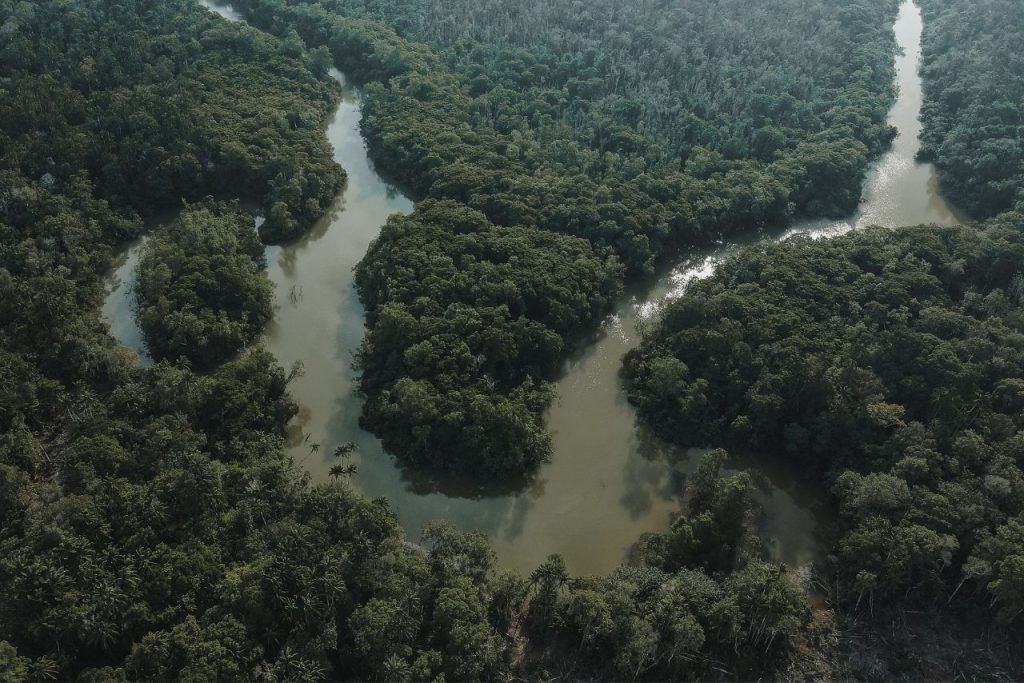
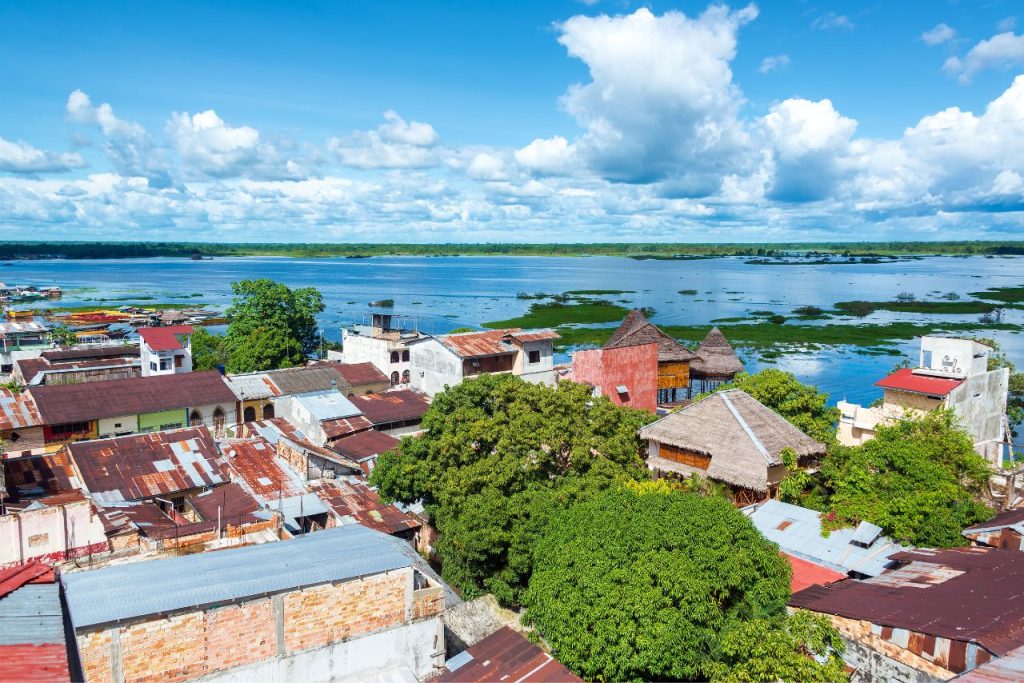
Iquitos, a remote city of half a million people that can only be reached by air or river, is the main city in the northern Amazon. It is the entrance to the Pacaya-Samiria National Reserve, which is the largest protected wetland in Peru and one of the most biodiverse freshwater ecosystems in the world.
Here, travel means water: luxury river cruises that go through what seems like an endless maze of tributaries, past caimans on sun-warmed banks, past groups of monkeys performing in the canopy, and past communities that have lived with the river for generations.
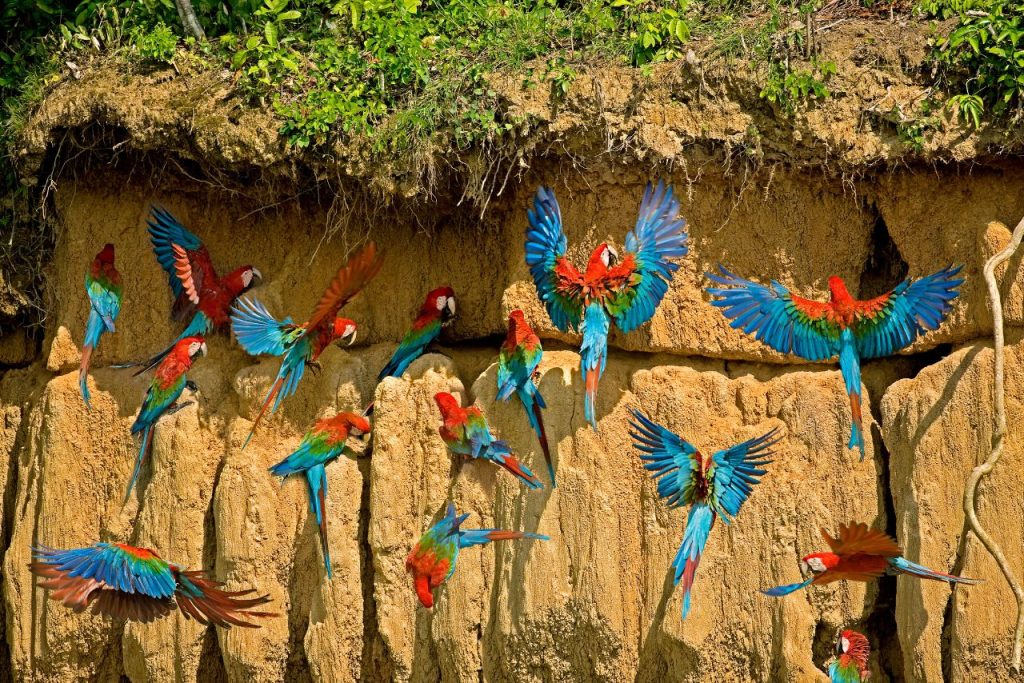
Puerto Maldonado is in the southern Amazon, which is more down-to-earth. This is jungle lodge country, where you can hear the forest at night and spend your days on trails, in canoes, and at clay licks where hundreds of macaws come to eat.
The Tambopata National Reserve and the Bahuaja-Sonene National Park next to it protect some of the most biodiverse land on the continent. The south is a great place to start exploring the Peruvian jungle because it is easy to get to and has a lot of wildlife.
Enigma’s Insider Note:The magic of the Amazon isn’t just in the bigger animals and the immense trees. There is so much richness of life in each square metre. The termites, the spiders, the butterflies, all part of a mind-blowing ecosystem.
READ ALSO: The Perks of an Amazon River Cruise
Northern Amazon: Iquitos and the Pacaya-Samiria Reserve
Getting there
There is no road to Iquitos because it is so deep in the rainforest. There are daily flights from Lima and less often from Cusco. The journey is part of the arrival: as the plane descends through the clouds, the Amazon spreads out below in every direction, a green that goes on forever.
What to expect
The best way to see the northern Amazon is from the water. Iquitos is the starting point for luxury river cruises along the Amazon River and its tributaries. These include the Ucayali, the Maranon, and the remote Yanayacu-Pucate Rivers that flow through the heart of Pacaya-Samiria. Naturalist guides take people on trips from the ship all day and into the evening, when the forest becomes a whole new world.
Expect pink river dolphins, black collared hawks, sloths, tropical songbirds, and the sudden, unhurried appearance of a jaguar at the water’s edge. Piranha fishing, though more ritual than sport, is a rite of passage on any jungle cruise. Night walks and caiman-spotting by torchlight from a skiff are among the most memorable activities the Amazon offers.
The wildlife along these rivers is just as amazing as the people who live there. Villages that can only be reached by boat keep traditions that the rest of the world hasn’t yet learned. With the right care and planning from an experienced guide, a visit can be one of the most meaningful experiences in Peru.
Best time to visit
There are two distinct seasons in the northern Amazon. From May to November, trails and riverbanks are easier to get to because the water levels are lower. Animals also gather around the last remaining water sources. The floodwaters rise from December to April, making it possible for boats to reach parts of the secondary forest that would otherwise be hard to get to. During the wet season, pink river dolphins go to new places, which makes it easier to see them.
There are good things about both seasons. The question is, do you prefer exploring on the ground or on the water?
Where to stay
Luxury river cruises are the best way to stay in the northern Amazon. The Aria Amazon, run by Aqua Expeditions, and Delfin Amazon Cruises’ fleet of ships offer the best mix of comfort, expert guiding, and access. The cabins are small on purpose, meant for only a few people, and the service is always good.
READ ALSO: 5 Thrilling Jungle Experiences in Peru’s Rich Amazon Rainforest
Southern Amazon: Puerto Maldonado and Tambopata
Getting there
Puerto Maldonado is served by daily flights from Lima and Cusco. The airport sits on the edge of town, and from there a short boat ride brings you to the lodges of the Madre de Dios and Tambopata Rivers. It is remarkably easy to reach one of the most remote natural environments on Earth.
What to expect
The southern Amazon is home to lodges. You will be staying in a jungle retreat for the next few days. Some are simple and close to town, while others require a boat ride of several hours upriver to the reserve, where there are more animals and fewer people. The Tambopata Research Centre is one of the most remote lodges in the Amazon. It’s a seven-hour drive from Puerto Maldonado and is probably the best place in Peru to see jaguars.
Days are structured around excursions: dawn walks when the forest wakes, canoe trips into oxbow lakes where giant river otters hunt; and visits to clay licks where hundreds of macaws and parrots gather each morning in one of nature’s great spectacles. In the evenings, after a dinner of fresh local ingredients, guides lead torchlight walks where caimans reveal themselves as small points of red light on dark water.
One of Peru’s most interesting citizen science programs is also in the southern Amazon. Wired Amazon, which is based at the Tambopata Research Centre, invites guests to help find new species. The program finds one new species every month on average. Sometimes, guests have been able to name a species themselves.
Wildlife highlights
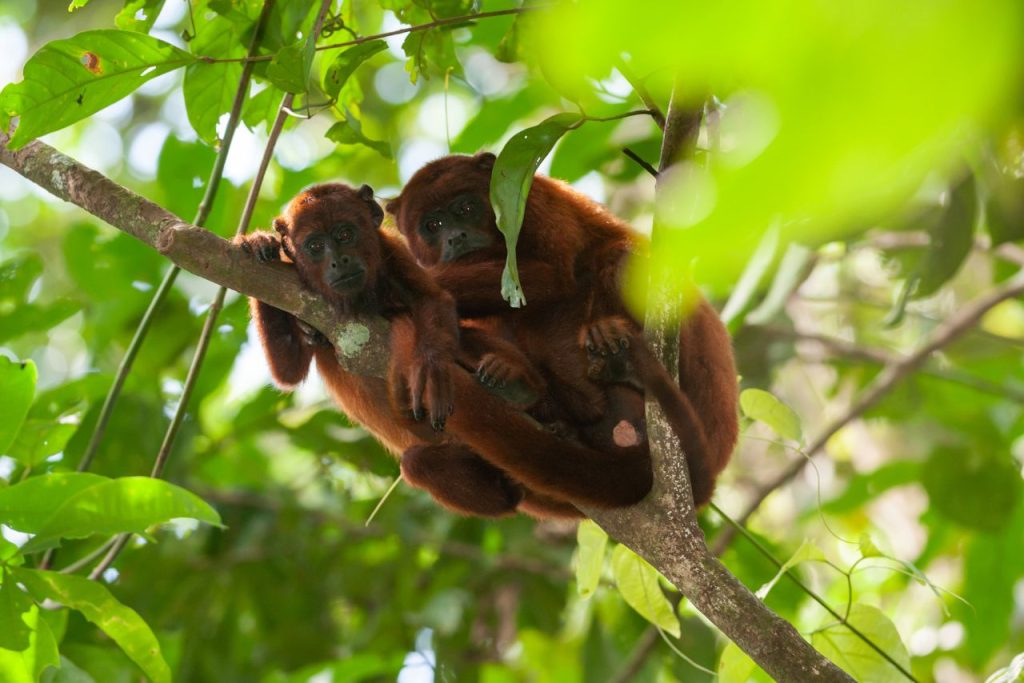
The Tambopata National Reserve shelters more than 670 bird species, over 1,200 butterfly species, and an outstanding roster of mammals, including giant river otters, harpy eagles, tapirs, and jaguars. Manu National Park, which sits between Puerto Maldonado and Machu Picchu, extends the altitude range from cloud forest to lowland jungle and is considered one of the most biodiverse protected areas in the world.
Best time to visit
The southern Amazon follows a dry season from May to October and a wetter period from November to April. The dry season is generally preferred for trail conditions and clay lick visibility. Cold fronts called ‘friajes’ occasionally sweep up from Patagonia between June and September, dropping temperatures briefly but adding a dramatic quality to the landscape. The wet season makes access to some trails more difficult but increases the visibility of reptiles and amphibians and reduces the humidity that defines the dry months.
Where to stay
There are a lot of different types of jungle lodges, from cosy eco-lodges close to town to more remote camps near research sites deeper in the reserve. The further you go up the river, the less infrastructure you see and the more wildlife you see. The southern Amazon is a great place for families to learn. The forest’s quietness and size make it hard for couples to find the same level of closeness anywhere else.
Manu National Park: Where the Andes Meet the Amazon
Manu National Park occupies a landscape category of its own. Designated a UNESCO World Heritage Site, it spans altitudes from 500 to over 4,000 metres, encompassing cloud forest, premontane jungle, and deep lowland Amazon. The biological variety within a single journey through the park is astonishing. Species counts here regularly exceed those of entire countries.
Access is more involved than other Amazonian destinations. Manu is reached by road from Cusco through the cloud forest, descending gradually until the temperature rises and the trees thicken. The journey takes the better part of a day. This effort is, for many visitors, precisely the point. Manu remains one of the least commercially developed natural areas in Peru, and that relative difficulty of access is what preserves it.
Accommodation within the park ranges from tented camps to small lodges. The combination of active wildlife watching, community visits, and the sheer scale of the reserve makes Manu the destination of choice for serious naturalists and those who want to leave the tourist circuit entirely behind.
READ ALSO: Wired Amazon: Travelers Become Scientists in the Jungle of Peru
What to eat in the Amazon
The cuisine of the Peruvian Amazon is a world of its own. Paiche, a large river fish with firm, white flesh, is the mainstay of Amazonian cooking. Paiche ceviche is among the more surprising culinary experiences Peru offers, light and clean in a cuisine more commonly associated with the Pacific coast. Patarashca, a whole fish wrapped in banana leaf and cooked over an open flame, is available on nearly every street corner in Iquitos.
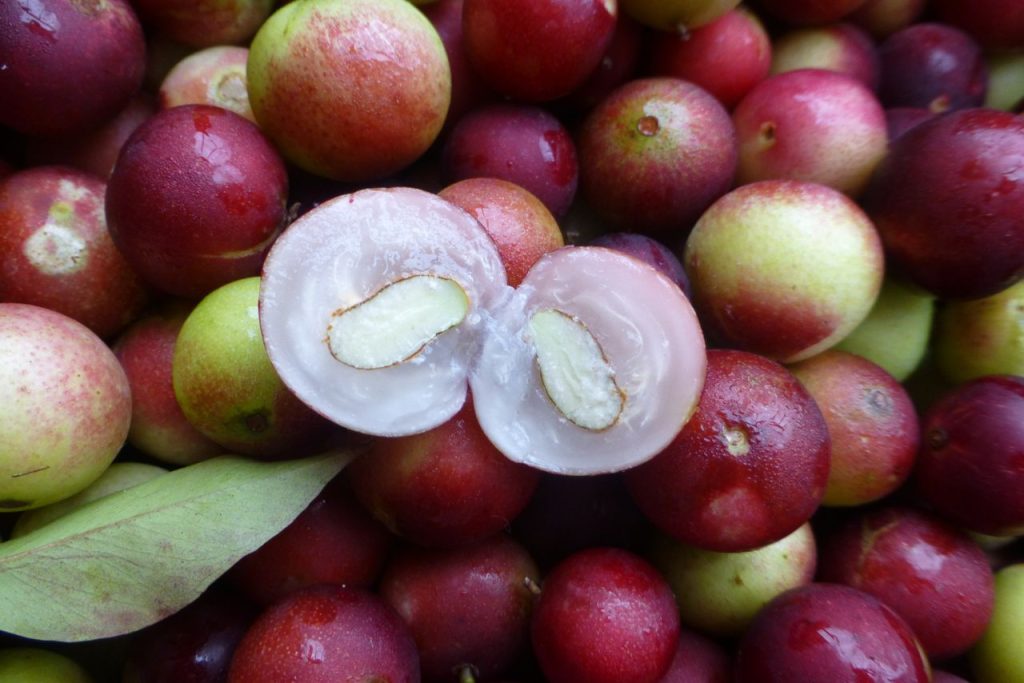
Tropical fruits grow in varieties that have no equivalent in temperate climates. Camu camu, one of the most vitamin C-rich foods on Earth. Aguaje, an orange-fleshed palm fruit with an extraordinary concentration of vitamin A. Ungurahui, the Amazonian cousin of the acai. The juane, a dish of rice and meat wrapped in macaw flower leaves and boiled slowly, is the Amazon’s great festive food, prepared for the Feast of San Juan in June.
On luxury river cruises, Amazonian ingredients are prepared by trained chefs who understand both the local tradition and the expectations of a discerning international guest. It is one of the more genuinely distinctive gastronomic experiences Peru offers.
READ ALSO: Jungle Fodder – Food Fantasies from the Peruvian Amazon
Conservation and Responsible Travel
The Amazon is not a backdrop. It is a living system under genuine pressure, and how you visit matters.
Enigma Peru is a partner of ARBIO, a Peruvian non-profit organisation that protects 916 hectares of Amazon forest in the Las Piedras River basin of the Madre de Dios region. ARBIO works to conserve the shihuahuaco, a slow-growing hardwood central to the forest’s ecosystem, and manages its land concession in active partnership with the private sector and local communities. Led by three Peruvian sisters, the organisation represents the kind of conservation work that responsible tourism can genuinely support.
Traveling responsibly in the Amazon means choosing operators who take seriously their relationship with the communities and ecosystems they work within. It means not swimming with dolphins in managed enclosures, not purchasing products made from wildlife, and following the guidance of your guide at all times on trails and waterways.
The Amazon does not require dramatic intervention from visitors. It requires presence, curiosity, and the willingness to move through it on its own terms.
Enigma is B Corp certified and a partner of The Long Run, a global sustainability initiative in the travel industry. Responsible travel in the Peruvian Amazon is the baseline for us.
Planning Your Amazon Journey
How long do you need
A minimum of three nights is required to genuinely settle into the rhythm of the jungle. Five to seven nights allows for a more layered experience, including both wildlife excursions and community visits. For Manu, allow at least four to five nights given the travel time involved in reaching the park’s interior.
The Amazon combines naturally with Cusco and the Sacred Valley, a pairing that offers one of the most complete contrasts Peru provides: Inca stone on one side, living forest on the other.
Health and preparation
Yellow fever vaccination is recommended before visiting the Amazon and is required if you are entering or exiting certain border areas. Malaria prophylaxis is advised for stays in rural and jungle areas; consult a travel medicine specialist at least four weeks before departure. Long-sleeved clothing, insect repellent with DEET, and waterproof footwear are essential. A quality head torch is indispensable for evening excursions.
Altitude and acclimatisation
If your Amazon journey follows a stay in Cusco or the Sacred Valley, the descent from altitude to the lowland jungle requires no special adjustment. The transition is, for most visitors, a relief. The air is thicker, the temperature warmer, and the pressure on the body eases.
The Best Time To Visit The Peruvian Amazon
There is no bad time to visit the Peruvian Amazon, only different Amazons to encounter. The dry season between May and October favours land-based exploration, trail walking, and clay lick visits.
The wet season between December and April opens the forest in different ways, flooding secondary jungle that is otherwise inaccessible and bringing dolphins and other wildlife into new territories.
Your guide’s knowledge of seasonal behaviour is one of the most valuable assets on any Amazon visit. The wildlife does not read a schedule.
An experienced naturalist knows where to look at every time of year, and that expertise is what makes the difference between an encounter and a sighting.
Frequently Asked Questions
Both seasons work. Dry season (May to October) is better for trails and clay licks. Wet season (December to April) opens remote waterways and brings more dolphin sightings. A good guide makes either season worthwhile.
The north means river cruises from Iquitos through vast, flooded jungle. The south means lodge-based exploration on foot and by canoe near Puerto Maldonado. Both are exceptional; the difference is how you prefer to travel.
A sleeping bag rated to at least minus five degrees Celsius is recommended. High-altitude camps, particularly the night near Dead Woman’s Pass, can be very cold. Down sleeping bags are lighter and more compressible but lose insulation when wet. A synthetic bag is more practical for the wet season.
Yes. Yellow fever vaccination is recommended, and malaria prophylaxis is advised for jungle areas. See a travel medicine specialist at least four weeks before departure.
Three nights is the minimum. Five to seven nights gives you the full range. Manu National Park needs at least four to five nights due to travel time.
Yes, particularly the southern Amazon. Night walks, caiman spotting, clay lick visits and wildlife encounters make it one of the most memorable natural education experiences available anywhere.
Plan your Amazon journey with Enigma
If the Amazon has stirred something in you, allow us to build a journey around it. Private, unhurried, and shaped entirely around your curiosity.
Enigma Peru has operated tailored journeys across the northern and southern Amazon since 2002. Our guides and naturalists know these waterways and forests intimately, and every itinerary begins from scratch, built around the traveller rather than the template.