When Elliott Tupac’s work of Chicha Street Art ‘Antes Sonoba’ (I used to dream) was painted over by Lima city officials, the global arts community woke up.

A movement began to celebrate and save this incredible form of creative expression from Peru’s street artists in Lima. Vastly talented and passionate, most of them hail from Huayanco, an Andean region from where several people come to Lima as labourers.
So where does “chicha” a fermented beer like brew made from purple corn come into the picture? Probably originating from the people who drank it, the term Chicha today speaks for far more than its beverage origins.
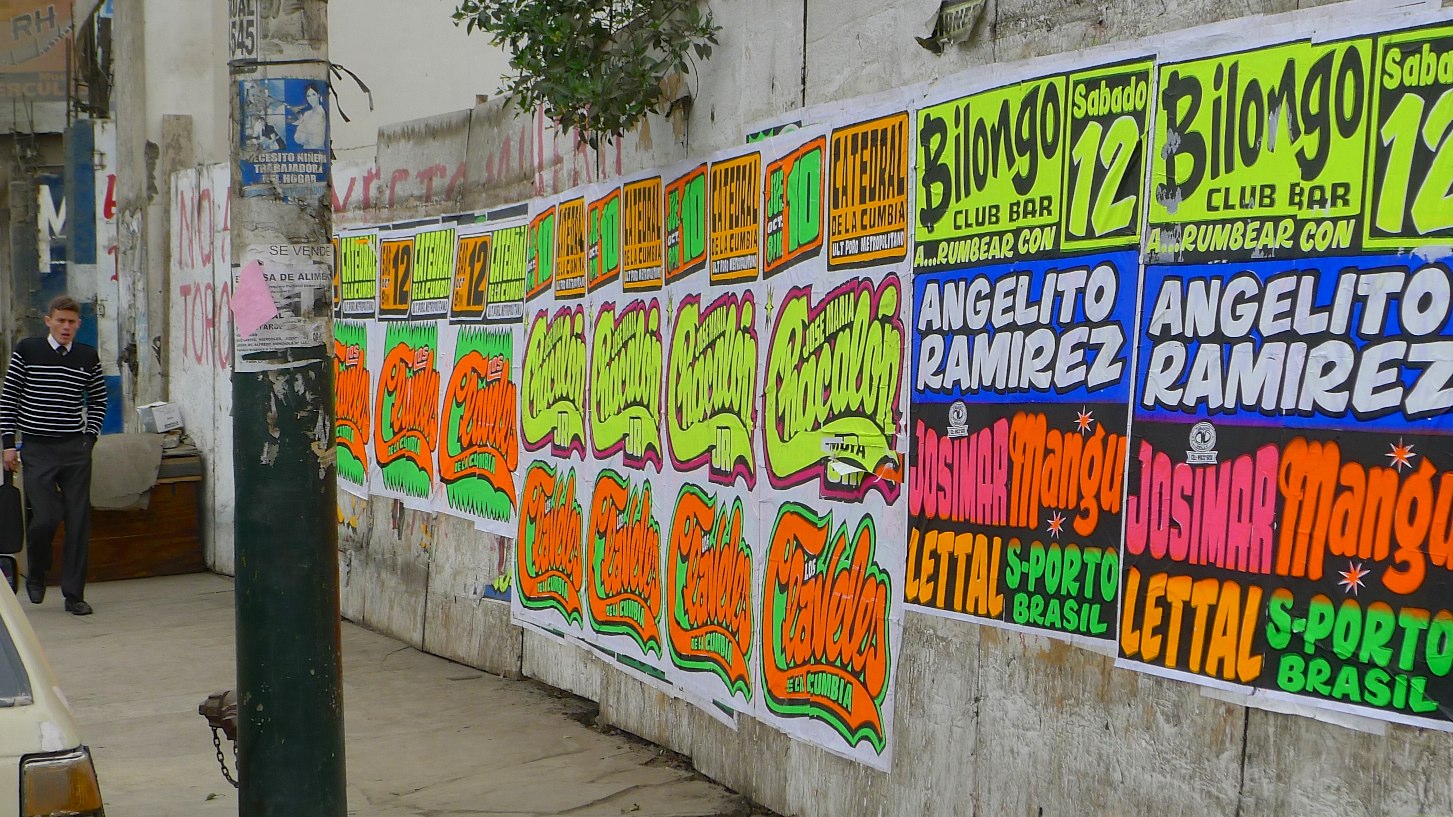
Chicha music, a Colombian Cumbia that was Peruvianized with a funky rock n roll beat and synthesizers thrown in for good measure, took Lima by storm in the 60s and by the 90s was recognized as both a genre of music. The poster art that originally a means of advertising live music performances, soon became a creative platform for social expression – and the walls of Lima became its canvas.

Psychadelic with bold fluorescent strokes, Chicha poster art speaks out about the concerns and issues faced by the Huancayo in urban settings. Inspired by Los Shapis, an 80s band whose colourfully embroidered ethnic outfits from the Huancayo region, the neon colours and big letters are a take off these vividly hued outfits, the colors emitting a sentiment of hope amid deep struggles.
The people of Lima rose to protest against the eradication of the art that has endeared itself to all Limenos, regardless of class. Even as controversy over Chicha art on the walls of Lima rages on, the rest of the world is inviting Elliott Tupac and his contemporaries to paint the walls of their cities – from Santiago de Chile to London, Great Britain.