There are hundreds of trails in the Peruvian Andes. Most of them are walked by local farmers and their animals, as they have been for centuries. A handful have become famous. Three of them have become legendary.
The Inca Trail, the Salkantay Trek and the route to Choquequirao are not simply hikes. Each one passes through a landscape that shaped one of the most extraordinary civilisations the world has ever seen.
Each one also arrives at ruins that were built without metal tools, wheeled vehicles or mortar. And each one will ask something genuinely difficult of you before it gives you anything back.
That is the point. That is why people come.
But the three routes are not interchangeable. The right choice depends on your fitness, your schedule, the kind of experience you want and how much solitude you are willing to work for. This guide covers all of it honestly.
Key Takeaways: Inca Trail vs Salkantay vs Choquequirao
- The Inca Trail is the only route that arrives at Machu Picchu through the original Sun Gate entrance. It is the most historically rich of the three but requires permits booked months in advance.
- The Salkantay Trek offers the most dramatic high-altitude scenery, crossing a 4,630-metre glacial pass. No permit is needed, making it the most flexible option for late planners.
- Choquequirao is the most demanding and most rewarding trek for solitude seekers. The citadel rivals Machu Picchu in scale but receives a fraction of the visitors.
- March is one of the best months to trek in Peru.The Inca Trail has just reopened, vegetation is lush from the rainy season and crowds are significantly lower than peak dry season.
- All three routes can be done privately and tailored to your pace, fitness and interests.
- A specialist operator makes the difference between a good trek and an unforgettable one.
At A Glance: The Three Peruvian Treks
| Inca Trail | Salkantay Trek | Choquequirao | |
| Distance | 43 km / 27 miles | 74 km / 46 miles | 60 km / 37 miles (return) |
| Duration | 4 days, 3 nights | 5 to 6 days | 4 to 5 days |
| Highest Point | 4,215 m / 13,828 ft | 4,630 m / 15,190 ft | 3,103 m / 10,178 ft |
| Permit Required | Yes, limited daily | No | No |
| Crowd Level | Controlled but present | Moderate to busy | Very low, near-solitary |
| Finish Point | Sun Gate, Machu Picchu | Aguas Calientes | Return to Cachora |
| Fitness Required | Moderate to hard | Hard | Very hard |
The Inca Trail to Machu Picchu
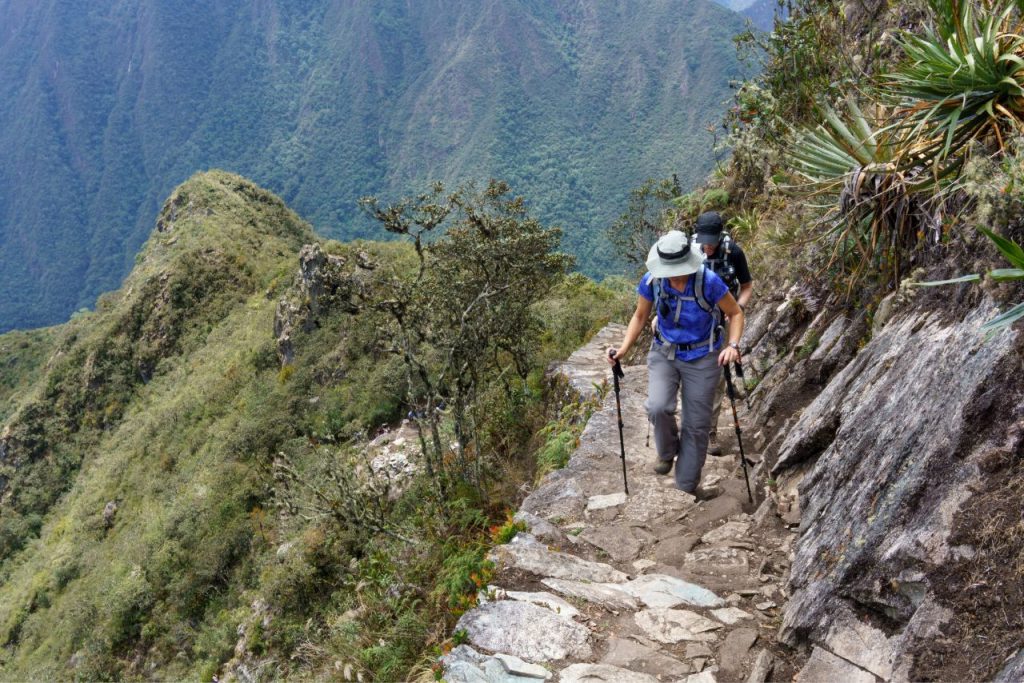
The classic Inca Trail covers 43 kilometres over four days, beginning at Kilometre 82 near Ollantaytambo and finishing at the Sun Gate above Machu Picchu. It crosses three high mountain passes, the steepest being Dead Woman’s Pass at 4,215 metres. It moves through cloud forest, subtropical jungle and high-altitude grassland, and passes through more than a dozen Inca ruins before arriving at the citadel.
What makes it worth doing
The Inca Trail follows the original Qhapaq Nan road system, the ancient network of paths that connected the Inca Empire from Colombia to Chile. You are not walking to Machu Picchu. You are arriving in the way that Inca pilgrims once arrived, through the Sun Gate at dawn, with the ruins spread out below you and cloud filling the valley floor.
That moment is genuinely different from taking the bus from Aguas Calientes. People who have done both will tell you so.
The archaeological sites along the route are also worth the journey on their own. Runkurakay, Sayacmarca and Phuyupatamarca are rarely crowded, and a knowledgeable guide will bring them to life in ways that transform the walk into something much closer to an education.
What to know before you go
Permits are strictly limited to 500 people per day, including guides and porters. This sounds like a lot until you try to book. Permits for the dry season months, particularly July and August, sell out months in advance. March is a genuinely good window. The trail reopens on the first of the month after its annual February maintenance closure, conditions are green and fresh, and the daily numbers are lower than at any other point in the open season.
The altitude is real. Two nights acclimatising in Cusco before departure is not optional. The pass on day two is steep, and the altitude affects people differently regardless of fitness level.
Good to know
The Inca Trail is the only trekking route in Peru that arrives at Machu Picchu through the original Inca entrance. If that approach matters to you, there is no substitute for it.
READ ALSO: The History of the Inca Trail
The Salkantay Trek
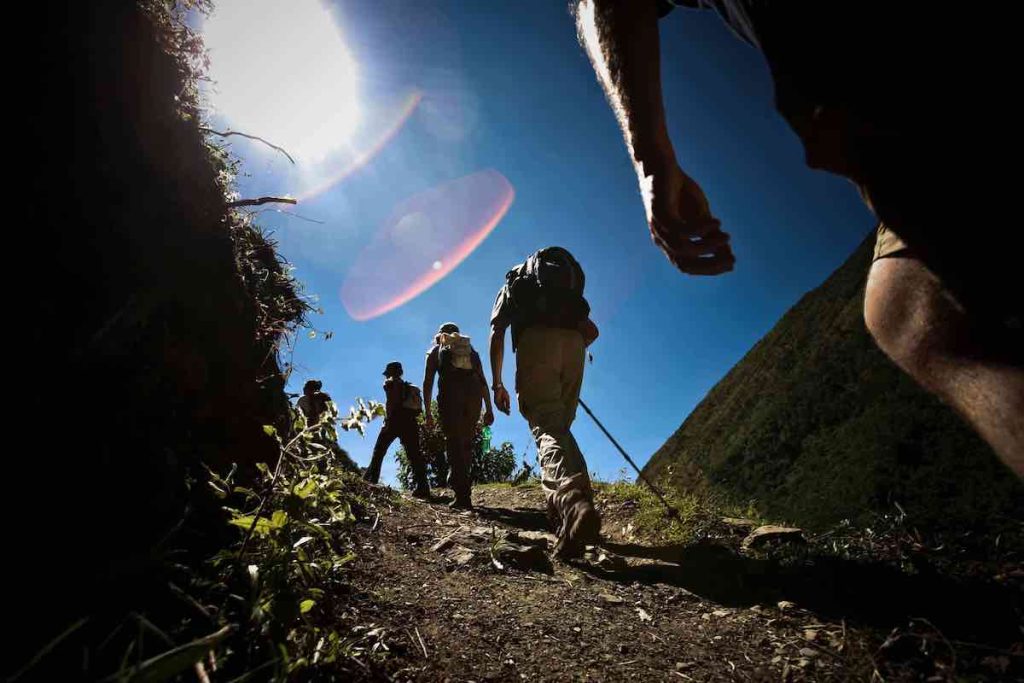
The Salkantay takes its name from the 6,271-metre sacred mountain that dominates the first two days of the route. The Incas considered Salkantay a deity, its glaciated peak worshipped as an apu, a mountain spirit with power over weather and water. Walking beneath it, with the glacier close enough to hear at night, it is not difficult to understand why.
The standard route covers approximately 74 kilometres over five to six days, beginning at Soraypampa and descending through cloud forest and coffee country before arriving in Aguas Calientes for the final morning at Machu Picchu.
What makes it worth doing
Salkantay offers the most dramatic and varied landscape of the three routes. The high camp beneath the glacier on night one, the turquoise waters of Humantay Lagoon, the dramatic descent into subtropical forest where orchids appear on the trees and the air thickens with heat and moisture. Within a single day, you can move from an Andean glacier to a tropical valley.
There is no permit system, which means you can choose your departure date freely. This matters if your travel plans are confirmed late, or if you prefer the flexibility of not committing months in advance.
The Salkantay also passes through the Andean community of Paucarcancha, where a largely unexcavated Inca complex sits quietly above the valley. Most trekking groups walk straight past it. A good guide will not.
What to know before you go
The Salkantay Pass sits at 4,630 metres, higher than any point on the Inca Trail. The ascent on day two involves significant elevation gain over a relatively short distance. This is not a gentle route. It rewards genuine physical preparation.
Because there is no permit cap, group sizes and crowd levels on the main trail are less controlled than on the Inca Trail. Going private, with a specialist operator, is the most effective way to manage both pace and solitude.
Good to know
The Salkantay is the best choice for travelers who want Machu Picchu at the end of a serious high-altitude trek, without the permit pressure of the Inca Trail.
EXPLORE MORE: Enigma Treks and Expeditions
Choquequirao Trek
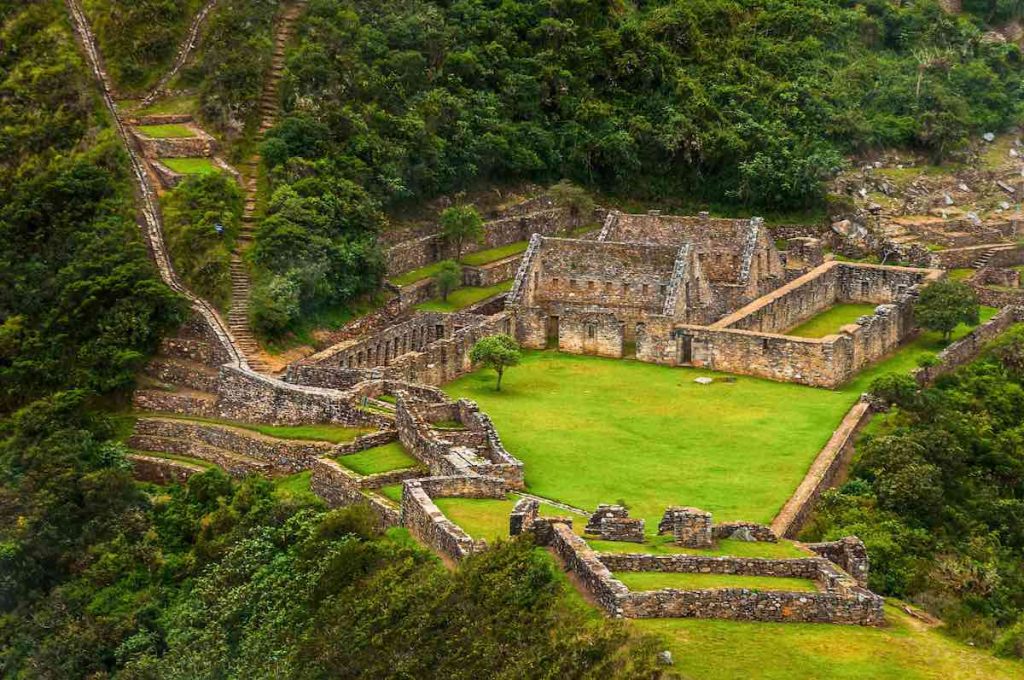
Choquequirao means Cradle of Gold in Quechua. It sits at 3,103 metres above the Apurimac River canyon, and it is connected to the rest of the world by a single demanding trail that most travelers simply do not bother with. That is precisely what makes it extraordinary.
The classic trek covers approximately 60 kilometres return over four to five days, beginning in the village of Cachora. The descent to the river crosses nearly 1,600 metres of vertical drop in a single day. The ascent to the ruins the following morning asks for the same effort again in reverse.
What makes it worth doing
Choquequirao is a sister city to Machu Picchu in almost every sense. It is comparable in scale, architectural language and ceremonial function. The New York Times described it as the other Machu Picchu. The crucial difference is that Machu Picchu receives more than a million visitors a year, while Choquequirao receives a few thousand. On a given morning at the citadel, you may be the only person there.
The site is also actively being excavated. Only around 30 to 40 percent of the complex has been uncovered, which means the terraces, temples and agricultural platforms you walk between still have a rawness to them. This is not a polished tourist attraction. It is an archaeological site that happens to be accessible to the determined traveller.
The Apurimac canyon above the river holds one of the most reliable condor populations in Peru. The birds ride the thermals above the canyon walls in the early morning, and at close range they are genuinely staggering.
What to know before you go
This is the most physically demanding of the three routes described here. The combination of heat in the canyon, steep elevation changes and the remoteness of the trail requires a serious level of fitness and preparation. It is not a route for first-time trekkers.
The classic Choquequirao route returns to Cachora rather than continuing to Machu Picchu. An extended eight to ten day route via the Yanama Pass does connect the two citadels, but it involves crossing a 4,600-metre pass and is for experienced high-altitude trekkers only.
Daily departures are possible. The best season runs from April through November, though March departures are feasible in the right conditions.
Good to know
If you have already been to Machu Picchu and want something that genuinely surprises you, Choquequirao is likely the most rewarding trek in Peru right now. Go before the cable car that has been proposed for the site is ever built.
READ ALSO: The Best Hikes in Cusco
Which Trek is Right For You?
There is no single correct answer to this question. The right trek depends on what you are looking for and what you are prepared to give.
Choose the Inca Trail if
The original pilgrims’ approach through the Sun Gate matters to you. You are planning at least four to five months in advance. You want a challenging but manageable route with outstanding archaeological content along the way, and you want to finish at Machu Picchu in the most meaningful way it is possible to arrive there.
Choose the Salkantay Trek if
You want dramatic glacial and tropical scenery and the freedom to book without months of lead time. You are in strong physical condition and comfortable at high altitude. The Machu Picchu finale is important to you, but how you get there matters as much as the destination itself.
Choose Choquequirao if
Solitude is a priority. You want to stand in a major Inca citadel with no one else around you. You are genuinely fit and experienced on difficult terrain. And you are not attached to reaching Machu Picchu. The journey, and the ruins themselves, are enough.
Consider combining them
For travelers with ten or more days and serious fitness, it is possible to connect Choquequirao to Machu Picchu via Salkantay on a single continuous route. This is one of the great adventure treks of South America, and it sees almost no one.
READ ALSO: Must-See Experiences in the Peruvian Andes
Practical Notes For Planning
| Book this far ahead | Best months | |
| Inca Trail | 4 to 6 months minimum | March, May, June, September |
| Salkantay | 4 to 6 weeks | March to November |
| Choquequirao | 2 to 4 weeks | April to November |
March deserves a specific mention. All three routes are in good condition through the month, the post-rainy season vegetation is at its most lush, and visitor numbers are significantly lower than in peak dry season.
The Inca Trail has just reopened from its February closure, and permits are available. For travelers with some flexibility on timing, March is one of the best-kept secrets in Peruvian trekking.
READ ALSO: How to Prepare for a Trek in the Andes
Ready To Choose Your Trek?
Our team has been leading private treks on all three routes since 2002. Every itinerary starts from scratch, designed around your pace, your interests and what you want to feel when you arrive.
FAQs: Inca Trail vs Salkantay vs Choquequirao
The Salkantay is generally considered harder. Its highest point sits at 4,630 metres compared to 4,215 metres on the Inca Trail, and the daily elevation changes are more demanding. Both require a good level of fitness and at least one to two days acclimatising in Cusco before you set off.
No. Unlike the Inca Trail, Choquequirao requires no advance permit. You can organise a departure with relatively short notice. The route is physically demanding and going with an experienced guide makes a significant difference to safety.
The dry season from May to September is the most popular window. That said, March and April offer excellent conditions with far fewer trekkers, lush green landscapes and good weather. The Inca Trail reopens on the first of March after its annual maintenance closure, making it a particularly good month to go.
Yes. An extended eight to ten day route connects the two citadels via the Yanama Pass, which sits above 4,600 metres. It requires serious physical preparation and is best done with a private specialist operator who knows the route well.
For the dry season months of June, July and August, book at least four to six months ahead. Permits are strictly limited and sell out quickly. For March, April and May, two to three months is usually sufficient though earlier is always safer. Once permits are gone, they are gone.
Layers are essential. Temperatures can shift dramatically between a cold high-altitude morning and a warm valley afternoon. Key items include a good waterproof jacket, trekking poles, broken-in boots, a warm sleeping layer, sun protection and altitude medication if your doctor recommends it. A specialist operator will provide a full packing list tailored to your specific route and season.